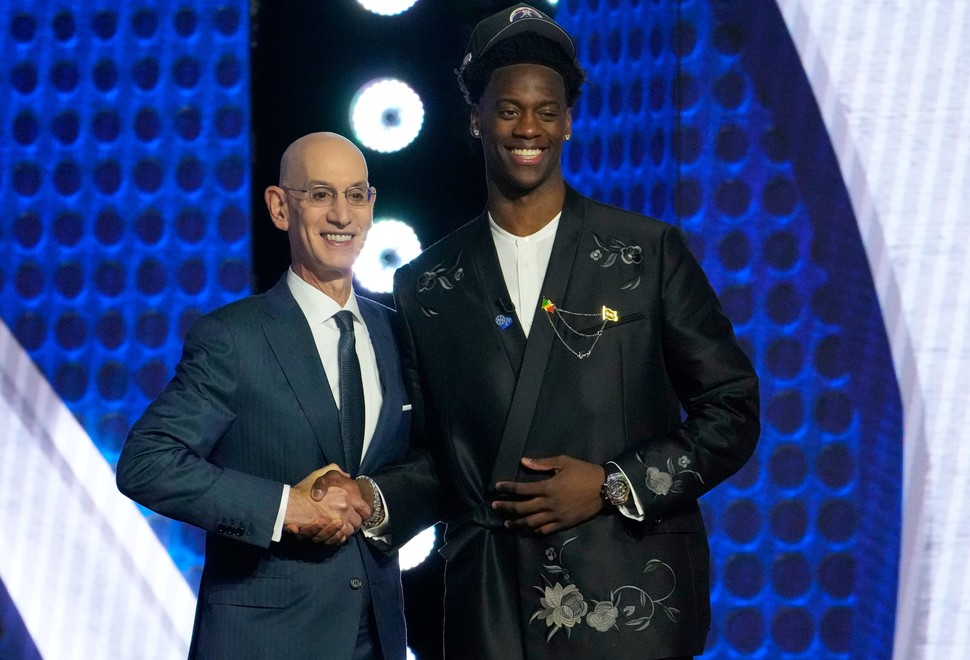
The top of this draft was never really in question. AJ Dybantsa to the Wizards at number one was the kind of pick that gets decided before anyone walks across the stage. Darryn Peterson, Cameron Boozer, and Caleb Wilson all made sense right behind him. Those four have the kind of obvious star traits that make the first few picks feel almost ceremonial. You watch, you nod, you move on.
Then the draft gets genuinely interesting.
The Clippers taking Keaton Wagler at five, the Kings landing Darius Acuff Jr., the Hawks adding more frontcourt pieces, the 76ers walking away with Labaron Philon. That’s where the real debate starts, where front offices either look smart in two years or spend the next ones scratching their heads.
Before getting into the grades, one thing is worth saying clearly. These are not career predictions. A player can get a B now and become an All-Star by 2029. A player can get an A and never reach their ceiling.
Draft grades are about the moment, the value relative to where the pick landed, the fit with the team, the players still sitting on the board, and whether the organization actually understood what it needed.
That context is everything. Here is how every first-round pick from the 2026 NBA Draft grades out.
1. AJ Dybantsa, Wizards
Grade: A
This was the easy pick. The Wizards needed a real franchise wing, and AJ Dybantsa was the best player in the class. He averaged 25.5 points, 6.8 rebounds, and 3.7 assists at BYU while shooting 51.0% from the field.
The fit is also strong because the Wizards already have Trae Young back in a new deal. Dybantsa doesn’t need to run every possession right away. Young can create the first advantage, and Dybantsa can attack closeouts, run in transition, and grow as the main long-term scorer.
The three-point shot still needs work after he hit only 33.1% from deep. The defense also has to become more consistent. Still, that is normal for a freshman wing with a huge offensive load.
The Wizards didn’t need to overthink it. Dybantsa has the best mix of size, scoring, athleticism, and star upside. This is the right pick.
2. Darryn Peterson, Jazz
Grade: A-
The Jazz needed a guard with star upside, and Darryn Peterson gives them that. He averaged 20.2 points, 4.2 rebounds, and 1.6 assists at Kansas while shooting 43.8% from the field and 38.2% from three.
Peterson is more scorer than pure point guard right now. That is fine for the Jazz because they badly needed shot creation alongside Keyonte George. He can get separation, shoot off the dribble, and score from different spots. For a team that went 22-60, upside mattered more than safety.
The reason this is not a full A is the risk and fit. He played only 24 games, so health has to be watched. The fit alongside two main scorers like George and Lauri Markkanen is also a focus point here. He must develop his game as a two-guard for the Jazz to succeed with him.
Still, this was the right swing. Peterson has real scoring talent, good size at guard, and enough shooting to become the main offensive piece in a very interesting squad.
3. Cameron Boozer, Grizzlies
Grade: A+
This is probably the best-fitting pick in the top five. Cameron Boozer gives the Grizzlies production, versatility, and a high floor with All-Star upside. Boozer averaged 22.5 points, 10.2 rebounds, and 4.1 assists at Duke while shooting 55.6% from the field, 39.1% from three, and 78.9% from the line. That is a strong all-around profile. He scores inside, passes well, rebounds, and can punish defenses from the perimeter.
With Ja Morant likely to be traded in the offseason, the Grizzlies could have gone for a floor general, but Boozer can fill an all-around role as a playmaker, scorer, and defender in the frontcourt as the Jaren Jackson replacement.
The athletic ceiling is the only question. He is not the most explosive forward in the class. But his strength, touch, IQ, and shooting make him easy to trust.
The Grizzlies got a player who can help early and still grow into something bigger. Great value at No. 3.
4. Caleb Wilson, Bulls
Grade: A-
Caleb Wilson makes a lot of sense for the Bulls. They needed a new frontcourt piece with size, defense, and upside. Wilson gives them all of that. He averaged 19.8 points, 9.4 rebounds, 2.7 assists, 1.4 blocks, and 1.5 steals at North Carolina while shooting 57.8% from the field. That is real two-way production. He was not just a scorer. He rebounded, protected the rim, passed a little, and made plays with his length.
The Bulls now have Josh Giddey, Matas Buzelis, and Nic Claxton, so Wilson gives them another big forward who can run the floor, finish, and defend in space. That can become a strong frontcourt base if the shooting keeps improving.
The swing skill is the jumper. If Wilson becomes a real three-point threat, this pick can look great. If not, the spacing next to Claxton can get tight.
Still, the value is strong. The Bulls got a real building block at No. 4.
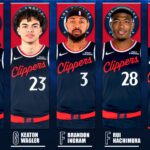
5. Keaton Wagler, Clippers
Grade: B-
Keaton Wagler is a good player, but this was the first top-five pick that feels debatable. Wagler averaged 17.9 points, 5.1 rebounds, and 4.2 assists at Illinois while shooting 44.5% from the field and 39.7% from three.
He has good size at 6-foot-6, and the shooting is real. He can play on or off the ball, which helps next to Darius Garland and Kawhi Leonard.
The fit is not the problem. Wagler can space the floor, attack closeouts, and grow as a secondary creator. He also doesn’t need star touches right away, which works for the Clippers because they still want to win now.
The issue is upside. Darius Acuff Jr. and Mikel Brown Jr. were still on the board, and both had stronger lead-guard cases. Wagler may be safer, but No. 5 is high for a player who might be more of a high-end connector than a star.
Not a bad pick. Just not a great one.
6. Mikel Brown Jr., Nets
Grade: B+
This is a good swing for the Nets. Mikel Brown Jr. has some risk, mostly because of the back injury and the smaller sample, but the talent is real. Brown averaged 18.2 points, 3.3 rebounds, and 4.7 assists at Louisville. The efficiency was not perfect at 41.0% from the field and 34.4% from three, but the shot-making and passing are easy to buy. He can play in pick-and-roll, hit pull-up threes, and create offense late in the clock.
The Nets needed a guard with more upside. They went 20-62, so this was not a spot for a safe low-ceiling player. Brown gives them a possible lead guard if the body holds up and the shot selection gets better.
The grade doesn’t rise because of health and efficiency. But at No. 6, this was the right type of bet. The Nets needed upside. Brown has it.
7. Darius Acuff Jr., Kings
Grade: A
The Kings got immense value here. Darius Acuff Jr. could have gone higher, and getting him at No. 7 feels like a clean win given his hype. Acuff averaged 23.5 points, 3.1 rebounds, and 6.4 assists at Arkansas while shooting 48.4% from the field and 44.0% from three. That is big-time guard production. He can score at all three levels, create out of pick-and-roll, and put real pressure on defenses.
The Kings needed a new offensive engine after a 22-60 season. Acuff gives them that. He is not just a scorer. The 6.4 assists matter because he can organize an offense and still create his own shot when the play breaks.
The concern is size and defensive pressure. Bigger guards will test him. Still, this is the right pick. The Kings needed star upside, not another rotation piece. Acuff gives them a real chance at a franchise guard.
8. Kingston Flemings, Hawks
Grade: B+
Kingston Flemings fits the Hawks because they needed more guard speed, creation, and point-of-attack juice. He averaged 16.1 points, 4.1 rebounds, and 5.2 assists at Houston while shooting 47.6% from the field.
The appeal is simple. Flemings is fast, aggressive, and can get into the paint. He also gives the Hawks another guard who can defend and pressure the ball. That matters next to Jalen Johnson, Dyson Daniels, a re-signed CJ McCollum, and the bigger pieces on the roster.
The reason this is not an A is the value. Flemings is good, but Mikel Brown Jr. and Darius Acuff Jr. were the stronger guard prospects and were already gone. At No. 8, the Hawks were taking the next guard in the tier, not stealing a top-five talent.
Still, the fit is good. Flemings gives the Hawks a real lead-guard bet with speed, passing, and defensive effort. That is useful.
9. Morez Johnson Jr., Mavericks
Grade: B
Morez Johnson Jr. is a safe pick, but No. 9 feels a little high. Johnson averaged 13.1 points, 7.3 rebounds, and 1.2 assists at Michigan while shooting 62.3% from the field.
He also brings physical defense, rebounding, and strong finishing around the rim. He is not soft. He plays hard, runs the floor, and gives the Mavericks another frontcourt body who can help Cooper Flagg.
The fit makes sense. The Mavericks need more defense, size, and dirty-work players. Johnson can guard big forwards, rebound, screen, and finish plays without needing touches. That helps around a main creator.
The issue is upside. He is not a polished shooter yet, and the offensive creation is limited. At No. 9, that makes the pick feel less exciting.
Still, this is not bad. Johnson has a clear NBA role. He should defend, rebound, and finish early. The grade is a B because the Mavericks probably passed on more upside.
10. Brayden Burries, Bucks
Grade: A-
This is a strong pick for the Bucks after the Giannis Antetokounmpo trade. They needed young guards, shooting, and players who can help build a new identity. Brayden Burries averaged 16.1 points, 4.9 rebounds, and 2.4 assists at Arizona while shooting 49.1% from the field and 39.1% from three. He also hit 80.5% from the line and averaged 1.5 steals. That is a very solid guard profile.
Burries is not the flashiest creator in the class, but he is strong, mature, and efficient. He can score off the ball, attack closeouts, defend with energy, and hit open threes. That fits next to Ryan Rollins, Tyler Herro, Kel’el Ware, Jaime Jaquez Jr., and the other young pieces.
The grade is A- because the ceiling may not be superstar level. Still, the Bucks needed a real two-way guard who can play soon. Burries gives them that, and the value at No. 10 is good.
11. Yaxel Lendeborg, Warriors
Grade: B+
Yaxel Lendeborg fits what the Warriors needed: an older forward who can play right away next to Stephen Curry, Jimmy Butler, and Draymond Green. He averaged 15.1 points, 6.8 rebounds, 3.2 assists, 1.2 blocks, and 1.1 steals at Michigan while shooting 51.5% from the field and 37.2% from three. That is useful for a team that doesn’t need another raw teenager.
The Warriors need size, passing, and low-usage help in the frontcourt. Lendeborg can screen, move the ball, defend bigger wings, and hit enough open threes to stay on the floor.
The upside may be limited because he is already 23, but that is fine for the Warriors. They needed an instant rotation player, not a five-year project.
12. Aday Mara, Thunder
Grade: B+
Aday Mara gives the Thunder a different frontcourt look behind Chet Holmgren. They already have stars and depth, so they could afford to take a bigger long-term swing.
Mara averaged 12.1 points, 6.8 rebounds, 2.4 assists, and 2.6 blocks at Michigan while shooting 67.0% from the field. The size is the sell. At 7-foot-3, he changes the paint just by being there.
The Thunder can use him slowly. He doesn’t need 25 minutes right away. He can develop as a Wembanyama countermeasure after their playoff series loss, as Hartenstein’s $29 million option could be declined for extra financial room now.
The concern is speed. Teams will drag him into space. But at No. 12, the upside is worth it for a team that didn’t need instant help.
13. Nate Ament, Bucks
Grade: B+
Nate Ament is the right type of swing for the competitive but rebuilding Bucks. They need size, scoring upside, and more young wings with a Rollins-Herro-Burries backcourt already in place.
Ament averaged 16.7 points, 6.3 rebounds, and 2.3 assists at Tennessee. At 6-foot-9, he gives the Bucks a forward who can attack closeouts, run the floor, and grow into a real scoring role.
There are questions about his motor, development, and overall projection at the next level after struggling in college. He can be compared to Jalen Johnson’s case in 2021, as five years later, he became an All-Star caliber player.
The risk is that Ament still needs polish. He has to get stronger, shoot more consistently, and defend with better discipline. Still, this is a good value pick at No. 13. The Bucks needed upside after losing Giannis, and Ament gives them that.
14. Hannes Steinbach, Hornets
Grade: B+
The Hornets needed more force inside, and Hannes Steinbach was one of the best big men left. LaMelo Ball and Brandon Miller can create offense, but the Hornets have needed rebounding and frontcourt strength for years.
Steinbach averaged 18.5 points, 11.8 rebounds, 1.6 assists, 1.2 blocks, and 1.1 steals at Washington while shooting 57.7% from the field. The rebounding is the main reason this pick works.
Ball needs bigs who can run, catch, finish, and punish smaller players. Steinbach can do that. He also gives Miller more help because the Hornets won’t be as soft around the rim.
The defense still needs work, and the three-point shot at 34.0% has to hold up on NBA volume. But at No. 14, this is a good need pick.
15. Dailyn Swain, Bulls
Grade: A-
The Bulls are clearly building with size now. Caleb Wilson at No. 4 and Dailyn Swain at No. 15 gives them two long forwards to complement their starting lineup with Giddey, Buzelis, and Claxton.
Swain averaged 17.3 points, 7.5 rebounds, 3.6 assists, and 1.6 steals at Texas while shooting 54.2% from the field and 34.8% from three. That is a strong all-around line for a wing.
The fit with Giddey is the best part. Giddey needs runners, cutters, and wings who can make fast reads. Swain can fill lanes, defend, rebound, and attack without needing plays called for him.
The jumper decides the ceiling. If the shot becomes real, the Bulls got a steal. If not, the spacing with Claxton and Wilson can get crowded. Still, this is strong value at No. 15.
16. Bennett Stirtz, Thunder
Grade: B
The Thunder traded into this pick for Bennett Stirtz, and the fit is easy to see. They don’t need him to become a star. They need another guard who can shoot, pass, and be smart in lineups around Shai Gilgeous-Alexander, Jalen Williams, and Chet Holmgren.
Stirtz averaged 19.8 points, 4.4 assists, 2.6 rebounds, and 1.4 steals at Iowa while shooting 48.0% from the field, 36.0% from three, and 86.0% from the line. He is already 23, so the upside is not crazy, but the Thunder traded for him to use his NBA-ready skillset now.
He can play as a second-unit ball-handler, hit pull-ups, and make quick reads when defenses load up on the stars. The defense is the concern. He is not a big athlete, and faster guards can test him.
The Thunder also have Ajay Mitchell and Jared McCain as bench scorers, so it’s going to either get overcrowded or more trades are coming in the following days.
17. Ebuka Okorie, Pistons
Grade: A-
The Pistons traded up for a guard who can score right away, and that part makes sense. Cade Cunningham is still the main engine, but the Pistons needed another creator who can bend defenses and get his own shot.
Ebuka Okorie averaged 23.2 points, 3.6 rebounds, 3.6 assists, and 1.6 steals at Stanford while shooting 46.5% from the field, 35.4% from three, and 83.2% from the line. He led the ACC in scoring and had eight 30-point games as a freshman.
That gives the Pistons something they needed badly: more perimeter juice. Cunningham can’t be the only player creating late in the clock. Okorie can attack, draw fouls, shoot off the bounce, and put pressure on the rim.
The question is size and role. He is more scorer than pure organizer, so the Pistons have to make the guard rotation work with Daniss Jenkins also at bay. But at No. 17, this is a good gamble. The scoring pop is worth it.
18. Christian Anderson Jr., Hornets
Grade: A
The Hornets got Hannes Steinbach at No. 14, then came back and added Christian Anderson Jr. at No. 18. That is a good balance: one frontcourt body, one guard who can shoot and pass.
Anderson averaged 18.6 points, 3.6 rebounds, 7.5 assists, and 1.6 steals at Texas Tech while shooting 41.5% from three and 80.5% from the line. That is a strong guard profile, especially for a team that needs better structure behind LaMelo Ball.
The Hornets don’t need Anderson to replace Ball. They need him to help when Ball sits, play next to him in smaller groups, and give Brandon Miller another passer who can find him in rhythm. His shooting also helps because the Hornets have had too many lineups with bad spacing.
The size is the concern at 6-foot-1. Bigger guards will go at him. But at No. 18, getting this much shooting and passing is excellent value.
19. Allen Graves, Raptors
Grade: B+
The Raptors stayed on brand here. Allen Graves is a 6-foot-9 forward with length, rebounding, shooting touch, and defensive tools. That fits with Scottie Barnes, Brandon Ingram, RJ Barrett, and Collin Murray-Boyles.
Graves averaged 11.8 points, 6.5 rebounds, and 1.9 steals at Santa Clara while shooting 41.3% from three. The volume was not huge, only 2.6 threes per game, but the touch is real enough to buy.
Toronto needed shooting more than anything after the playoffs. Graves gives them 3-and-D potential in a cheap rookie contract. He can defend bigger wings, crash the glass, and play off the main guys without needing the ball in his hands.
The grade is not higher because the offensive creation is limited. He is not going to solve the half-court problems by himself. But at No. 19, this is a good bet on size, shooting, and defense.
20. Jayden Quaintance, Spurs
Grade: A-
This is a strong upside pick for the Spurs. Jayden Quaintance slipped because of the knee issues, but the talent is much better than a normal No. 20 pick. Quaintance played only four games at Kentucky last season after a torn ACL and lingering right knee problems. Across his college career, he averaged 7.2 points, 6.5 rebounds, 1.7 blocks, 1.0 assists, and 0.8 steals in 23.3 minutes. The offensive game is still raw, but the defensive tools are real.
The Spurs can be patient. Victor Wembanyama is the franchise player, and Luke Kornet gives them center depth. Quaintance doesn’t need to play heavy minutes right away, but they need more paint defensive juice once Wembanyama heads to the bench.
The risk is obvious. Knee history for an explosive big man is scary. But at No. 20, the upside is too good. This is the kind of pick that can look great in two years.
21. Karim Lopez, Grizzlies
Grade: B
The Grizzlies did good work before this pick. They moved back twice from No. 16 to No. 21, added five second-round picks, and still landed Karim Lopez. Lopez averaged 11.9 points and 6.1 rebounds with the New Zealand Breakers. He is 6-foot-8, moves well, cuts hard, and can guard different matchups. That fits a Grizzlies team that already got Cameron Boozer at No. 3 and needed more wing size.
The problem is the jumper. Lopez shot 32.6% from three, and he doesn’t have one elite NBA skill yet. He may need time before he helps a real rotation.
Still, the pick is fine because of the trade-down value. The Grizzlies turned one pick into Lopez and a pile of second-round picks. That makes the grade better than the player value alone.
22. Labaron Philon Jr., 76ers
Grade: B+
Labaron Philon Jr. falling to No. 22 is good value for the 76ers. The fit is a little crowded, but the talent is too good to ignore this late. Philon averaged 22.0 points and 5.0 assists at Alabama while shooting 50.1% from the field and 39.9% from three. He can score, pass, and play with enough control to help a second unit early.
The 76ers already have Tyrese Maxey and V.J. Edgecombe, so Philon won’t walk into a giant role. That is the only issue. Three smaller guards can get tricky, especially in playoff matchups.
But the 76ers needed more young offense behind Joel Embiid and Paul George. Philon gives them another guard who can create when Maxey sits. At No. 22, and after losing Jaden McCain in a shocking trade last season, this feels like a very good replacement for that bench-guard scoring role.
23. Zuby Ejiofor, Hawks
Grade: B-
Zuby Ejiofor gives the Hawks more frontcourt power, but this pick was really a surprise. Ejiofor averaged 16.3 points, 7.3 rebounds, 3.5 assists, and 2.1 blocks at St. John’s. He has a 7-foot-2 wingspan, plays hard, and brings interior defense. That fits a Hawks team that wants more size and toughness around Jalen Johnson and Onyeka Okongwu.
The issue is spacing. Ejiofor shot only 30.5% from three, and he is 6-foot-8, so he needs the jumper to become more playable. If not, his offensive role could get overpowered fast.
The Hawks already took Kingston Flemings at No. 8, so this pick gives them a different type of player. It isn’t bad. It just feels more like a late-first energy big man than a player who had to go at No. 23.
24. Cameron Carr, Lakers
Grade: A
This might have been the absolute best value pick late in the first round. Cameron Carr going to the Lakers at No. 24 makes a lot of sense. Carr averaged 18.9 points, 5.8 rebounds, and 2.6 assists at Baylor while shooting 37.4% from three. He has size at 6-foot-5, can score off the catch, and gives the Lakers another wing who can play next to Luka Doncic without needing the ball all the time.
That part is important. The Lakers need more shooting, more youth, and more perimeter scoring around Doncic and Austin Reaves. Carr can run the floor, hit open threes, and attack closeouts.
The defense still has to improve, but the value is strong. Carr had lottery talk earlier in the process. Getting him at No. 24 is a win.
25. Sergio De Larrea, Mavericks
Grade: A-
Sergio De Larrea is a smart upside pick for the Mavericks. They already have Cooper Flagg as the franchise forward, so adding a big guard with passing and shooting makes sense.
De Larrea averaged 9.7 points, 3.7 assists, and 3.0 rebounds in 18.3 minutes for Valencia. He also shot 40.7% from three. That is strong production for a 20-year-old playing pro minutes overseas.
The Mavericks need more guards who can organize offense without taking touches away from Flagg. De Larrea can pass, play pick-and-roll, and space the floor. He gives them a different pace than their other guards.
The athletic ceiling is the concern. He may struggle against pressure early. But at No. 25, getting a 6-foot-6 guard with real skill is good value.
26. Tarris Reed Jr., Spurs
Grade: B
The Spurs doubled down on frontcourt depth after taking Jayden Quaintance at No. 20. Tarris Reed Jr. is older, stronger, and more ready for real minutes. Reed averaged 14.7 points, 9.0 rebounds, and 2.0 blocks at UConn. He is 6-foot-10 and 260 pounds, so this is about power, screens, rebounding, and defense around the rim.
The fit with Victor Wembanyama is about backup minutes when he sits in playoff games. The Spurs needed extra size in their Finals run, and Reed gives them a big body who can handle physical matchups without losing leads when Wemby is not on the court.
The grade stays at B because the upside isn’t huge. Reed turns 23 in August, and he isn’t a potential star. But for a playoff team needing frontcourt insurance, this is a very smart late-first pick.
27. Chris Cenac Jr., Celtics
Grade: A
This is a strong Celtics pick. Chris Cenac Jr. slipped too far for his tools. He averaged 9.5 points and 7.9 rebounds at Houston in 24.8 minutes. The college numbers don’t jump out, but the body does. He is 6-foot-10 with a 7-foot-5 wingspan, and that gives the Celtics another long frontcourt athlete.
The Celtics need cheap size around Jayson Tatum after a very expensive roster build. Cenac can rebound, run, defend, and play physical minutes while the offense develops slowly.
The shot selection and offensive polish need work. He can’t be asked to create right away. But the Celtics don’t need that from him early. They need energy, length, and rebounding.
At No. 27, this is one of the better swings in the first round.
28. Joshua Jefferson, Nets
Grade: B+
The Nets added Mikel Brown Jr. at No. 6, then came back for Joshua Jefferson at No. 28. That gives them a guard creator and a bigger forward who can pass. Jefferson averaged 16.4 points, 7.4 rebounds, 4.8 assists, and 1.6 steals at Iowa State while shooting 34.5% from three. That is a useful all-around profile for a 6-foot-8 forward.
The Nets are still building, so they need players who can do more than one thing. Jefferson can handle a little, rebound, defend forwards, and make reads from the wing. He doesn’t need to score 20 points to help.
The upside may be lower because he is 22 and not a top athlete. But at No. 28, his versatility is worth it. This gives the Nets another rotation bet with real feel.
29. Alex Karaban, Kings
Grade: B+
The Kings took Darius Acuff Jr. at No. 7, then added Alex Karaban at No. 29. That is a good mix: one lead guard, one older forward who can shoot and play off others.
Karaban won two national titles at UConn and nearly got a third. He won’t be a star, but he knows his role. He can shoot, move without the ball, and play as a 6-foot-8 forward who doesn’t need usage.
That fits the Kings because Acuff will need spacing and structure around him. Karaban gives him both. He can stand in the corner, lift into open threes, and make the simple pass.
The athletic ceiling isn’t high, so the grade can’t be crazy. But this is a good late-first pick for a team trying to rebuild its identity without only taking raw athletes.
30. Koa Peat, Suns
Grade: A-
The Suns traded up for Koa Peat, and at No. 30, the value is far better than expected from a player who was supposed to become a top 15 or top 20 pick. Peat averaged 14.1 points, 5.6 rebounds, and 2.6 assists at Arizona. He is 6-foot-7, strong, physical, and already plays with an NBA body. The jumper is the swing point. He shot only 7-for-20 from three, so teams will test him early.
For the Suns, this is the right kind of late-first bet. They need young players with size, defense, and edge. Peat gives them that. He can attack the rim, guard bigger wings, rebound, and make basic reads.
The shooting could decide his real ceiling. If it comes, this pick looks like a steal. If it doesn’t, he still has a path as a tough rotation forward. At No. 30, that is more than enough.