One thing that’s absolutely clear with the Boston Celtics is that they don’t just make trades; they light a fuse every time a player moves away.
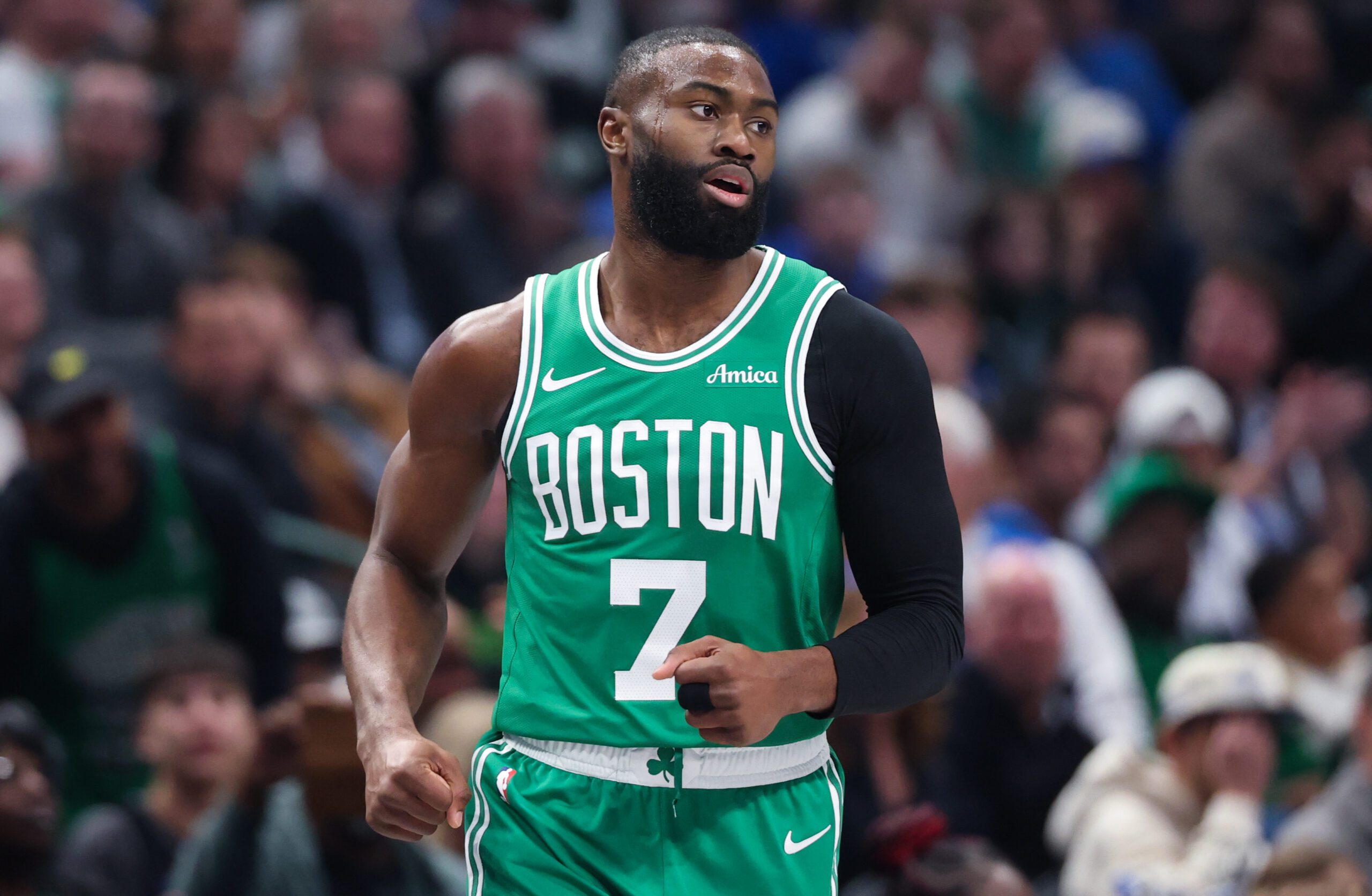
Jaylen Brown heading to the 76ers is the latest shock to hit one of the NBA’s most tradition-heavy franchises. Even with all the rumors, the offseason drama, the pettiness of the situation and all, trading Brown for a 36-year-old Paul George is one move that nobody saw coming.
Because in Boston, trades aren’t just transactions. They’re turning points. Some built dynasties while others tore them down. And some moves made perfect basketball sense, but broke a few hearts along the way.
So this isn’t just about the “best” trades. It’s about the biggest ones. The deals that shifted eras, redefined identities, and left a mark on Celtics history as they moved franchise icons, modern stars, and some of the most loyal players they’ve had.
Let’s rank them.
10. Moving Timelord For The Final Piece Of The Puzzle
Boston Celtics Receive: Jrue Holiday
Portland Trail Blazers Receive: Malcolm Brogdon, Robert Williams III, 2024 first-round pick, 2029 first-round pick
This wasn’t the flashiest move, but it might’ve been the one that gave them an eighteenth banner, at the cost of one big fan favorite.
Boston paid a real price to land Jrue Holiday before the 2023-24 season, sending out two key rotation players and future picks. But the logic was simple: the Celtics needed a steady, elite two-way guard who could fit without disrupting the offense.
Holiday’s numbers didn’t jump off the page at all: 12.5 points, 5.4 rebounds, 4.8 assists, but his impact showed up everywhere else. Defense, decision-making, timely scoring. In the playoffs, he delivered exactly what Boston needed.
No drama. No adjustment period. Just winning. But the Celtics moved Robert Williams III in the trade, which definitely hurt. Williams had been in Boston for five seasons after the Celtics drafted him No. 27 in 2018, and he became one of the easiest players for fans to love because his game was simple in the best way: protect the rim, catch lobs, block shots, run the floor, and play with crazy energy.
His peak came in 2021-22, when he averaged 10.0 points, 9.6 rebounds, 2.0 assists, and 2.2 blocks while shooting 73.6% from the field. He made the All-Defensive Second Team that season and helped Boston reach the NBA Finals, so he was not just a fun bench piece. He was part of the Celtics’ best defensive version.
That is why the trade had an emotional cost. Williams had signed a four-year, $48.0 million extension with Boston in 2021, and even if his knees made everything complicated, fans still saw him as “Time Lord,” the homegrown big man who changed shots without needing the ball. He only played 35 games in 2022-23, but he still averaged 8.0 points, 8.3 rebounds, and 1.4 blocks in 23.5 minutes, and that was enough to remind everybody what he could be when his body allowed it.
So yes, Holiday came in and helped Boston win right away. But the Celtics had to move a real fan favorite, a former All-Defensive player, and one of the most loved pieces of the Tatum-Brown era to get there.
9. Ray Allen Lit The Fuse
Boston Celtics Receive: Ray Allen, Glen Davis draft rights
Seattle SuperSonics Receive: Wally Szczerbiak, Delonte West, Jeff Green draft rights
Before Kevin Garnett, before the 66 wins, before Banner 17, the Celtics first had to look like a serious team again. That started with Ray Allen.
Boston traded for him on draft night in 2007, sending Wally Szczerbiak, Delonte West, and the draft rights to Jeff Green to the SuperSonics. For a team that had just gone 24-58 in 2006-07, this was not a low-key move. It was Boston saying the rebuild was over, or at least that Paul Pierce was not going to spend more years waiting around with only young pieces and hope.
Allen was also not just an old shooter when he arrived. He was 31 and still coming off a huge season in Seattle, where he averaged 26.4 points, 4.5 rebounds, and 4.1 assists, shooting 43.8% from the field and 37.2% from three. He had made seven All-Star teams already, and he was still one of the best pure offensive guards in the league.
Pierce had averaged 25.0 points, 5.9 rebounds, and 4.1 assists in 2006-07, but he only played 47 games, and the Celtics were going nowhere. Allen gave him a real co-star, and more importantly, he made the Celtics look like a team worth joining. Without Allen, the Garnett trade probably becomes much harder because Garnett was not leaving the Timberwolves just to join another bad team. Allen changed the picture.
Then the role changed fast once Garnett arrived, and Allen accepted it. In 2007-08, he averaged 17.4 points, 3.7 rebounds, and 3.1 assists, shooting 44.5% from the field and 39.8% from three. The scoring went down, but the value did not. His spacing helped Pierce attack, helped Garnett work from the elbows and post, and forced defenses to chase him through screens all night. That kind of gravity does not always show in the box score, but it changed how Boston’s offense worked.
He also came through in the playoffs. Allen averaged 15.6 points in the 2008 postseason and shot 39.6% from three, then scored 26 points in Game 6 of the NBA Finals against the Lakers. That was the closeout game, the night Boston won by 39 and finished the job. So no, this was not the final championship move by itself. But it was the move that made the whole championship run possible.
8. The Tatum Heist Still Looks Insane
Boston Celtics Receive: No. 3 pick, future first-round pick
Philadelphia 76ers Receive: No. 1 pick
This trade is still crazy because the Celtics had the No. 1 pick in the 2017 NBA Draft, traded down to No. 3, got another future first-round pick, and still ended up with Jayson Tatum.
The 76ers moved up for Markelle Fultz, who was seen by many people as the top guard in the draft, while the Celtics trusted their board and waited for Tatum at No. 3. That is why this deal aged like one of the best front-office wins of the last 20 years. The Celtics not only got the better player, but they did it while adding another asset.
At the time, this was not emotional in the same way as trading Marcus Smart or Isaiah Thomas. It was more about draft risk. Fans did not all agree, because Fultz had real hype, Josh Jackson was also in the mix, and nobody knew if Tatum would become a franchise player. But once Tatum started playing, the logic looked better fast. He averaged 13.9 points, 5.0 rebounds, and shot 43.4% from three as a rookie, then helped the Celtics reach Game 7 of the 2018 Eastern Conference Finals with Kyrie Irving and Gordon Hayward injured.
The trade became even bigger because Tatum kept rising. In 2023-24, he averaged 26.9 points, 8.1 rebounds, and 4.9 assists, then helped lead the Celtics to Banner 18. He became a multiple-time All-NBA player, a top-scoring forward, and the face of the next Celtics title team.
That is why this trade is No. 8. It did not break the fanbase on the day it happened, and it did not have the same emotional hit as the Brown trade, but it changed the Celtics’ future. The Celtics beat the 76ers in asset value, player value, and long-term team building. For a rival deal, that is about as good as it gets.
7. Isaiah Thomas Became Boston’s Heart
Boston Celtics Receive: Isaiah Thomas
Phoenix Suns Receive: Marcus Thornton, 2016 first-round pick
This trade didn’t look that big when it happened. The Celtics got Isaiah Thomas from the Suns in 2015 for Marcus Thornton and the Cavaliers’ 2016 first-round pick, and on paper, that looked like a smart move for bench scoring.
Thomas was small, had already moved teams with the Kings before, and wasn’t treated like a franchise player. Then he arrived with the Celtics and gave the team something it badly needed after the Paul Pierce and Kevin Garnett era ended: a real emotional identity.
Thomas made the rebuild feel alive. He was 5-foot-9, but he played with no fear, and the Celtics fanbase connected with that right away. He could get downhill, shoot off the dribble, draw fouls, and close games in a way that made every fourth quarter feel important. This was not a title team yet, but Thomas made it feel like a team with a soul, and that matters in a city that doesn’t care much about patient losing.
The numbers became crazy in 2016-17. Thomas averaged 28.9 points and 5.9 assists in 76 games, shot 46.3% from the field and 37.9% from three, finished fifth in MVP voting, and made the All-NBA Second Team. The Celtics went 53-29, finished first in the East, and reached the Eastern Conference Finals. That season became Thomas’ career peak, and it marked the start of something new brewing.
The human part is why the trade is bigger than normal. Thomas played through a hip injury, carried a huge offensive load, and kept playing in the playoffs after his sister died. That made the connection with fans deeper than just stats. For a few seasons, he was not only the point guard. He was the reason Celtics games felt personal.
That is why this deal is No. 7. Thomas didn’t win a title, but the Celtics traded very little and got one of the most loved players of the modern era. Thomas gave them two All-Star seasons, one All-NBA season, and a bridge from the old era to the Tatum and Brown era. For a trade that looked small at first, that is a huge result.
6. Trading Marcus Smart For A Title Still Hurts
Boston Celtics Receive: Kristaps Porzingis, 2023 first-round pick, 2024 first-round pick
Memphis Grizzlies Receive: Marcus Smart
Washington Wizards Receive: Tyus Jones, Danilo Gallinari, Mike Muscala, 2023 second-round pick
This was the move that felt wrong in the stomach, even if the basketball idea made sense. The Celtics moved Marcus Smart to the Grizzlies in a three-team trade and got Kristaps Porzingis plus two first-round picks. The Wizards got Tyus Jones, Danilo Gallinari, Mike Muscala, and a second-round pick.
Smart was not the best Celtics player, but he was the player who felt most like the team’s personality. He played nine seasons with the Celtics, from 2014 to 2023, and he was there before the roster became a champion. He was there for early Tatum, early Jaylen Brown, the Kyrie mess, the bubble run, the 2022 Finals, and all the almost seasons. His Celtics averages were not huge at 10.6 points, 4.6 assists, and 3.5 rebounds, but his impact was never just box score numbers.
His best individual moment came in 2021-22, when he won Defensive Player of the Year. Smart became the first guard to win the award since Gary Payton in 1995-96, and the Celtics had the league’s best defense that season. Smart started all 71 games he played, averaged 12.1 points, 5.9 assists, 3.8 rebounds, and 1.7 steals, and helped the Celtics reach the NBA Finals. That is why moving him was not like moving just a guard. It was moving the voice of the group.
Porzingis made the trade work, as hard as it was. In 2023-24, he averaged 20.1 points, 7.2 rebounds, 2.0 assists, and 1.9 blocks in 57 games. He shot 51.6% from the field and 37.5% from three, giving the Celtics a different frontcourt shape with rim protection, post scoring, and spacing.
This trade could really rank higher because it was painful, but it delivered a title at the same time. The Celtics traded a fan favorite, a Defensive Player of the Year, and the emotional guard of the whole era. Then they won the 2024 title with the new version of the roster, and while it doesn’t erase the pain, it explains why the front office did it.
5. Kevin Garnett Turned A Bad Team Into A Champion
Boston Celtics Receive: Kevin Garnett
Minnesota Timberwolves Receive: Al Jefferson, Ryan Gomes, Gerald Green, Sebastian Telfair, Theo Ratliff, two first-round picks
The Kevin Garnett trade is the moment the Celtics stopped waiting and just went for the title. The Celtics had already added Ray Allen, but Garnett made the whole thing a real championship roster. They sent Al Jefferson, Ryan Gomes, Gerald Green, Sebastian Telfair, Theo Ratliff, a 2009 first-round pick, and the return of the Wolves’ conditional first-round pick to the Wolves for Garnett. The Celtics landed a 10-time All-Star and 2004 MVP, and that is exactly what changed the level of the team right away.
The jump was anything but expected; it was really an increase in wins for the ages. The Celtics went 24-58 in 2006-07, then 66-16 in 2007-08 while finishing the season with a title. That is a 42-win improvement that’s just impossible to beat.
Garnett was the main reason the team changed that fast. He averaged 18.8 points, 9.2 rebounds, 3.4 assists, 1.4 steals, and 1.3 blocks in his first Celtics season, finished third in MVP voting, won Defensive Player of the Year, and helped the Celtics win the championship.
The trade cost was obviously huge, as good as the move became instantly. Jefferson was only 22 and had just averaged 16.0 points and 11.0 rebounds for the Celtics. He looked like a young frontcourt piece who could become an All-Star. Gomes, Green, Telfair, Ratliff, and the picks added volume to the package, but when a player like Garnett is available, and Pierce is already in his prime, waiting for the young group to grow can become a trap.
With Garnett in town, the Celtics had size, toughness, half-court scoring, and a defense that treated every possession like a fight. The 2007-08 team finished first in defensive rating and won the title over the Lakers, so the payoff came right away.
That is why this trade is one of the best win-now moves ever. It brought Banner 17, saved the Pierce era, and gave the Celtics a team fans still talk about like it was bigger than one season.
4. The Nets Trade Was Pain First And Genius Later
Boston Celtics Receive: Gerald Wallace, Kris Humphries, MarShon Brooks, Keith Bogans, Kris Joseph, first-round picks in 2014, 2016, 2018, and a 2017 first-round pick swap
Brooklyn Nets Receive: Paul Pierce, Kevin Garnett, Jason Terry, D.J. White
This trade was sad before it became famous as a robbery. The Celtics sent Paul Pierce, Kevin Garnett, Jason Terry, and D.J. White to the Nets in 2013, and got back Gerald Wallace, Kris Humphries, MarShon Brooks, Keith Bogans, Kris Joseph, first-round picks in 2014, 2016, and 2018, plus the right to swap first-round picks in 2017.
The emotional part was letting a franchise icon like Pierce leave. He played 15 seasons with the Celtics, scored 24,021 points for the franchise, made 10 All-Star teams with the team, and won the 2008 Finals MVP.
He had been there through bad teams, trade rumors, injuries, the title, and the 2010 Finals loss. Garnett had only been with the Celtics for six seasons, but he also changed the team forever because he was the defensive and emotional engine of the 2008 champion. Moving both together felt like the official end of the era.
The Nets wanted to win right away. They had Deron Williams, Joe Johnson, Brook Lopez, and now Pierce and Garnett. The idea was understandable with their relocation to Brooklyn, but Pierce was 35, and Garnett was 37. The Celtics were looking at the same situation and seeing the opposite thing. They knew the title window was gone, so they sold the names before the value disappeared.
The trade became huge because the Nets fell off fast. The 2016 first-round pick became Jaylen Brown at No. 3. The 2017 pick swap helped the Celtics get the No. 1 pick, which then became the Tatum trade-down. The end of Pierce and Garnett basically became the start of Brown and Tatum. That is wild team-building, even if it was painful at the start.
This move completely hurt fans in the moment because Pierce and Garnett were gone. Then it became the asset pile that helped build the next Celtics champion. A trade that ends one era and starts another one has to be this high.
3. The Celtics Broke Isaiah Thomas’ Heart For Kyrie Irving
Boston Celtics Receive: Kyrie Irving
Cleveland Cavaliers Receive: Isaiah Thomas, Jae Crowder, Ante Zizic, 2018 first-round pick, 2020 second-round pick
After everything Isaiah Thomas did for the Celtics in a really weird time for the rebuild, trading him that coldly, even for a superstar guard, must be this high for me.
The Celtics traded Thomas, Jae Crowder, Ante Zizic, the Nets’ 2018 unprotected first-round pick, and later a 2020 second-round pick to the Cavaliers for Kyrie Irving, who was fresh off a title run with the Cavaliers and a Finals appearance the following season.
From a basketball side, there was really absolutely no debate about making that call. Irving was 25, already a champion, and had just averaged 25.2 points and 5.8 assists for the Cavaliers in 2016-17. Thomas was 28, smaller, injured, and going into a contract situation. The front office saw a chance to turn a great story into a star upgrade and did it, so pointing fingers wasn’t the main issue.
The problem was that Thomas didn’t become a trade piece to fans. He had averaged 28.9 points and 5.9 assists in 2016-17, made the All-NBA Second Team, finished fifth in MVP voting, and led the Celtics to the No. 1 seed in the East. He also played through a hip injury and through the death of his sister during the playoffs, where he scored 53 points in one of the most emotional moments of all NBA history.
The Irving era did not pay back that emotional cost, and that’s the main reason for the anger. He averaged 24.4 points and 5.1 assists in 2017-18, but he missed the playoff run. He averaged 23.8 points and 6.9 assists in 2018-19, but that season became awkward fast, and the Celtics lost in the second round before Irving left for the Nets. So the Celtics took the loyalty hit and did not get a title from it.
The move was cold NBA business at the highest level. The talent logic was understandable, but the human part was brutal. Thomas gave the Celtics everything he had, and the team moved him right after it. Fans can get the move and still hate how it felt.
2. The Jaylen Brown Trade Is A Modern Celtics Earthquake
Boston Celtics Receive: Paul George, 2028 first-round pick swap, 2031 first-round pick, 2028 second-round pick, 2030 second-round pick
Philadelphia 76ers Receive: Jaylen Brown
The Jaylen Brown trade is already No. 2 because it is one of the biggest shocks in modern Celtics history. The Celtics sent Brown to the 76ers for Paul George, a 2028 first-round pick swap, an unprotected 2031 first-round pick, and second-round picks in 2028 and 2030.
What makes it even more brutal is that the 76ers are direct Celtics rivals, and even worse, they just came back from a 3-1 deficit to eliminate Boston in the first round only a few months ago, despite the Celtics being the No. 2 seed.
Brown wasn’t just another star on the roster. He was drafted by the Celtics in 2016, developed next to Tatum, survived years of trade rumors, won the 2024 championship, and won Finals MVP. He had become part of the Celtics’ modern identity. The Jays were the rare duo that lost together, learned together, got criticized together, and finally won together. Breaking that up was always going to be a massive deal, especially with all the fake trades Brown had to endure for years.
The timing makes it even more shocking. Brown had just averaged 28.7 points, 6.9 rebounds, and 5.1 assists in 2025-26, finished sixth in MVP voting, and took on more responsibility with Tatum injured.
Paul George is still a huge name, but this is not prime George anymore. He is 36, he has missed too much time, and he is coming off a season where he averaged only 17.3 points in 37 games while playing on a $54.0 million contract. That is a hard sell when Brown just had the best season of his career and is still in his prime.
Ending the Jays era with such an underwhelming return was always going to be huge. It also sent Brown to the 76ers, where he joins Joel Embiid and Tyrese Maxey to compete for a title instantly next season, as Brown will face the Celtics a lot of times, and maybe even have the chance to eliminate them in the postseason. If the Celtics have to witness that scenario, this trade will feel even a bigger sell.
1. The Bill Russell Trade Created The Celtics Dynasty
Boston Celtics Receive: Bill Russell draft rights
St. Louis Hawks Receive: Ed Macauley, Cliff Hagan
There is no other argument for No. 1 when it includes the most winning player of all time. The Celtics trading for Bill Russell’s draft rights in 1956 is the biggest in franchise history, and one of the most important trades in NBA history. The Hawks selected Russell with the No. 2 pick and traded his rights to the Celtics for Ed Macauley and Cliff Hagan. That one move changed everything about the Celtics and everything about the league.
Russell won 11 championships in 13 seasons with the Celtics. That number is still hard to even explain in a modern NBA, as they even had a run of eight straight championships. No other trade on this list comes close to that kind of title return.
His career averages were 15.1 points, 22.5 rebounds, and 4.3 assists, but the numbers still don’t fully show the player he was. Russell changed games with defense, rebounding, shot-blocking, outlet passing, and leadership. He never had to chase scoring numbers because his whole value was making the Celtics impossible to beat. He became the center of a dynasty and the reason the franchise became the icon people know now.