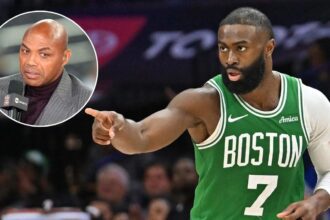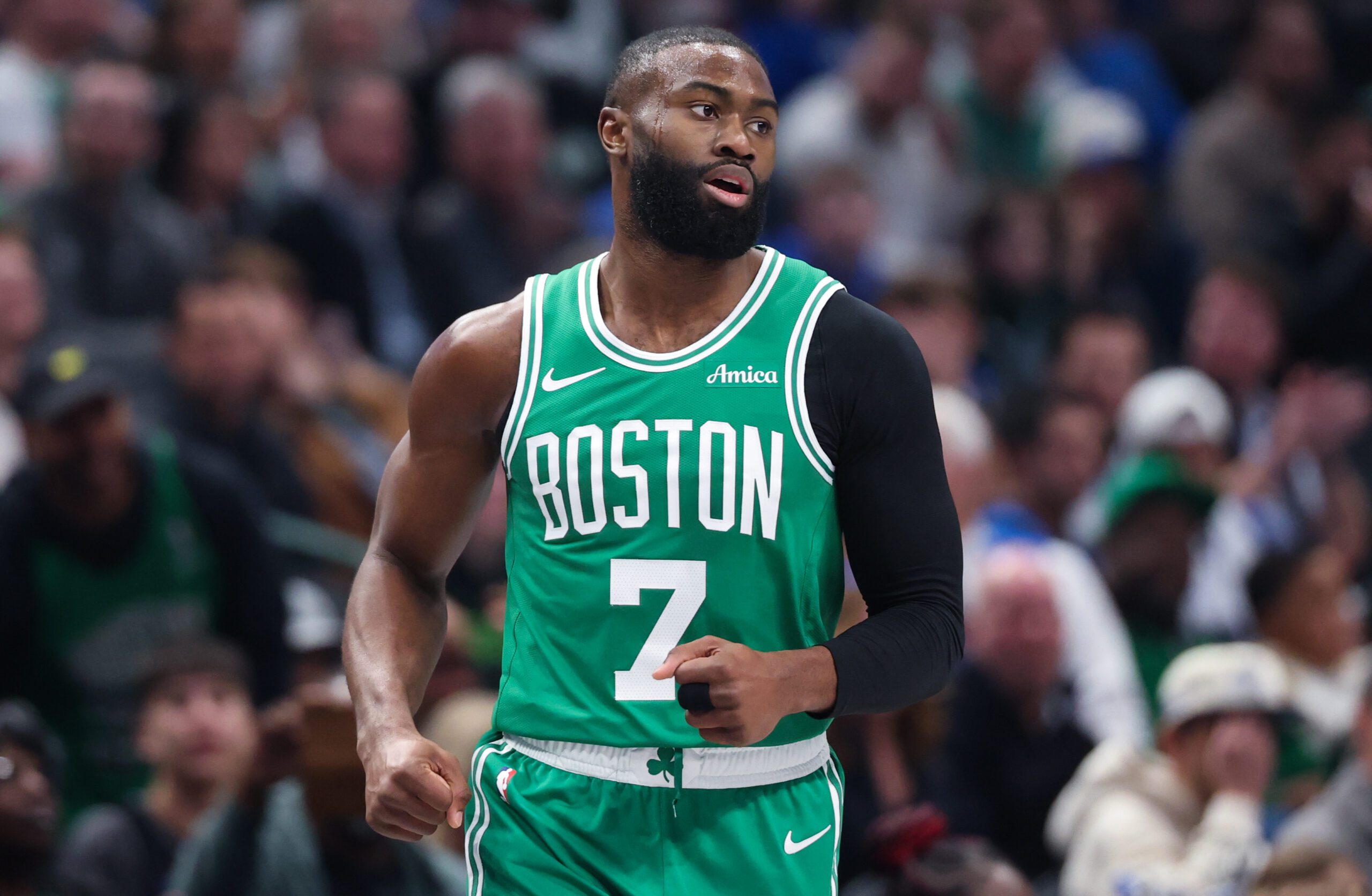
The Boston Celtics sending Jaylen Brown to the Philadelphia 76ers is a big shocker, even with all the previous reporting attached to it. This is one that, amid all the rumors and drama, you wouldn’t have really thought would happen. It marks the end of an important era for the team after
Brown arrived in Boston in 2016 as a No. 3 draft selection. Over 10 seasons, he became a five-time All-Star, won the 2024 NBA Finals MVP and formed one half of the team’s main duo with Jayson Tatum.
According to Shams Charania’s reports, the Celtics agreed to trade Brown for Paul George plus two first-round picks and two second-round picks. ESPN said the picks include a 2028 first-rounder that can be swapped and an unprotected 2031 first-rounder.
It is, by all means, an underwhelming return, no matter the “7th best player on a team” by ESPN analyst Bobby Marks. Brown just had his best season as an NBA player: 28.7 points, 6.9 rebounds, and 5.1 assists per game. He finished sixth in MVP voting and is still in his prime at 29 years old, carrying the Celtics to a 2nd seed without Jayson Tatum for more than 60 games.
This absolute blockbuster didn’t happen because Brown demanded a trade. On the contrary, Shams Charania claimed he never asked out of the franchise, so the Celtics simply didn’t want him anymore.
Here are the main reasons why Boston decided to move one of their most iconic players in recent history for a less-than-ideal haul.
1. The Failed Giannis Pursuit Doomed The Relationship
Boston tried hard to get Giannis Antetokounmpo. They even offered Brown as the main piece in a package before the Bucks sent Giannis to the Heat. Every team wants a player like Giannis. Pairing him with Tatum would have been very strong. But for Brown, hearing his name in that offer changed things.
A player knows basketball is business. But seeing yourself as the key piece in a failed trade for another star is different. Brown had just helped win a title and played like the No. 1 option when Tatum was out.
After missing out on Giannis, the Celtics had a choice: repair things with Brown or keep listening to other offers. They chose to keep exploring the market, and I feel like that decision made trust harder to fix.
2. The Celtics Kept Shopping Brown After The Giannis Trade
Brown never asked to be traded. But reports say the Celtics spoke with over 10 teams about him and asked for big packages, sometimes up to four first-round picks.
This came right after his best season. The constant rumors made the situation difficult and while Brown had been in trade rumors before, this time felt worse.
The front office showed they saw him more as an asset than a player they wanted to keep forever, regardless of Giannis’ value as one of the best players in the league.
Keeping him after all that noise would have been awkward for the locker room, too. Questions about his future would come up all season. The Celtics decided it was better to end the drama now and move forward with a new group around Tatum, now featuring new faces in George, Mike Conley, and Mitchell Robinson.
3. The Big Contract And Future Salary Implications
Money also played a big role. Brown has three years left on his big extension: around $57.1 million next season, $61 million in 2027-28, and $65 million in 2028-29.
He is still excellent, but his style is physical. Paying that kind of money deep into his 30s is a risk. Boston already has Tatum on a supermax and faces tough rules under the new CBA.
Paul George’s contract is shorter. He is set for $54.1 million next season with a $56.6 million player option for 2027-28. That gives Boston more flexibility to build around Tatum in the future after his money expires from the books.
Plus, the draft picks give the Celtics extra tools for future moves. Not like they have much more room to make another play like this, but it’s still an asset.
Final Thoughts
The Celtics did not trade Jaylen Brown because he stopped being a star. They did it because the relationship was damaged, the trade market was active, and the long contract was becoming too heavy, as a brand new extension next year would have reached potentially the two-year, $140.0 million mark or even more, making $70+ million deep in his 34 or 35 years of age.
Brown gave 10 good years to Boston, won a championship, and Finals MVP. He did not force his way out.
For the Celtics, this was a cold but clear front-office decision. They got a shorter contract, good draft assets, and a cleaner financial future around Tatum.
Was this the right trade to make? Well… I don’t really think so. Paul George is 35, with a long injury history in recent seasons, just put up 17.3 points, 5.3 rebounds, and 3.6 assists across 37 appearances, and definitely won’t be an upgrade for the Celtics’ contending case.