The Timberwolves got tired of waiting. After another solid, but ultimately disappointing playoff run, they made the kind of move that actually reshapes a roster.
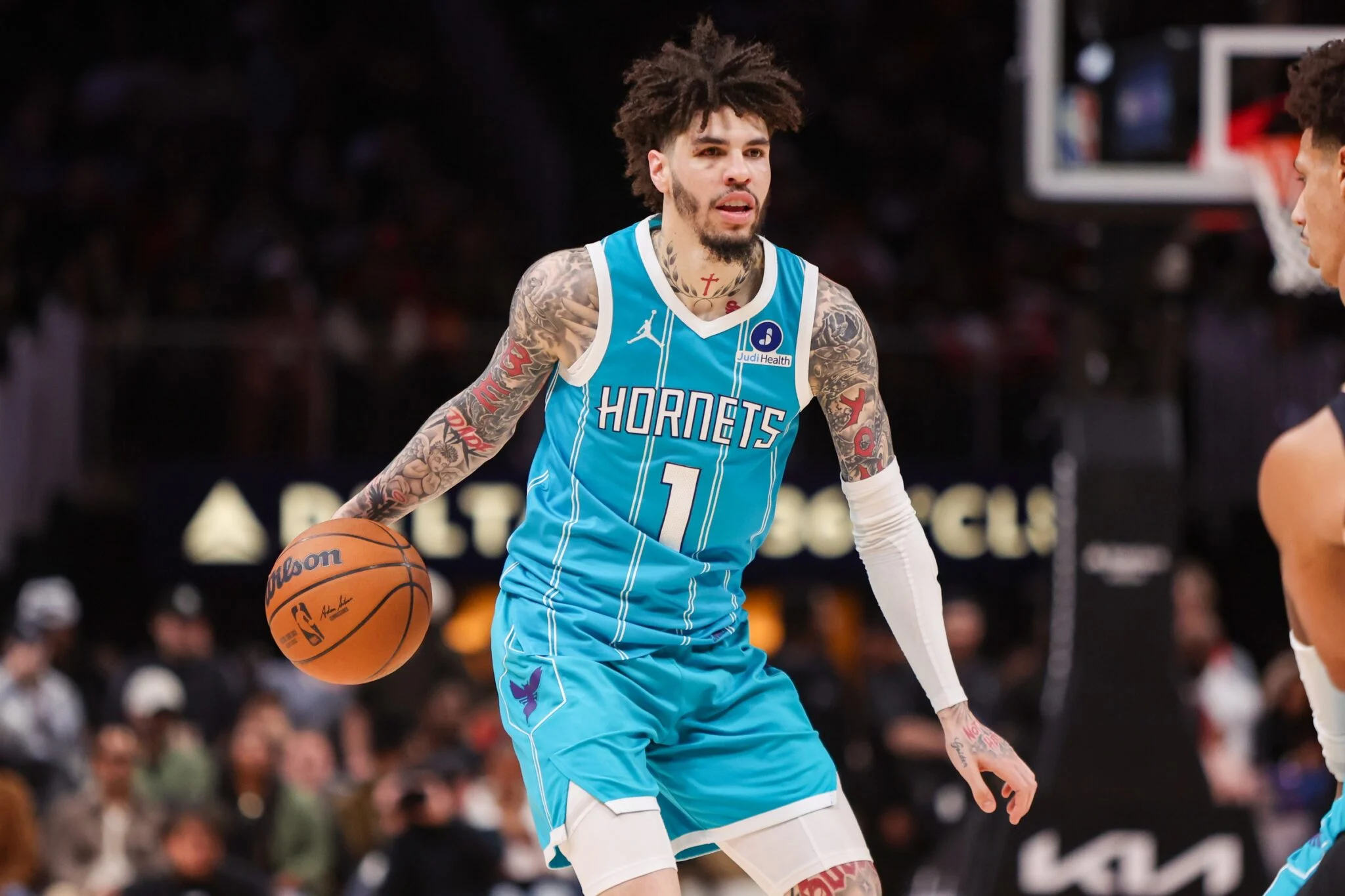
As Shams Charania reported for ESPN, LaMelo Ball is heading to Minnesota along with Josh Green, while Charlotte walks away with Naz Reid and a hefty collection of future picks and swaps.
Both sides are making a serious bet here. Minnesota is finally putting a real offensive creator next to Anthony Edwards. Charlotte is moving on from their franchise guard right after the team had arguably its best season in years.
Trade Details
Minnesota Timberwolves Receive: LaMelo Ball, Josh Green
Charlotte Hornets Receive: Naz Reid, 2028 first-round pick swap, 2029 first-round pick swap, 2030 first-round pick swap, 2033 unprotected first-round pick, 2029 second-round pick, 2032 second-round pick, 2033 second-round pick
The Timberwolves finished 49-33, landed sixth in the West, and got bounced in the second round by the Spurs. They were a good team. Just not a total contender. Their offense checked in at 116.8 (12th in the league) while the defense sat at 113.5, good for eighth. Solid numbers, but not enough when the Western Conference is loaded with teams that can become championship threats.
The Hornets went 44-38, squeezed into ninth in the East, and put up a 119.4 offensive rating, fifth best in the league. That was a real step forward for a team that looked aimless early in the year. LaMelo Ball, Brandon Miller, and Kon Knueppel had started to build something worth watching. Which is exactly what makes this trade complicated. The Hornets didn’t trade a star off a sinking ship. They traded him off a team that had just started figuring things out.
Timberwolves Grade: A-
This is a genuine all-in move, and honestly, it makes sense. LaMelo averaged 20.1 points, 4.8 rebounds, and 7.1 assists across 72 games last season, shooting 40.7% from the field, 36.8% from three, and 89.9% from the line.
He also knocked down 3.8 threes per game, so the spacing element is not just on paper. He’s a big guard who reads the game early, moves the ball, and creates plays that Minnesota simply didn’t have at the point guard position.
Put simply, this is the best offensive running mate Edwards has ever had. That’s really the whole argument for the trade.
Edwards put up 28.8 points, 5.0 rebounds, and 3.7 assists in 61 games, shooting 48.9% from the field and 39.9% from three. Those are superstar numbers by any standard, but the usage load was unsustainable. Too many possessions were ending with Edwards having to manufacture something against a locked-in defense. That works in spurts. Over a seven-game playoff series, it falls apart.
Ball changes that dynamic. He brings pace, early passing, pull-up shooting, and easier touches for Rudy Gobert. Gobert had 10.9 points and 11.5 rebounds while converting 68.2% of his shots. He needs guards who actually see his rolls. Ball does. He throws lobs naturally, finds the right angles, and can genuinely punish defenses that send a second body at Edwards.
Josh Green is a reasonable add-on, too. His raw numbers (4.3 points, 1.8 rebounds, 0.8 assists) don’t jump off the page, but he shot 45.9% from the field and 42.0% from three. He runs the floor, plays with effort on defense, and fits around a core of Edwards, Ball, Jaden McDaniels, Ayo Dosunmu, and Gobert. His $14.7 million salary is on the heavy side for his role, but he contributes.
Losing Naz Reid genuinely hurts, though. He was at 13.6 points, 6.2 rebounds, and 2.2 assists while shooting 45.6% from the field and 36.2% from three as a sixth man. He was their versatile forward, their bench anchor, and a player who gave them a completely different look when Gobert sat. That kind of flexibility doesn’t get replaced easily.
Still, the Wolves kept Edwards, McDaniels, Gobert, and Dosunmu intact. That’s a win. The 2033 unprotected first can bite them down the road, and the swaps carry real risk, but that’s the price you pay to add a 24-year-old offensive star.
The grade stops at A- because Ball still has legitimate playoff questions. He has never played high-stakes basketball. His defense is a real weakness. His shot selection can go off the rails. But the upside here is too significant to dismiss.
The Timberwolves needed a second creator. Now they have one.
Hornets Grade: B-
This one is harder to evaluate. The Hornets walked away with solid draft capital and a genuinely useful player in Reid. But they also gave up the most talented person in the deal. That always comes with a cost.
Even with all the trade noise behind him at the start of the season, Ball was not just a good guard on a rebuilding team. He was the face of the franchise. He averaged 20 and 7, stayed healthy for 72 games, and helped fuel a top-five offense. Charlotte’s offensive rating with Ball on the floor last season was 120.1. That’s not a small number. Even accounting for his questionable shot selection and defensive effort, the offense was meaningfully better because of him.
The front office clearly made a long-term call. They probably didn’t want to lock in around Ball’s max extension, with $37.9 million owed in 2025-26 and a five-year, $203.9 million deal on the books. For a player who has never seen a playoff game and still has defensive concerns, that’s a reasonable hesitation.
What Charlotte has now: Brandon Miller, Kon Knueppel, Naz Reid, a handful of future swaps, and a 2033 unprotected first. Miller averaged 20.2 points, 4.9 rebounds, and 3.3 assists. Knueppel posted 18.5 points, 5.3 rebounds, and 3.4 assists as a rookie while shooting 47.5% from the field and 42.5% from three. That’s a genuinely promising young wing foundation.
Reid fits the timeline. He can shoot, score in the mid-range, play center in small-ball lineups, and give Miller and Knueppel a reliable frontcourt partner right now. His five-year, $125 million deal isn’t light, but he’s 26. This isn’t a pick up for five years from now.
The issue is value. For a 24-year-old former All-Star, the return doesn’t feel like a star-level trade haul. Reid is good. He is not a franchise piece. The picks are far out, and the swaps only pay off if Minnesota falls, which isn’t guaranteed by any stretch.
This trade has a real chance to look better in a few years if that 2033 pick lands in the lottery or if one of the swaps turns into something useful. But right now, today, Charlotte lost their best player and didn’t bring back anyone with comparable upside.
They gained flexibility. They gained picks. They gained a quality big man. But they also got noticeably less dangerous after a great post-All-Star run.
That’s why this sits at B-.
LaMelo Ball Grade: A
Honestly, this is a great landing spot for him. Ball needed a change of scenery. Somewhere he wasn’t carrying the full weight of a franchise every single night. In Charlotte, everything traced back to him. The wins, the losses, the style of play, the injuries, the attitude questions, all of it. That’s a heavy load for a 24-year-old who was still developing.
In Minnesota, the setup is just better. Edwards is the unquestioned number one. Ball can run the offense without being the primary scorer, which is probably the version of him that actually works at the highest level. Push pace in transition, run pick-and-roll, find Gobert rolling, hit McDaniels in the corners, create easier catch-and-shoot looks for Edwards. He doesn’t need to drop 28 points. He needs to make the offense breathe.
His numbers already back this up. 20 points and 7 assists, 3.8 threes per game on great volume. Defenses can’t sag off him, which opens the floor for everyone else around him.
The real question is whether he can adapt to winning basketball. Ball cannot approach this like a highlight-reel team. Minnesota is not rebuilding. They are pushing for a championship. Loose early-clock threes, soft defensive possessions, and careless turnovers will get noticed here. Edwards will demand more. The entire environment demands more.
That’s actually a good thing for him, though. This is the first time Ball will share a floor with a legitimate superstar wing in his prime. If he accepts the role and buys in, this move could genuinely elevate how he’s perceived around the league. His individual numbers might not spike, but his value as a winning player absolutely can.
For Ball personally, this is close to ideal. A contending team, a star teammate, real defensive structure around him, and a genuine opportunity to rewrite his career narrative.
Now he has to go prove it.
Anthony Edwards Grade: A
This trade is good for Edwards, full stop. He needed more help. Not another ball-dominant scorer. He needed a guard who passes first, shoots when open, and takes pressure off the offense before the defense can set up.
There were rumors about Edwards being unhappy with the team since the Karl-Anthony Towns trade. After the postseason, questions started to rise about his long-term future with the Timberwolves. Now the team has delivered on its promise to find better help for him.
Edwards averaged 28.8 points on strong efficiency, but Minnesota’s playoff offense still cratered to 108.3 points per 100 possessions with him injured and unhealthy. That’s the root cause of this trade. Regular-season offense is manageable. Playoff offense is a different problem. Ball comes in to scratch the mistakes of the past playoff performance.
The best part for Edwards is that nothing about his own game has to change. He doesn’t need to become a point guard like Devin Booker had to do. He doesn’t need to force-feed the offense himself on every possession. He can attack closeouts, run in transition, and catch the ball against a defense already rotating. That’s a much better use of his athleticism and scoring ability.
This trade also sends a clear message from the front office. They didn’t just say they’re hoping Ant stays. They spent real future assets to give him a co-star. That matters to players. Edwards is young, but the whispers were already starting to creep in.
The one genuine risk here is fit. Both Edwards and Ball play big, loud, high-volume basketball. That combination can be exciting. It can also get complicated. Edwards has to stay the clear first option, and Ball has to internalize that without any ego.
But if the roles stay defined, Edwards gets easier looks, more space to operate, and a little less physical wear every night. This trade is good for his game, his body, and his playoff ceiling.
Final Thoughts
Minnesota wins this trade today, and it’s not particularly close. They got the best player in the deal and kept their core intact. Ball is far from perfect, but guards with his combination of passing, shooting range, size, and age don’t come available very often. For a team that already has Edwards, this is the right kind of calculated risk.
The Hornets didn’t get fleeced, but the return feels more like a long-term project than a star-for-star swap. Reid is a good player. The 2033 unprotected first has serious potential. The swaps can matter. But giving up Ball right after a 44-38 season and a top-five offense is a significant decision, and the return doesn’t quite match the weight of it.
This trade ultimately gets judged on two questions. Can Ball become a winning guard alongside Edwards? And can Charlotte turn these picks into something real, either by hitting on them or packaging them in another move?
For now, Minnesota looks sharper, more creative offensively, and more dangerous in a loaded Western Conference. Charlotte looks more flexible, but also much less exciting.
Final grades: Timberwolves A-, Hornets B-, LaMelo Ball A, Anthony Edwards A.