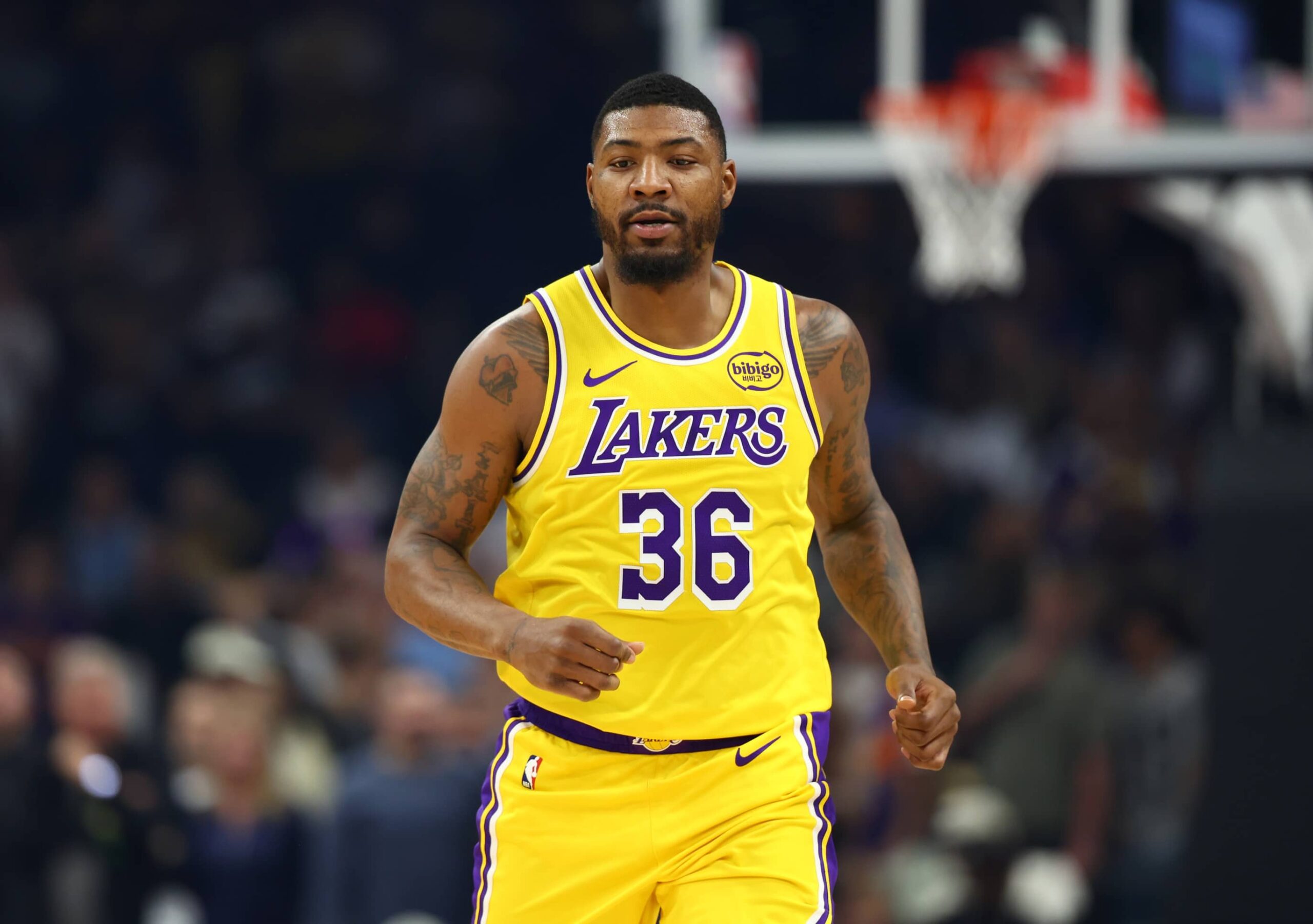
If Marcus Smart departs as a free agent, the Lakers will surely miss him for one thing that comes in quite literally. The team won’t have a problem replacing his points or minutes because they’ll surely find other players to fill his place. However, finding another guy to replace his defense and his mentality is going to be extremely difficult.
According to Shams Charania, Smart opted out of his $5.4 million option and will now be an unrestricted free agent. The move seems quite easy for him since he revived some of his value during the last season. He started in 54 of the 62 games he played and averaged 9.3 points, 3.0 assists, 2.8 rebounds, and 1.4 steals per game.
While he may not be as athletic as he once was, he’s strong, active-handed, has good instincts, and, most importantly, that competitive edge on the defensive end of the floor. The Lakers need a player like that because their roster is built around offense right now. Luka Doncic is the main engine. Austin Reaves just signed a four-year, $185 million extension. LeBron James remains a question mark, as the Warriors rumors are growing larger every day.
The good news is that Deandre Ayton opted into his $8.1 million player option, which gives the team some frontcourt size and depth there. But none of that solves their problems defending at the point of attack.
The defensive numbers from last season tell the story. The Lakers finished with a 116.4 defensive rating last season, ranked 19th in the league. That simply isn’t a good sign for a team that wants to contend around Luka and Reaves. They need guards who can fight through screens, stay glued to their man, pressure the ball handler, and take some of the toughest defensive assignments away from Luka.
Smart was the best version of that kind of player on the roster last year. If he leaves, the Lakers cannot just go out and sign another shooter and hope the defense holds up. They need a real defensive guard who can make an impact right away.
Here are four free-agent targets they should look at seriously as backup plans.
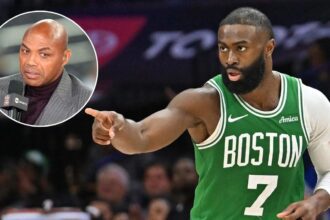
4. Jevon Carter
It won’t be a flashy name, but that is exactly why Jevon Carter could be a smart fit. Depending on how things play out with LeBron and the rest of the roster, the Lakers might not have a ton of cap space if Smart departs. Carter represents a low-cost option who can still bring consistent defensive pressure, especially during the regular season.
Last season, Carter averaged 6.4 points, 1.7 rebounds, and 1.6 assists while shooting 40.1% from the field and 36.3% from three. Those numbers are not going to excite anyone, but that’s not the point. The Lakers would not be signing him to be another offensive engine. They would bring him in to guard backup point guards, apply full-court pressure, knock down open threes when they come, and make sure the second unit does not fall apart defensively.
The fit next to Luka would be particularly useful. Carter is not a big guard at 6-foot-1, but he plays with heart. He gets into ball handlers early, picks them up high on the floor, and plays off-ball often. The Lakers already have plenty of players who need the ball in their hands. Luka will dominate in pick-and-rolls. Reaves will handle a lot as well. LeBron, if he returns, will still have his touches. Carter’s job would be to defend and space the floor.
He also offers something a little different from the Gabe Vincent-type guards or pure spot-up shooters the Lakers have tried in the past. Carter’s strength is pressure. He can disrupt the rhythm of bench units by picking up guards higher and forcing them to start their offense late in the shot clock. It is not something that shows up in the box score, but it is something the Lakers have been missing.
The risks are still there. His size makes him vulnerable against bigger guards, and he has no rim pressure. If the Lakers sign him, they would still need to find a bigger wing defender somewhere else on the roster.
Carter by himself would not fully replace Smart’s versatility. He is a useful backup plan rather than the main solution. If the Lakers lose Smart and need a cheap guard who can defend immediately, Carter is a logical choice. But he projects more as a regular-season player than someone who can close important playoff games.
Contract-wise, he should be available in the minimum or small exception range, which is key. The Lakers cannot afford to spend much on a guard with limited offense at this point. Carter is not going to make headlines, but he is a legitimate defensive guard.
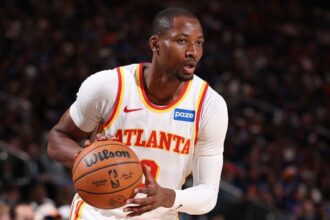
3. Josh Okogie
Josh Okogie brings more athleticism and chaos defensively. He is not a natural point guard, but he fits the general idea of replacing Smart because he defends hard, plays with energy, and plays without the ball. For the Lakers, that kind of player has a ton of value.
Last season with the Rockets, Okogie appeared in 78 games and put up 4.5 points, 2.6 rebounds, and 0.9 assists. The scoring is low, but the improved shooting is the part worth paying attention to. He made 38.5% of his threes. In the past, defenders could sag off him without much consequence. If that shooting holds up, he becomes a bigger weapon in the playoffs.
The Lakers should like that because they need defense, but it shouldn’t kill their spacing around Luka. Okogie can guard both guards and smaller wings. He can pressure ball handlers, chase shooters around screens, crash the glass, and inject energy into short stints.
The Lakers could slide him into lineups next to Luka and Reaves when the team needs more legs. Let him take the opponent’s best guard for stretches and run the floor in transition, while he stands in the corner on offense. If teams continue to ignore him and he knocks down enough threes, those lineups can work.
At 27 years old, Okogie is also younger than many of the other names available. That means a deal would not feel like a pure one-year veteran patch. The Lakers could comfortably give him a two-year contract in the $5-6 million range per year if his market rises after that shooting season.
The main limitation is ball handling. Okogie cannot step in as a secondary playmaker the way Smart could. Smart was able to bring the ball up, make reads, and talk everyone through possessions. Okogie is more limited in that area. If he is forced to do too much offensively, the offense can have problems.
Because of that, the Lakers would have to use him as a defensive guard-wing who brings athleticism and effort in 15 to 20 minutes a night. In the playoffs, the big question will be whether opponents still respect his jumper.
If they don’t, they will help off him and load up on Luka even more. That is a problem the Lakers have run into with defensive specialists before. The 38.5% from three last season is what makes Okogie an interesting fallback option.
2. Gary Payton II
Gary Payton II is probably the purest defensive specialist on this list. He is older and smaller, and his offense is limited, but he knows exactly who he is on the court. He guards, cuts, sets screens, creates fast-break chances, and plays with zero ego.
Last season with the Warriors, he had his best offensive year. He played 73 games and averaged 7.5 points, showing better finishing and overall scoring than usual. He knows how to play off stars. He lives in the dunker spot, makes smart cuts, pushes in transition, grabs offensive rebounds, and spaces the corner at times.
That skill set can be huge for the Lakers. Luka creates so many weak-side opportunities that defenses collapse on him and lose track of cutters. Payton is one of the best small guards in the league at doing that. He actively finds space and can be a double-digit scorer next to Luka if he has enough minutes to punish defenses with backdoor cuts and sneaky rolls behind the big man stepping up.
Defensively, he comes closest to filling Smart’s role, even if he doesn’t match the size or strength. Smart is bigger and more physical. Payton is more of a guard-only stopper. But the assignment is similar: take the tough matchup, pressure the ball, force turnovers, and make life easier for the team’s stars on the defensive end.
The Lakers need that kind of help. Luka should not be chasing quick guards for 35 minutes a night. Reaves should not have to guard every top perimeter scorer. LeBron, if he stays, should not be the primary wing defender in the playoffs, as we saw at times in the last postseason.
Payton can make some threes, but teams still won’t treat him as a true shooter in the playoffs. Opponents will help off him in big moments. The Lakers would have to decide if his defense and cutting activity are enough to make up for the spacing issues.
There is also the age factor. At 33 years old, even after playing 73 games last season, he should not get a long-term deal. A one-year or two-year contract with protection would be the smart play. Anything longer would be risky.
The ideal version is Payton signing for part of the mid-level exception or close to the minimum. He plays 16 to 20 minutes a night, guards the ball, runs with Luka, and gives the Lakers a chaos defender off the bench. It is not a perfect replacement for Smart’s passing or size, but it adds an identity skill that could make their defense more active immediately.
1. De’Anthony Melton
If Smart leaves, I do think De’Anthony Melton stands out as the best target on this list. Not because he is an Ironman, but because his overall skill set fits what the Lakers need better than the other options.
Melton declined his $3.3 million player option with the Warriors and will enter free agency. Last season, he put up 12.3 points, 3.2 rebounds, 2.6 assists, and 1.6 steals in 49 games. That combination of defense, steals, secondary ball handling, and enough offense to stay on the floor is what separates him from the rest.
Unlike Carter, who is smaller, Okogie, who is not much of a handler, or Payton, who is limited as a shooter and creator, Melton brings more all-around versatility. He can defend guards, jump passing lanes, make simple reads, run secondary pick-and-rolls, and knock down enough shots when his jumper is falling.
The shooting is the biggest red flag. He shot just 29.4% from three last season, but his career track record suggests he is better than that. Before the ACL injury and inconsistent role in Golden State, he was closer to a 36-38% three-point shooter. The Lakers would be betting on the body of work rather than one down year.
Next to Luka, that bet looks promising. Melton would have to make the easy shots. He would get catch-and-shoot opportunities, attack closeouts, and punish defenses that help too much. Luka improves shot quality for role players, and that benefit would help Melton more than almost anyone else.
Defensively, he checks the boxes the Lakers need. He has the steals stats without over-gambling, has enough size to handle both backcourt positions, and can switch some matchups with bigger players. He can play in closing lineups when the shot is there. He is not as strong or vocal as Smart, but he is younger and better-fitting offensively when healthy.
The contract will be the tricky part. Melton improved his stock, so he will probably cost more than the minimum. If the Lakers can land him on a short mid-level deal or something in the taxpayer mid-level range at $6.0 million, they should move quickly. A two-year deal with a team option would be ideal. Three guaranteed years would be riskier because of the injury background.
This would also be the best long-term play. At 28 years old, Melton is not just a one-year veteran fix. He could fit alongside Luka and Reaves for multiple seasons.
Melton should be the first call if Smart leaves. He is not an exact replica of Smart as a defender, but he is the most complete replacement available: defense, steals, youth, secondary creation, and playoff fit.