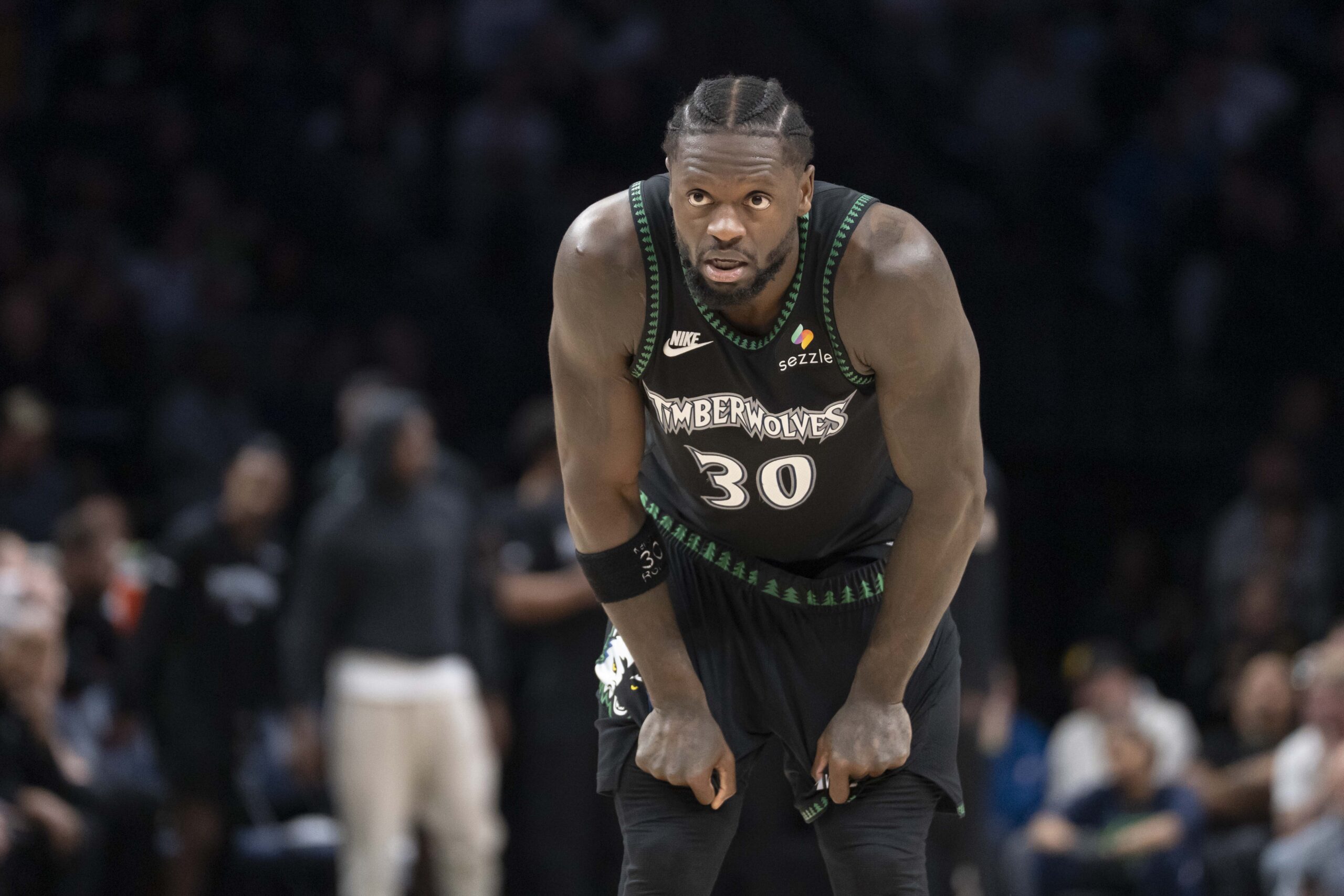
For the last two seasons, Julius Randle has been a key player in the Minnesota Timberwolves‘ rotation, often emerging as one of their best players on the court. However, following a disappointing performance in the playoffs this year, Randle’s time in Minnesota has come to an end.
ESPN’s Shams Charania just reported that the Minnesota Timberwolves have traded Julius Randle to the Brooklyn Nets as part of a three-team deal involving the Chicago Bulls.
“Just in: Minnesota is sending Julius Randle and the No. 28 pick in the NBA Draft to the Brooklyn Nets in a three-team trade that sends Nic Claxton to the Chicago Bulls, sources tell ESPN. The Timberwolves will acquire Brooklyn’s No. 33 pick for Randle and No. 28.”
This deal marks a drastic shift in Minnesota’s direction. Julius Randle appeared to have cemented his position in the rotation over the course of the 2025-26 season with averages of 21.1 points, 6.7 rebounds, and 5.0 assists per game. Given that he appeared in 79 games, shooting 48.1% from the field and 31.5% from three-point range last season, it can even be argued that he was one of their most reliable players.
With rumors suggesting that the Wolves would focus on Joan Beringer’s development as a core piece, Julius Randle’s time was already winding down. Now, with Randle headed over to the Nets, the Wolves can begin retooling this offseason.
What Have The Wolves Gained From Julius Randle’s Departure?
On the face of it, the Minnesota Timberwolves haven’t received any player assets in return for Julius Randle. With the No. 33 draft pick from Brooklyn coming in, along with Mohamadou Gueye (Bulls), this trade raises some eyebrows at first glance. However, there are some significant benefits involved.
Randle was expected to have a cap hit of $33.3 million for the 2026-27 season, which largely affected Minnesota’s cap flexibility. Given his $33.3 million cap hit, the Wolves would have also required another team’s involvement to absorb his contract. In this regard, the Chicago Bulls have played a vital role.
By redirecting Nic Claxton‘s $23.4 million contract to the Bulls, who had ample disposable cap space before this trade, the Wolves have effectively avoided taking on any new salaries. Now that Randle’s contract is on the way out, the Wolves effectively find themselves $50 million below the first apron while also possessing a $33 million trade exception.
In many ways, this could be the setup for something bigger. But with more cap flexibility right before draft night, the Wolves could be gearing up for some major offseason moves.