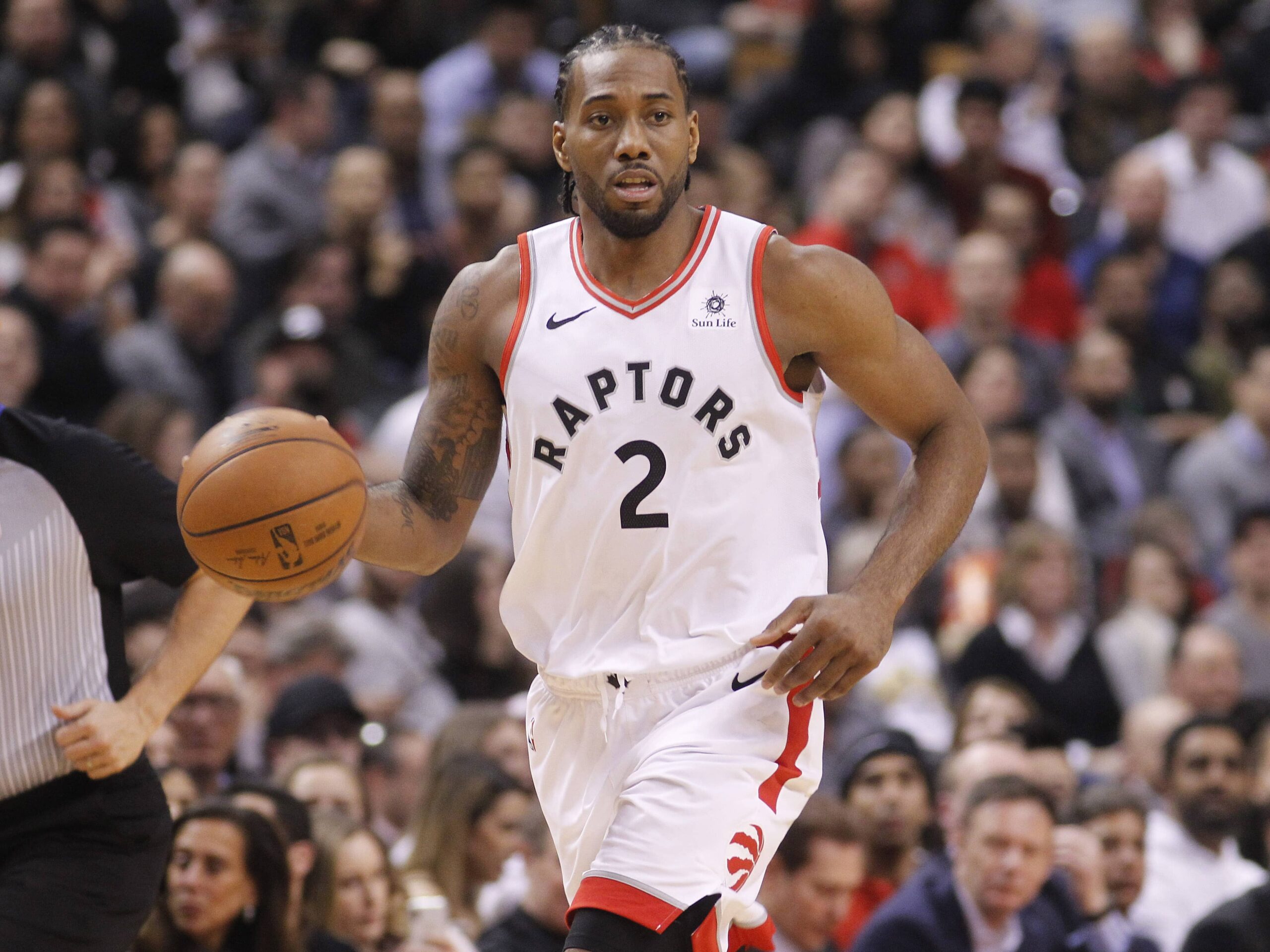
The Toronto Raptors landed Kawhi Leonard from the Clippers in a blockbuster deal earlier today, built around Brandon Ingram, Gradey Dick, two first-round picks, a pick swap, and two second-rounders. The Raptors were already a solid team this season, but they didn’t have a true playoff scorer who could get a bucket in the clutch.
Losing Ingram and Dick stings. Ingram played great for them this season and even earned an All-Star selection, while Dick, even if relegated to a lesser role, still was showing good signs of progress. But if Leonard is healthy, he’s still capable of becoming the best player in an entire playoff series.
This trade wasn’t about nostalgia for the 2019 championship, even though there was always a sensation of unfinished business between both sides since Leonard signed with the Clippers back in 2019. Now, it really feels like Kawhi has found his new home, and as Shams Charania reported, a place to retire from the league when the time comes.
Toronto finished 46-36 last season and bowed out to the Cavaliers in a seven-game first-round series. Close, but not enough. The defense was already good. The young core was already there. Scottie Barnes had already taken a step forward. What was missing was a wing who could dominate in a slow, half-court playoff game.
Leonard solves that right away, even if he’s obviously not 2019 Kawhi anymore, and health is always going to be the asterisk next to his name. But last season he still put up 27.9 points, 6.4 rebounds, 3.6 assists, and 1.9 steals on 50.5% shooting from the field and 38.7% from three. When he’s on the floor, he’s still an elite scorer.
Now Toronto has to figure out how to build everything else around him, Barnes, RJ Barrett, Immanuel Quickley, and Jakob Poeltl. The trade reshapes the starting five, the bench rotation, and the team’s ceiling all at once.
The New Starting Five
This Raptors’ new group has a clear identity of being big, physical, defense-first, and built for the half-court in a way last year’s team wasn’t. The spacing won’t always be the best, especially with Barnes and Poeltl sharing the floor, but Toronto now has an actual playoff structure to lean on.
PG: Immanuel Quickley
SG: RJ Barrett
SF: Kawhi Leonard
PF: Scottie Barnes
C: Jakob Poeltl
Quickley runs the show and is probably the most important shooter in the starting lineup. He averaged 16.4 points, 4.0 rebounds, and 5.9 assists last season while knocking down 37.4% of his threes on 6.8 attempts a game. That volume is an emphasis point because Leonard, Barrett, and Barnes are all more comfortable working inside the arc. Quickley has to be the guy keeping defenses honest from outside.
Barrett slides over to shooting guard, even though he plays more like a wing. He turns into a downhill scorer after putting up 19.3 points, 5.3 rebounds, and 3.3 assists on 49.1% shooting. The three-point number at 33.9% is the thing to watch, but his job should get easier with Leonard soaking up the other team’s best perimeter defender. Barrett can hunt second-side gaps and smaller matchups to improve his wanky outside shooting.
Leonard is the piece that changes everything. He takes over as the top half-court scoring option from Ingram, but brings more on the defensive end and more playoff pedigree with it. Toronto can run mid-post touches, elbow sets, isolations, and late-clock looks through him like they couldn’t with Ingram, who’s still an immensely talented player, but the gap is huge.
Barnes is probably the biggest beneficiary of this whole trade. He averaged 18.1 points, 7.5 rebounds, 5.9 assists, 1.4 steals, and 1.5 blocks on 50.7% shooting last season. With Leonard on the floor, Barnes doesn’t have to manufacture big scoring numbers every single night. He can pass, rebound, defend, push the pace, and pick his spots to attack mismatches, which is when he’s at his best anyway.
Poeltl anchors the lineup at center. He put up 10.7 points, 7.0 rebounds, and 2.0 assists while shooting 70.0% from the field. He’s not a shooter, so the floor can get a little cramped, but his screening, short-roll passing, finishing at the rim, and positioning on defense are still valuable, although the injury bug could become a huge setback again.
Last season, Toronto ran a 115.9 offensive rating, 15th in the league, and a 113.0 defensive rating, fifth-best. The hope is this lineup keeps the defense near the top while finally giving the offense a more elite playoff weapon, which was the entire point of making this trade in the first place.
It’s not a flawless starting five. The shooting will get awkward at times, and the bench is going to need to bring some spacing of its own. But Quickley, Barrett, Leonard, Barnes, and Poeltl give Toronto size, defense, shot creation, and someone who can close a game.
The Bench
The bench is the part where the Raptors still have a lot to prove. The starting lineup makes a lot of sense for the playoffs. But the second unit is younger and not as proven, and it depends a lot on how the shooting develops.
The bench group now has Jamal Shead, Allen Graves, Ja’Kobe Walter, Jamison Battle, Sandro Mamukelashvili if he comes back, Collin Murray-Boyles, and Jonathan Mogbo. It has defense, size, energy, and some shooting, but there is no clear 15-point scorer on the bench.
Last season, the Raptors got 33.5 bench points per game, but the bench was not really winning minutes. The net rating was -2.0 with an offensive rating of 111.6 and a defensive rating of 113.6. They could score at times, but depth is proving to be crucial in the playoffs for teams like the Thunder, Spurs, or the championship Knicks.
Shead is the most important bench player because he is the only real backup point guard. He averaged 6.6 points, 1.7 rebounds, and 5.4 assists, which is a good number for a bench guard. But he only shot 36.7% from the field, and that is the issue. He defends well and organizes the offense, but he needs to finish better around the rim and make enough open shots so defenses cannot just ignore him. In a Kawhi team, his ability to get the ball to the right players and bring defensive energy is useful. He just has to be more efficient.
Graves is the rookie who could play more minutes than expected. He was taken at No. 19 after averaging 11.8 points, 6.5 rebounds, 1.8 assists, 1.9 steals, and 0.9 blocks while shooting 41.3% from three at Santa Clara. He is a big wing who defends, rebounds, and can shoot without needing a lot of touches. Since they lost Dick’s shooting in the trade, Graves has a real chance to play early. If he can hit open threes at a decent rate, he becomes a good first wing off the bench.
Walter is another player who can help or lose minutes quickly. He averaged 7.5 points, 2.6 rebounds, and 1.2 assists while shooting 44.6% from the field. The numbers are okay, but the key is whether his three-point shot stays consistent and if he can guard bigger players. With Kawhi and Barnes on the team, he just needs to hit open threes, cut, and defend without fouling too much. If his shot is not falling, Graves or Battle can take his minutes.
Battle is the best shooter in the bench group. He only played 8.5 minutes per game and averaged 3.1 points and 1.5 rebounds, but he shot 41.2% from three with a 63.5% true shooting. This team needs shooting badly, and Battle gives them that. He is not a creator off the dribble, but he can stay on the weak side and punish defenses that help too much on Kawhi or Barnes.
Murray-Boyles looks like the best bench player right now if Mamukelashvili does not come back. As a rookie, he averaged 8.5 points, 5.0 rebounds, and 1.9 assists while shooting 57.9% from the field, and he made the All-Rookie Second Team. He brings strength, passing from the short roll, rebounding, and good defense. He can play backup four or even small-ball five. The problem is his three-point shooting. He was at 34.0%, which is okay but not great yet.
Mamukelashvili is the biggest question on the bench. He declined his $2.8 million player option, so the Raptors need to bring him back. He averaged 11.2 points, 4.9 rebounds, and 1.9 assists with good efficiency and shot 38.9% from three. As a backup five, he can space the floor and pass. That is important because Poeltl won’t shoot, Barnes is still not a strong shooter, and Murray-Boyles is still developing from deep. If Mamu stays, the Raptors can play more five-out lineups with Kawhi or Barnes. If he leaves, they lose their best stretch-big option.
Mogbo is more of a depth player right now. He only played 6.2 minutes per game and averaged 1.5 points, 1.7 rebounds, and 0.6 assists while shooting 59.1%. It’s still early to know for sure, but he gives the team another defensive body and some size for regular-season games. He is probably not ready for playoff minutes yet.
Bottom Line
This new-look Raptors team built around Kawhi is a real, serious bet on winning now. I don’t really think they are immediately into the top contender tier as they are, but this is a serious team ready to make noise.
The starting lineup gives them legit playoff structure. Quickley spaces the floor and runs the offense. Barrett gets downhill. Kawhi is the elite half-court scorer they didn’t have. Barnes gets to be the do-everything engine instead of being forced into tough shots every night. Poeltl handles the screening, finishing, and defensive structure.
That’s why this trade makes sense in the first place. Toronto was already 46-36, already fifth in the East, already strong on defense. The offense was the problem, and they couldn’t find any answer when playoff games slowed to a crawl. Kawhi is built for those situations.
But I think there are three things to keep an eye on, basically.
First, Kawhi’s health. If he plays something like 60 games and is right come April, this team is scary. If he’s in and out all year, this trade gets a lot tougher to evaluate fairly.
Second, the shooting around Barnes and Poeltl. Quickley and Kawhi can shoot it. Battle, Graves, and Mamu can chip in. But if Barrett, Barnes, and the bench wings go cold, playoff defenses are going to pack the paint and dare somebody to beat them from outside.
Third, the bench offense overall. Shead needs to be more efficient. Graves needs his shot to carry over to the NBA. Battle needs to keep making shots. Mamu needs to either be back or get replaced by someone who can do what he does. Murray-Boyles needs to stay useful without totally wrecking the spacing.
Even with all that, this is the best roster Toronto’s had on paper since the title run. And it’s not because Kawhi’s back for a sentimental reason, but because there’s an actual path here to thrive with him as the main scorer again.
The Raptors have size, defense, passing, a true number-one scoring option, and someone who can close games out. That’s enough to push them from good team into the kind of team nobody wants to see in the first round.
They’re not the favorites in the East. Not yet, anyway. But nobody’s circling them as an easy out anymore either.