NBA teams can never know what can happen in the second round of the NBA Draft. After seeing big names such as AJ Dybantsa and Darryn Peterson going No. 1 and No. 2, respectively, in the 2026 Draft, there were some major steals all the way into the second round that we have to identify.
Second-round picks hardly become anything special, although Jalen Brunson is an example of a player who ended up becoming a Finals MVP and NBA champion as the biggest second-round steal in history.
With the 2026 NBA Draft concluded, let’s rank the 10 biggest steals in the second round.
10. Felix Okpara (C, Tennessee)
Drafted: No. 46 overall by the Washington Wizards
Washington targeted one of the best defensive specialists available, No. 46 overall. The 6’11”, 220 lb Okpara is not a polished offensive player, but his role is crystal clear.
He protects the rim well enough to be a potential long-term role player behind Alex Sarr. The Wizards continue to stockpile young talent, and Okpara fills a need as another youngster.
Every rebuilding team needs players willing to do the dirty work, and the native Nigerian’s defensive motor stands out immediately.
9. Bruce Thornton (PG, Ohio State)
Drafted: No. 31 overall by the Houston Rockets
Bruce Thornton leaves Ohio State as the program’s all-time leading scorer after accumulating 2,164 career points while averaging 19.9 PPG, 5.1 RPG, and 3.9 APG during his final season.
Standing just 6’0″, Thornton’s stock fell tremendously because of his height, but the Rockets looked a little deeper and saw the 215 lbs of muscle he carries. That holds weight in Ime Udoka’s system.
Yes, he may never become a superstar, but the chances of him outperforming the No. 31 selection feel extremely high after Thornton shot 55.4% from the field and 40.0% from deep with Ohio State. The Rockets are hoping Thornton can be Fred VanVleet’s backup for 2026-27.
8. Alex Karaban (PF, UConn)
Drafted: No. 45 overall by the Sacramento Kings
Karaban enters the NBA with something many second-round prospects lack: a championship pedigree. The former UConn standout built a reputation as a winning and reliable role player with two NCAA championships.
Sacramento adds a player who should transition smoothly into an NBA rotation because of his basketball IQ and versatility. The 6’8″, 210-lb forward averaged 13.2 PPG, 5.3 RPG, 2.4 APG, 0.8 SPG, and 0.8 BPG on 46.4% FG and 37.4% 3-PT FG.
Getting that level of reliability in the 40s is a strong piece of business because the Kings desperately need a player who has a winning pedigree.
7. Braden Smith (PG, Purdue)
Drafted: No. 38 overall by the Indiana Pacers
The Pacers may have found a very suitable backup point guard. Smith was one of the most productive floor generals in college basketball, averaging 14.3 PPG, 3.5 RPG, and 8.8 APG on 44.0% FG and 36.2% 3-PT FG for Purdue.
Indiana’s fast-paced system seems tailor-made for his strengths. Assuming Tyrese Haliburton comes back and needs time to get back to his superstar best, giving Smith reps on the court makes a ton of sense.
While questions about his size (only 6’0″ and 180 lbs) limited his draft stock, his feel for the game makes him one of the safest selections in the second round.
6. Jack Kayil (PG, ALBA Berlin)
Drafted: No. 39 overall by the New York Knicks
The Knicks traded back in the second round and still landed one of the most intriguing international prospects in the draft. At 6’5″, Kayil has excellent size for a point guard and already has valuable professional experience in Europe.
New York can afford to be patient with his development (12.2 PPG, 2.8 RPG, and 3.5 APG in 2025-26 with ALBA Berlin) while allowing him to continue gaining experience overseas if necessary.
Landing a player with Kayil’s upside outside the top 35 could end up looking like one of the smartest moves of draft night.
5. Joshua Jefferson (PF, Iowa State)
Drafted: No. 43 overall by the Brooklyn Nets
Jefferson is the type of prospect analytics departments love because of his high basketball IQ and natural passing skills. The 6’8″ forward averaged 16.4 PPG, 7.4 RPG, and 4.8 APG on 47.1% FG and 34.5% 3-PT FG.
The Nets continue to prioritize positionless basketball, making Jefferson an ideal fit with his particular skillset. Jefferson started all 35 games for Iowa State in 2025-26.
He may never become a star, but his ability to impact games without dominating possessions gives him a realistic path to a long NBA career.
4. Richie Saunders (SG, BYU)
Drafted: No. 32 overall by the Memphis Grizzlies
If not for injury concerns, the 6’5″ Saunders likely would have been a first-round pick. The BYU sharpshooter entered the draft process as one of the best movement shooters available before a torn ACL caused teams to hesitate.
Memphis took advantage. When healthy, Saunders is expected to be an elite floor spacer who can immediately get shots up in spurts of playing time.
He averaged 18.0 PPG, 5.8 RPG, 2.1 APG, 1.7 SPG, and 0.3 BPG on 48.9% FG and 37.6% 3-PT FG in 25 games for BYU in the Big 12 Conference. The Grizzlies may have landed a potential first-round talent at a significant discount.
3. Meleek Thomas (SG, Arkansas)
Drafted: No. 34 overall by the Cleveland Cavaliers
The Cavaliers may have found one of the biggest steals in the draft when it comes to scoring potential. Thomas is a fearless scorer capable of creating his own shot from anywhere on the floor.
The 6’5″ guard from Arkansas averaged 15.6 PPG, 3.8 RPG, 2.5 APG, 1.5 SPG, and 0.2 BPG on 43.5% FG, 41.6% 3-PT FG, and 84.3% FT in 21 starts over 37 games in 2025-26. Those are impressive offensive numbers for a player who had roles starting and coming off the bench.
Cleveland’s veteran core means Thomas won’t be forced into a major role right away, allowing him to develop at a comfortable pace. Still, we expect the Cavs to give Thomas at least 10 MPG in 2026-27.
2. Isaiah Evans (SF, Duke)
Drafted: No. 33 overall by the Minnesota Timberwolves
Many evaluators expected Evans to hear his name called in the first round, but instead, Minnesota landed one of the draft’s most dangerous shooters at No. 33.
Evans brings floor spacing, and in a league where shooting is king, those skills are incredibly valuable. The 6’6″ guard from Duke averaged 15.0 PPG, 3.2 RPG, 1.3 APG, 0.7 SPG, and 0.7 BPG on 43.3% FG, 36.1% 3-PT FG, and 86.0% FT.
His fit with the Timberwolves is especially exciting. Playing alongside Anthony Edwards should create plenty of open looks, allowing Evans to focus on what he does best.
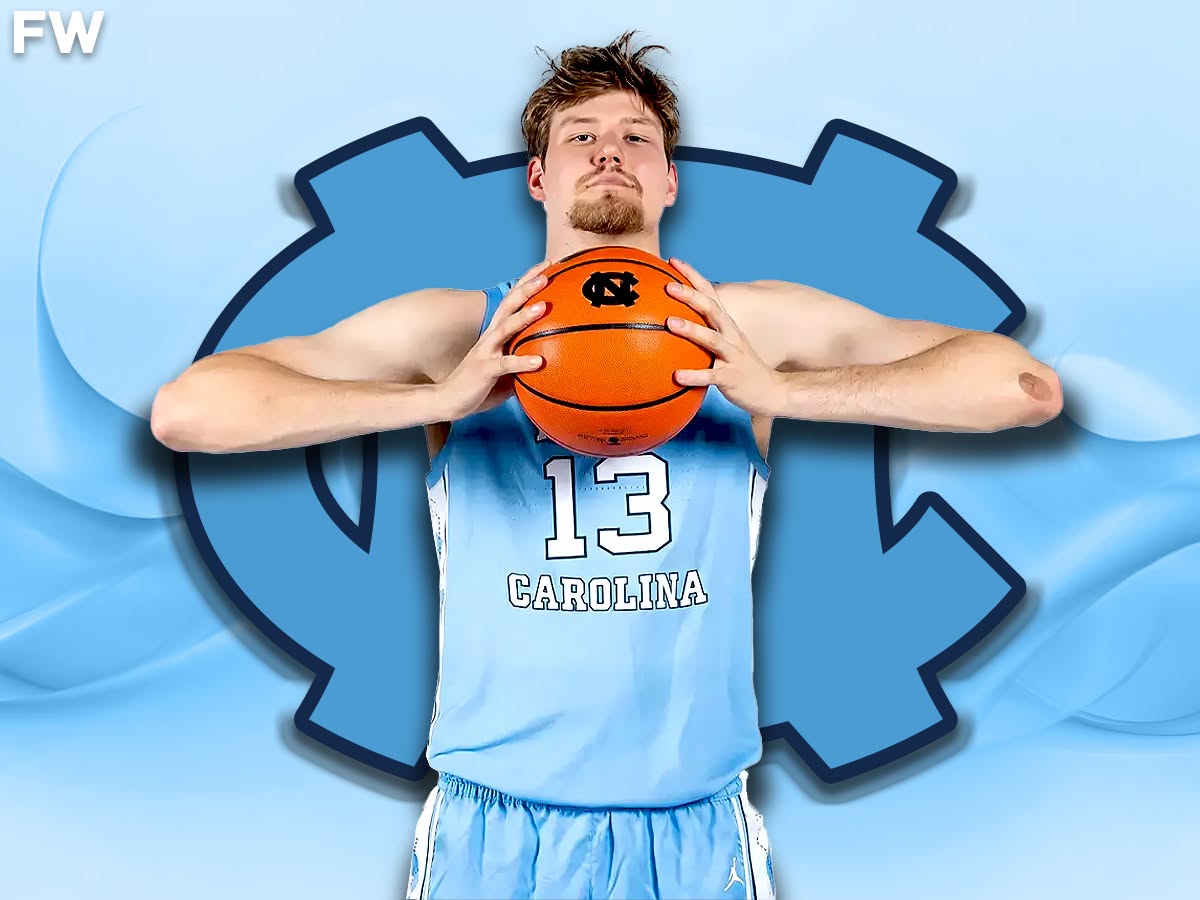
1. Henri Veesaar (C, North Carolina)
Drafted: No. 52 overall by the Atlanta Hawks
This is very likely the biggest steal of the entire draft. Veesaar should have been a top-25 prospect, yet somehow remained available until the 50s.
Atlanta wasted no time capitalizing, since the seven-footer brings a rare blend of size, shooting, and mobility. The big man averaged 17.0 PPG, 8.7 RPG, 2.1 APG, 0.6 SPG, and 1.2 BPG on 60.8% FG, 42.6% 3-PT FG, and 61.5% FT with UNC.
Modern NBA teams are constantly looking for big men who can protect the rim and shoot from deep. Finding one at No. 52 is remarkable value.