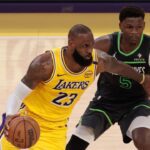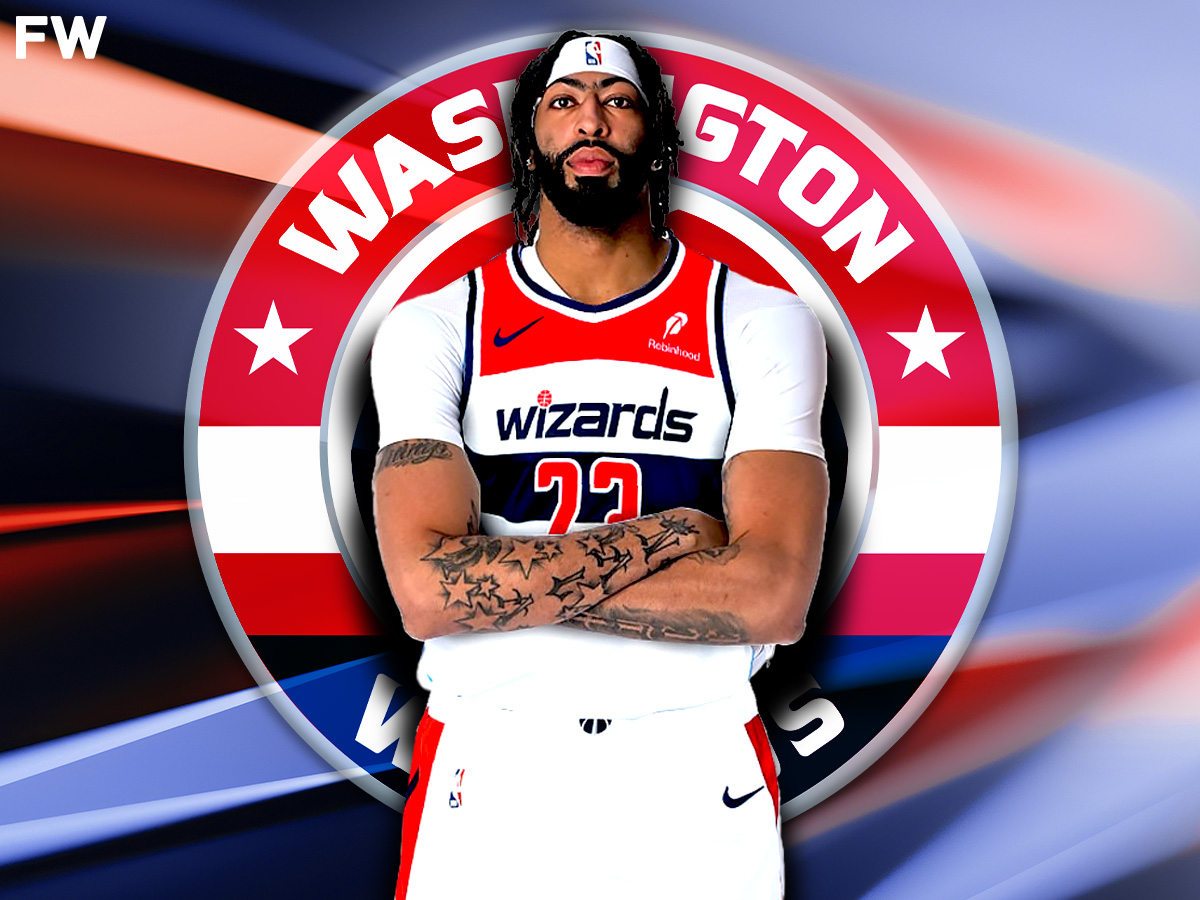
The Warriors are not looking for a modest upgrade. They are pursuing one final veteran superteam around Stephen Curry before his championship window closes. According to Kevin O’Connor, Golden State has expressed interest in trading for Anthony Davis from the Washington Wizards, viewing the move as a potential springboard to recruit LeBron James in free agency.
The plan is clear: acquire Davis first, then pitch James on joining Curry, Draymond Green, Davis, and Steve Kerr. James could sign for the non-taxpayer mid-level exception for the cleanest fit, or the Warriors could explore a sign-and-trade if he seeks a larger salary and the Lakers want assets in return.
Acquiring Davis represents the more challenging piece. The Wizards finished last season with a dismal 17-65 record, but they selected AJ Dybantsa with the No. 1 pick and re-signed Trae Young to a four-year, $212 million contract. Their stated intention is to accelerate their contention timeline. Yet the reality is straightforward: another poor season could leave Davis, who will be 34 in 2026-27, eager for a more immediate contender.
Davis retains significant star value. He posted averages of 20.4 points, 11.1 rebounds, 2.8 assists, 1.1 steals, and 1.7 blocks per game in 2025-26 while shooting 50.6 percent from the field. Health concerns remain a factor, but the talent has not faded. For the Warriors, this is not a measured, multi-year rebuild. It is a calculated title push while Curry continues to perform at an All-NBA level.
Trade Framework
Golden State Warriors receive: Anthony Davis
Washington Wizards receive: Jimmy Butler, Al Horford, 2028 first-round pick
Al Horford recently agreed to a two-year, $14 million deal to return to the Warriors, so he’d be a critical addition in the salary-fitting mechanics. Davis is due $58.5 million in 2026-27, while Jimmy Butler is at $56.8 million and Horford approximately $7.0 million. The Wizards would absorb less incoming salary than they send out.
The first-round pick carries substantial weight given Butler’s age (37) and ongoing recovery from a torn right ACL. The 2028 unprotected first-round selection represents the centerpiece asset, as it offers Washington long-term upside should the Warriors’ veteran experiment decline after Curry, Draymond, LeBron, and Davis move past their primes.
Why the Wizards Would Accept the Deal
Washington would likely engage only if the season begins poorly and Davis signals, even quietly, a desire for a contending situation. That is the essential trigger. If the Wizards remain competitive for a playoff spot and Davis appears engaged alongside Trae Young, AJ Dybantsa, and Alex Sarr, this package would fall short. But another season near the bottom of the standings would shift the narrative.
Coming off a 17-65 campaign, the gap to contention remains wide. Even with Young back, Dybantsa entering the league, and Sarr developing, the roster has much to prove. Davis is still an elite big man, but his timeline no longer aligns with a young core. Dybantsa is 19. Sarr is still ascending. Young’s contract is star-level, but his defensive limitations and size require constant roster adjustments around him.
Butler provides a shorter-term contract and a clearer path to reset. At 37 and coming off a major injury, he does not match Davis’s current on-court impact, but his $56.8 million salary expires after 2026-27. That flexibility is meaningful. Washington could use him as a veteran bridge, reroute him later, execute a partial buyout, or simply allow the money to come off the books. This becomes especially valuable if Davis’s next extension appears far away.
Davis holds a $62.8 million player option for 2027-28 and will soon be extension-eligible. Committing another massive long-term deal to a player entering his mid-30s carries real risk for a franchise still building around its young talent. With Young already on a hefty contract, the Wizards must avoid locking themselves into another high-salary veteran before Dybantsa and Sarr are ready to lead.
Horford is not the headline return, but he adds useful structure as a short-term veteran and locker-room presence. He averaged 8.3 points, 4.9 rebounds, 2.6 assists, and 1.1 blocks last season. Washington could retain him briefly to mentor the frontcourt or flip him to a contender seeking depth.
The 2028 first-round pick is the primary basketball incentive. A Warriors selection in the post-Curry era could hold significant value, particularly if the veteran core ages out quickly. This is not a haul of young prospects, but if Davis requests a trade, the Wizards would be exchanging an aging star for immediate cap relief, a high-value future first, and renewed control over their timeline. For a 17-win team, that represents a compelling idea.
How the Warriors Become Contenders
This move only elevates Golden State to true contention as part of a two-step plan. Davis by himself is not sufficient. Pairing him with Curry creates danger, but the roster would still be old, thin, and lacking in secondary creation. The true swing hinges on landing LeBron James afterward.
A starting lineup of Curry, Brandin Podziemski, LeBron, Draymond Green, and Davis would be old, yet formidable in a playoff series. Curry remains the engine, averaging 26.6 points, 3.6 rebounds, and 4.7 assists while shooting 46.8% from the field and 39.3% from three in 2025-26. Defenses must still account for him well beyond the arc.
LeBron, no longer at his absolute peak, still delivered 20.9 points, 6.1 rebounds, and 7.2 assists on 51.5% shooting: elite production for a third star or secondary creator. A mid-level exception signing would be exceptional value; a sign-and-trade would be more complex but worth pursuing for the chance to unite Curry, LeBron, Draymond, and Davis for one playoff run.
Davis addresses Golden State’s most persistent need: a genuine two-way center. He brings rim protection, rebounding, lob threat, and a reliable half-court option against switches. Even in a relatively quiet three-point shooting season, his 50.6% field-goal percentage and 11.1 rebounds per game highlight his impact. With Curry and LeBron creating for him, his efficiency should only improve.
Draymond Green gains new utility alongside Davis. Freed from playing extended minutes at center, he can defend wings, initiate actions, and orchestrate the defense. A Green-Davis frontcourt may not maximize spacing, but it has the potential to be one of the league’s most intelligent and disruptive defensive units when both are healthy.
Podziemski serves as the vital young connector. His 13.8 points, 5.1 rebounds, and 3.7 assists on 45.5/37.1 shooting splits last season fit perfectly. He just needs to rebound, pass, knock down spot-up threes, and hold his own defensively.
The bench would be the clearest vulnerability. Losing Butler and Horford means the Warriors must fill the roster with minimum-contract shooters, defenders, and another reliable guard. Players like Will Richard, Gui Santos, and Yaxel Lendeborg would need to contribute regular-season minutes, as the aging stars cannot carry 82 games.
Still, the upside is evident. The Warriors went 37-45 last season but were 25-19 before Butler’s ACL injury. They were never truly broken when healthy. Davis supplies the defensive anchor missing since the Kevin Durant era. LeBron adds a second high-IQ playmaker capable of managing possessions when Curry faces heavy attention.
The risks are substantial. Age, injury history, and luxury-tax implications all loom large. Yet the basketball logic is sound. A core of Curry, LeBron, Green, and Davis would offer size, basketball intelligence, passing, defense, and playoff pedigree, with enough shooting around them if Podziemski and the supporting cast deliver.
For the Warriors, this is the appropriate gamble. Not because it is safe, it is anything but. It is appropriate because Curry is still performing at a high level and no gradual rebuild will serve him. If Golden State wants one more championship, they must swing aggressively. Acquiring Davis is that swing. Landing LeBron afterward would be the realization of the dream.