The NBA Summer League is set to begin tomorrow night and will be played in three parts, beginning with the California Classic from July 3 to 6, combined with the Salt Lake City segment from July 4 to 7. Subsequently, all teams will head to Las Vegas for the final part of the Summer League from July 9 to 19.
Ahead of this exciting basketball action that we get to witness this summer, the NBA announced two major changes that will completely redefine the basketball product we are about to witness in the Summer League.
“The one free throw rule will be tested at the upcoming NBA summer leagues. With this rule, any foul that would typically result in one, two, or three free throws under standard NBA rules will instead result in a single free throw attempt,” the NBA Communications’ X page announced.
“That attempt will be worth the same total number of points as the free throws it replaces. Standard NBA free throw rules will apply during the last two minutes of the fourth quarter and throughout overtime.”
Yes, one free throw will be awarded for all three points at stake if the foul was committed on a three-point shot attempt. The NBA G-League has used this rule since 2019-20 to improve its game flow, and now the league is testing it out in the Summer League to potentially consider its application for further use.
This rule change went viral on social media as fans were left dumbfounded over the potential changes to the in-game dynamics if so much more pressure is added to a single free throw. Some felt it made things too easy, while others argued tremendous pressure.
The NBA also announced a second major change, the use of sensors in the game ball, just like the ones currently being used in the FIFA World Cup.
“The connected basketball will be tested at the upcoming NBA summer leagues. The basketball contains an embedded sensor that detects contact with the ball. The sensor does not materially affect the ball’s weight, feel or playability,” they wrote on the NBA Communications’ official social media page.
“Data collected from the ball will support future officiating applications, such as last-touch out-of-bounds calls.”
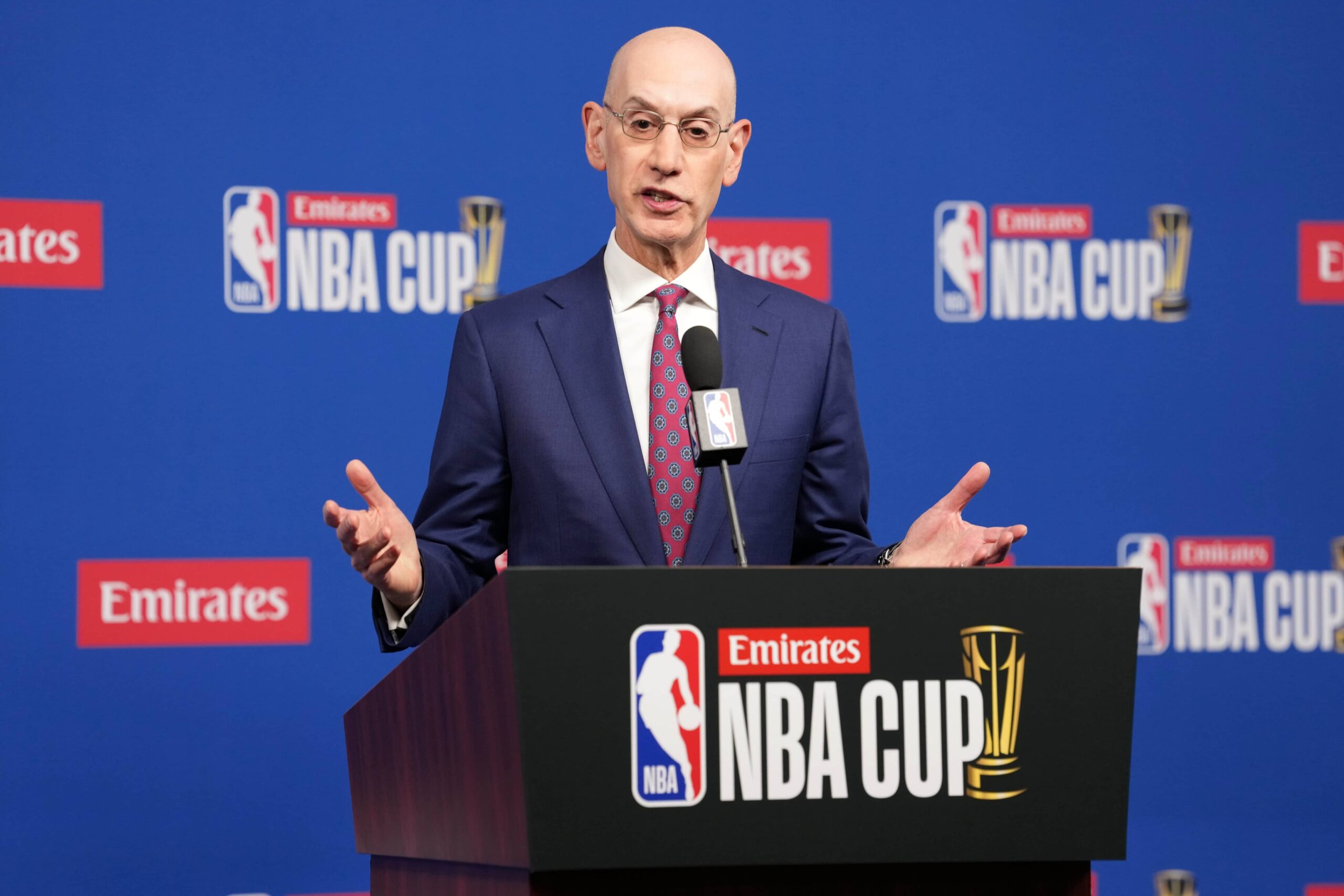
This supports the assertion made by the NBA commissioner, Adam Silver, earlier this year, when he said AI would be introduced to potentially reduce the load on human officials to focus on subjective calls made based on game positions.
While it will be interesting to see the application of this rule change, I am severely concerned about the potential application of this in the postseason, where everything boils down to exploiting individual matchups down the stretch in any game. If applied universally, this could, however, help speed up the regular season.
Do you think these rule changes will have a positive impact on the basketball product that we see on our screens? Let us know in the comments section.