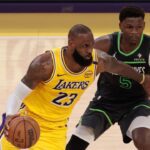
The Lakers already made their big moves after a heavy-hitting Day 1 of free agency. They traded for Walker Kessler, signed Quentin Grimes, Collin Sexton, and Sandro Mamukelashvili, and in roughly some hours turned a messy roster into something that actually fits around Luka Doncic and Austin Reaves.
Kessler fixes the center need, Grimes adds two-way play on the perimeter, Sexton brings scoring, and Mamukelashvili gives them some shooting from the frontcourt. Taken together, it looks like an organization that finally has a plan for the Doncic era.
What’s still missing is obvious: they’re thin on the wing. With LeBron James playing elsewhere next season and Rui Hachimura likely to be renounced, the Lakers are short on bodies who can guard forwards. They’re sitting roughly $14 million below the first apron, but that flexibility doesn’t mean much when there’s no real cap room left, just trade exceptions and minimum-salary options.
That’s the context for this list. The Lakers need wings who can defend tough matchups, hold up in playoff spacing, and do it without needing the ball. Defend, hit the open shots, and stay out of foul trouble. That’s the job.
4. Jonathan Kuminga
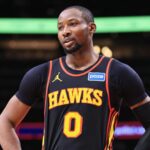
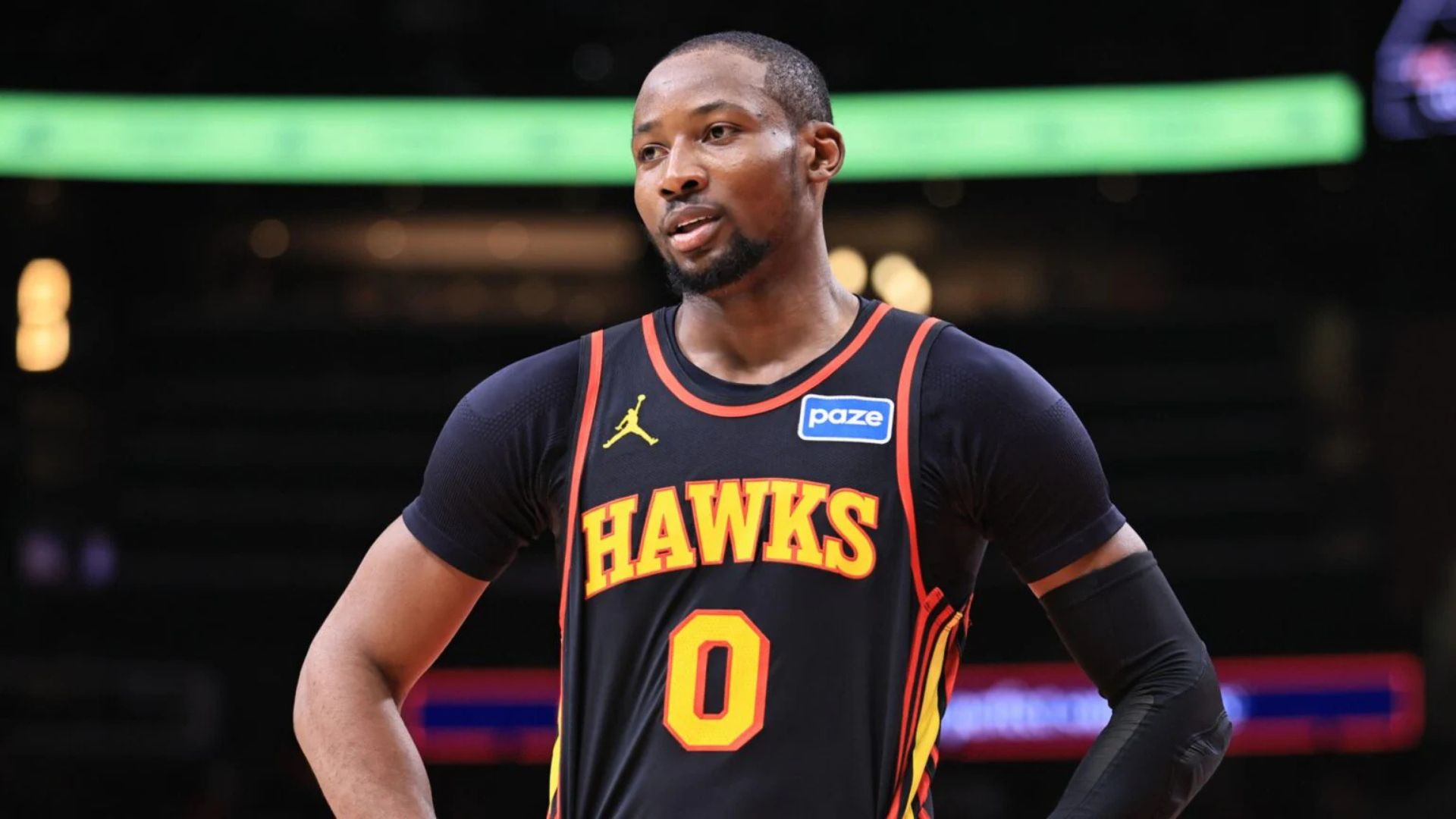
There’s no debate that Jonathan Kuminga is the highest-upside swing on this list, and also the riskiest. The Hawks declined his $24.3 million team option after acquiring him from Golden State, making him an unrestricted free agent. In 16 games with the Hawks, he averaged 12.3 points and 5.3 rebounds, then stepped up to 13.7 points in the playoffs against the Knicks.
For the full season, he finished at 12.2 points, 5.6 rebounds, and 2.3 assists on 46.3% shooting, but just 33.3% from three. That number is the story with him right now. If he can push it closer to 38%, this conversation changes completely.
What makes him interesting for the Lakers is the physical profile. At 23, he’s strong, athletic, and big enough to hold his own against forwards in a way Grimes can’t. Kessler helps protect the rim, but the Lakers still need someone who can stand in front of bigger wings without getting mogged.
The money is the tricky part. The Lakers don’t have cap space, so any deal would likely need to be a sign-and-trade that hard-caps them at the first apron. Something in the range of three years and $33 million, front-loaded and declining, is the kind of structure that usually gets discussed in these situations, potentially moving Jarred Vanderbilt’s $12.3 million salary and Jake LaRavia’s $6.0 million expiring deal in the process.
The fit concerns are also there. Kuminga isn’t a polished off-ball player yet, and a Doncic offense that already has a non-shooting center in Kessler can’t easily carry two non-shooters. His minutes would need to be managed carefully. Kuminga also can’t be regarded completely as a lockdown defender. His attention span can be short, his defensive IQ may be in question, and his motor isn’t as high as you’d like for a defensive specialist.
Still, athletic forwards who can defend and finish above the rim don’t grow on trees in July, which is why this is worth a call. If Kuminga can just accept his role and play with heart, this could be a sneaky good fit.
3. Haywood Highsmith
Haywood Highsmith is the quiet, low-maintenance option, and there’s real value in that. He signed a two-year, $4.7 million deal with the Suns in February, and his 2026-27 cap hit can dip under $4 million depending on how it’s structured. That’s a number the Lakers can actually work with.
His production is modest with 6.3 points, 3.3 rebounds, and 0.9 steals across the past two seasons, with 38.8% from three. That’s fine. The Lakers aren’t asking him to create offense. They need him to guard wings, rotate on time, run shooters off the line, and knock down the shots Doncic creates for him.
Defensively, he plays bigger than his 6-foot-5 frame thanks to strength and instincts. He’s not a lockdown guy, but he’s reliable, which matters when the goal is simply taking some of the tougher defensive assignments off Doncic and Reaves. Phoenix doesn’t have much reason to keep him after acquiring many new pieces in free agency so far, and with the Lakers low on trade assets after the Kessler deal, this is the type of player worth pursuing.
2. Caleb Martin
There’s nothing really special about Caleb Martin’s game, but the Lakers could definitely use his heart and motor on the defensive side. He had a rough year in Dallas, averaging just 3.9 points, 2.5 rebounds, and 1.4 assists in 14.8 minutes while shooting 45.0% from the field and 35.1% from three. There’s no way to dress those numbers up.
That’s also what creates the opportunity. If he bounces back, he won’t be available at this price again. Martin is a playoff-tested wing who has guarded elite scorers in big series. He’s not big, but he’s physical and comfortable in postseason basketball, which the Lakers need after losing both LeBron and likely Hachimura.
The contract works. He’s owed $8.9 million next season with a $9.3 million player option the year after. Offensively, the fit is limited but functional. He can hit corner threes, cut off the weak side, and attack closeouts when defenses collapse on Doncic. That’s enough.
The concerns are real. Martin turns 31 during the season, and last year’s foot issues are worth monitoring. If his athleticism has declined, he becomes a smaller wing without enough shooting to justify the minutes. Still, if Dallas wants to move money or reshape its rotation, this is a call worth making with Jake LaRavia as the main trade piece.
1. Matisse Thybulle
If pure wing defense is the priority, and it should be, Matisse Thybulle is the best fit in the market. He’s not here to create shots. He averaged 5.8 points, 2.0 rebounds, and 0.9 assists last season in Portland while shooting 43.3% from the field, but those numbers have never been the point with him.
What he does is disrupt. He jumps passing lanes, alters shots from odd angles, and makes life difficult for whoever he’s guarding. That’s exactly what this roster needs. The bench scoring is already covered by Sexton; Grimes handles guard defense and shooting, and Mamukelashvili helps with frontcourt spacing. What’s missing is a pure stopper.
Even with his offensive limitations, Thybulle remains one of the league’s best deflection artists when healthy. He led the NBA in deflections per 36 minutes last season and posted a plus-10.8 net rating when he shared the floor with his teammates. The defensive impact shows up even if his shot creation is rough to watch.
His price reflects the injury history more than anything else. He’s only played 45 games combined over the last two seasons because of thumb surgery and a long knee issue. His next deal is expected to land in the bi-annual exception range, around $5.5 million. That’s exactly why the Lakers should be calling.
The obvious concern is spacing in the playoffs. Defenses will sag off him, and pairing him with a non-shooting center like Kessler creates risk. Doncic can mask a lot, but even he can’t make every non-shooter viable in May. Thybulle would need smart lineups built around him.
Still, he’s the top target here because the need is defense-first. He can guard both guards and wings, disrupt passing lanes, provide weak-side help, and give Kessler more room to stay near the basket. For a backcourt as offense-heavy as Doncic and Reaves, that kind of addition has real value.
The Lakers already made their big swings this summer. What’s left is filling specific gaps with players who do one thing extremely well. Thybulle’s job is simple: defend the wing, force turnovers, and stay far enough from the offense that he never costs the team a possession. Right now, that’s the best value play on the board.