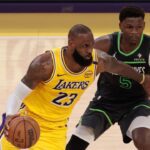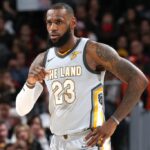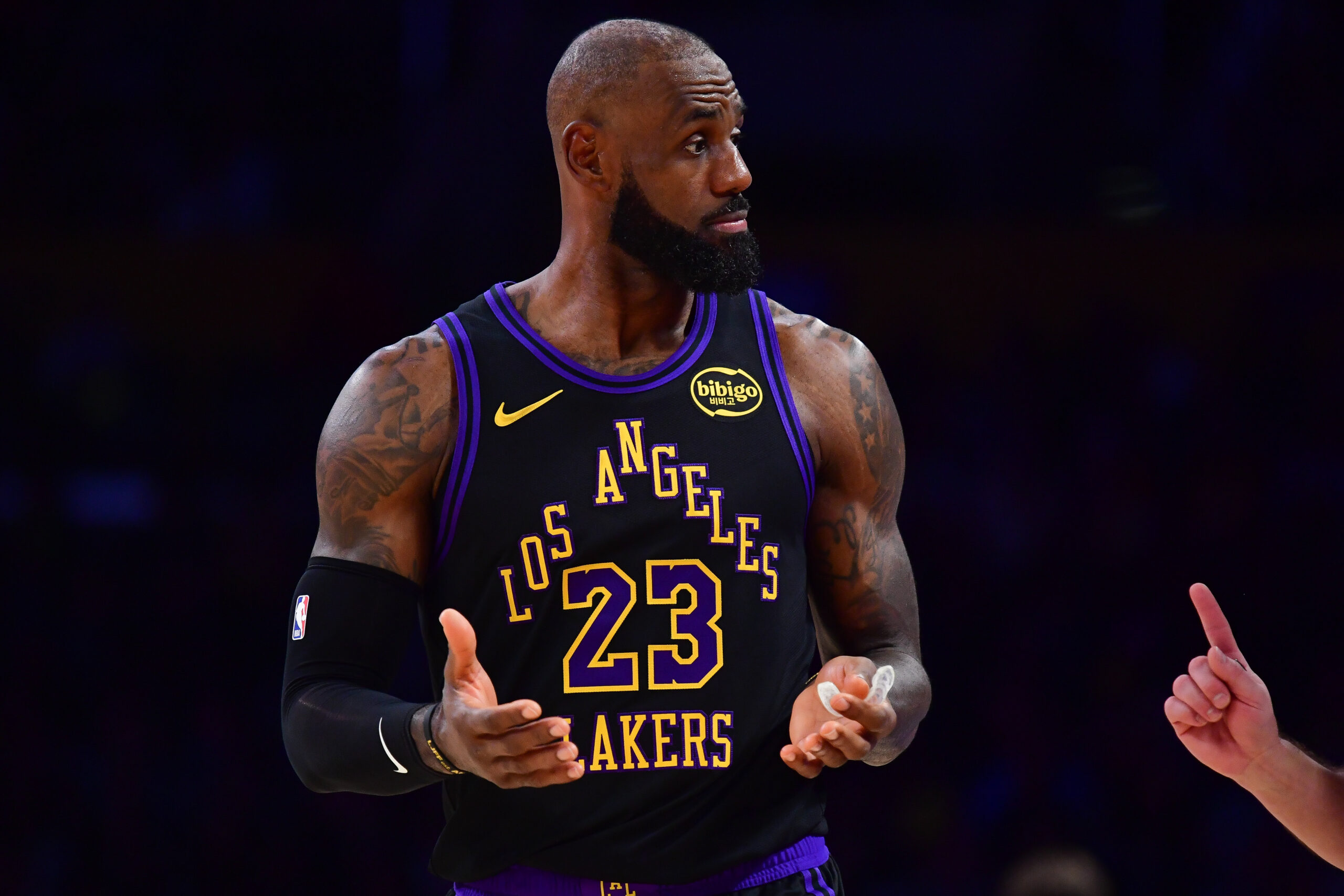
Now that he’s a free agent after eight years with the Lakers, LeBron James and the Cavaliers could be the greatest career-ending story. He got there as the No. 1 pick in the 2003 Draft, got the 2016 title, and it could be the last chapter with the franchise that drafted him. That sells by itself, no doubt. But the Cavaliers don’t need a movie ending as much as they need a lineup that can defend, space, and thrive in playoff half-court basketball.
Kevin O’Connor went right at this point on X, saying he didn’t get the Cleveland appeal for LeBron beyond home, and that James, Donovan Mitchell, and James Harden would be “an awful fit.” The quote was harsh, but the numbers back the idea.
The Cavaliers already went 52-30, reached the Eastern Conference Finals, finished fourth in the East, but got swept 4-0 by the Knicks in the end. Their biggest issue wasn’t creation. It was balance. Their defense was only 15th in defensive rating, exactly why adding another older, ball-dominant scorer isn’t their best answer.
Marc Stein and Jake Fischer reported there is “growing belief” that the Cavaliers are the scenario to beat for LeBron, as James Harden declined his $42.3 million player option while negotiating a new deal to create enough space. Moreover, the Cavaliers are reportedly keeping a roster spot open to trade for Bronny James if LeBron signs with the franchise for a last run.
So this isn’t just noise, but a true, almost imminent decision. But the basketball case is way weaker than the Cinderella story. Harden averaged 20.5 points and 7.7 assists in 26 games with the Cavaliers, Mitchell averaged 27.9 points, 4.5 rebounds, and 5.7 assists, and LeBron still averaged 20.9 points, 6.1 rebounds, and 7.2 assists for the Lakers. That is a lot of talent, but it might come with a bigger overlap in usage.
LeBron’s Homecoming Is Better Than The Fit
The emotional case is stronger than the basketball case. That is the whole article, basically. LeBron returning to the Cavaliers for one last run would be huge for legacy, TV, jersey sales, and franchise history. Nobody should pretend that part isn’t powerful. He already gave them the 2016 title, and a final run at 41 years old would have massive narrative value. The Cavaliers would instantly become the most-watched team in the league, even if they don’t become the best team in all of basketball.
The problem is that the Cavaliers weren’t a bad team looking for an identity. They were already very good with their roster build after many years of failing to reach the Conference finals. The Cavaliers sat at seventh in net team EPM at +6.5, third in offensive EPM at +5.9, and only 16th in defensive EPM at +0.6. They ended with a 119.2 offensive rating, sixth in the league, a 115.1 defensive rating, 15th, and a +4.1 net rating, ninth. That is not a roster begging for more old creation, but needing two-way wings, better perimeter defense, and more lineup flexibility.
LeBron can still play, that part isn’t the debate. The issue is the type of value he’d bring to their established core. At 41, he gives passing, size, mismatch scoring, and playoff IQ. He doesn’t give 35-minute defensive coverage, high-speed off-ball movement, or a perfect spacer outside shooter.
The Cavaliers already had Mitchell as a 31.4 Usage guy, with Harden becoming the secondary high-usage engine, and he still wants to stay with the Cavaliers. Adding LeBron means one of those three has to become much more off-ball than usual. Mitchell and Harden are the better outside shooters, while LeBron is the best passer. But all three are best when they control the game. That is the clash that Cleveland would have to manage.
The Mitchell-Harden-LeBron Trio Has Too Much Ball
The offensive talent is obvious, but the need for the ball could be the downside. Mitchell had a 31.4 usage rate and sat in the 98th percentile. Harden was at 25.1 usage in his Cavaliers sample, still 90th percentile. LeBron had a 26.4 usage rate with the Lakers, and even with Luka Doncic on the roster, he still averaged 7.2 assists. They all want to read the floor, get into the paint, and decide what to do with the ball in their hands.
Mitchell is the first priority because he is still in his prime. He averaged 27.9 points while shooting 48.3% from the field. He ranked at +3.7 offensive EPM, 98th percentile, and +3.7 total EPM, 97th percentile in the 2025-26 season. That is elite guard offense while commanding 36.3 estimated points per 100 scoring possessions and a 59.0% true shooting mark.
If LeBron comes, the Cavaliers can’t reduce Mitchell to a spot-up guard too much because Mitchell is the guy with the burst. He attacks the first defender more than anyone else on this roster and has been their key player in tough postseason stretches.
Harden is different, but the same problem persists. In 26 games with the Cavaliers, he posted a +1.9 offensive EPM, 92nd percentile, and an 8.1 assist estimate, 89th percentile. He is still a very high-level passer, but his defensive EPM was -0.5, only 45th percentile, and his turnover estimate was 5.1, one of the worst marks. That is a giant warning sign in playoff offense.
LeBron would make the passing prettier, for sure. The Cavaliers could spam inverted pick-and-rolls, Horns sets, Spain actions, and empty-side drives. But the playoff question is another: who is actually moving without the ball for 15 seconds? Mitchell likes to attack. Harden likes to hold, dribble, and manipulate in isolation. A contender usually needs two players who can space and shoot without dribbling or stopping the flow. The Cavaliers don’t have enough of that in this version.
The Defense Would Be A Problem
The defense is the biggest red flag. KOC’s point was spot on there, and this is where the numbers hurt the Cavaliers most. They already finished only 15th in defensive rating, which is league-average defense, not title defense. Then add LeBron at 41 next to Mitchell and Harden. The top-end IQ goes up, but the point-of-attack defense probably gets worse, as even Keon Ellis wasn’t re-signed and chose to join the Nets.
Mitchell had a solid-ish defensive EPM at +0.1, 69th percentile, but that doesn’t mean he should be carrying hard assignments every night. He is 6-foot-2, and the Cavaliers already need his legs for 27.9 points per game. Harden was worse defensively by the same metric, at -0.5, 45th percentile. LeBron was at 41 years old and spent last season managing energy in a Luka Doncic-led Lakers offense. That is expected, but in this Cavaliers build, he might become their best wing-sized defender by default, and that is not ideal at all.
Evan Mobley and Jarrett Allen can cover a lot, but they can’t cover everything outside of the paint. Mobley averaged 18.2 points, 9.0 rebounds, 3.6 assists, and 1.7 blocks, sitting at +1.1 defensive EPM, 91st percentile. Allen averaged 15.4 points, 8.5 rebounds, and 1.8 assists on 63.8% from the field, at the 94th percentile in EPM. That is a very good big-man defensive base. But if the perimeter is Mitchell-Harden-LeBron, Mobley and Allen will be in rotation all game. That means more corner threes, more second-side drives, more fouls, and more fatigue.
The opponent shot profile already showed a warning. The Cavaliers’ opponents were taking 42.8% of their shots from three, 22nd in the league, and scoring 1.12 points per three-point shot, 26th. So the Cavaliers already gave up too much value from deep. That was with Dean Wade and Keon Ellis still in the system for part of the year. Wade is now headed to the 76ers on a four-year, $39 million deal, and Ellis went to the Nets on a two-year, $18 million deal. Losing defensive wings and adding LeBron doesn’t fix that side.
The Spacing Gets Weird Fast
The spacing is the other bad part. At first glance, a Mitchell-Harden-LeBron-Mobley-Allen lineup has five big names and a lot of passing. Then the opponent loads up the paint and the problems start. Mitchell shot 36.4% from three, Harden was at 35.1% in his Cavaliers sample, and LeBron shot 31.7% from three last season. That means the three main creators aren’t scaring defenses as pure off-ball spacers. They can hit shots, yes. But nobody is running around screens like Sam Merrill and forcing panic rotations like a movement shooter.
The frontcourt makes it even tighter. Mobley shot 31.6% from three on the year, and Allen had a tiny 0.6 three-point attempt rate. Allen is a rim finisher, and Mobley is improving, but defenses will still live with him above the line in a playoff series. If both are on the floor with LeBron, the lane gets busy. If one sits, the defense or rebounding drops.
The Cavaliers’ team shot chart looks good overall, but it also shows why LeBron is an awkward add. They ranked fifth in offensive eFG% at 56.1%, 10th in turnover rate at 13.2%, and ninth in offensive rebounding rate at 26.9%. They were already efficient as the ninth-best team in three-point volume, with 44.2% of shots coming from deep, and 13th in points per three-point shot at 1.08. This offense didn’t need a major engine change, but more of improved spacing and better defensive options.
Sam Merrill is actually a perfect example of the type of player the Cavaliers need more of, not less. He was at 60.1% true shooting, 37.6% from three, and a 92nd percentile three-point rate. Max Strus also gives some of that, with 35.8% from three and 89th percentile three-point volume. LeBron is a way better player than both, obviously. But fit isn’t just “who is better?” With Mitchell, Harden, Mobley, and Allen, the Cavaliers need more off-ball shooting, not another driver-passer who wants bodies near the rim.
The Cavaliers Need A Different Type Of Forward
The forward Cleveland needs is pretty specific. They need a 6-foot-7 to 6-foot-9 wing who guards the best perimeter scorer, shoots around 38.0% from three, cuts, rebounds, and doesn’t ask for a lot of usage. Basically, the opposite of “add another star creator.” That is why the LeBron idea feels more like a franchise story than roster logic. LeBron is still a great player. He just isn’t the exact player type this roster is missing.
Dean Wade leaving makes this even more obvious. Wade averaged only 5.8 points, 4.2 rebounds, and 1.5 assists, but he was one of their best low-usage balance pieces. He signed a four-year, $39 million deal with the 76ers, and that takes away one of the few forwards who could defend up or down the lineup without needing shots. That is the type of loss the Cavaliers can’t replace with LeBron’s name.
Keon Ellis leaving also hurts the profile. He went to the Nets after averaging 6.7 points, 1.0 assists, and 1.2 steals last season. He ranked at the 91st percentile steal rate and 97th percentile block rate among guards, and even if he wasn’t a huge minutes piece, he was another defensive need.
The bench also isn’t strong enough to make the star fit perfectly. Dennis Schroder had a down year and got into trade talks this offseason, and Sam Merrill’s or Max Strus’ value is mostly shooting, not defense. Jaylon Tyson is young and could become their starting wing, but the Cavaliers almost froze him out of the rotation in the postseason. This isn’t a bench that lets the Cavaliers hide three older or smaller perimeter players across four rounds.
That is why I’m with KOC here. LeBron to the Cavaliers is a beautiful story and a flawed basketball bet. The Cavaliers already have shot creation, passing, and star power. Their actual missing pieces are point-of-attack defense, wing size, off-ball shooting, and better frontcourt spacing. LeBron helps some of that with IQ and size, but he makes the ball-sharing, spacing, and defensive workload harder. For a farewell chapter, it is amazing. For a title build, it is shaky.