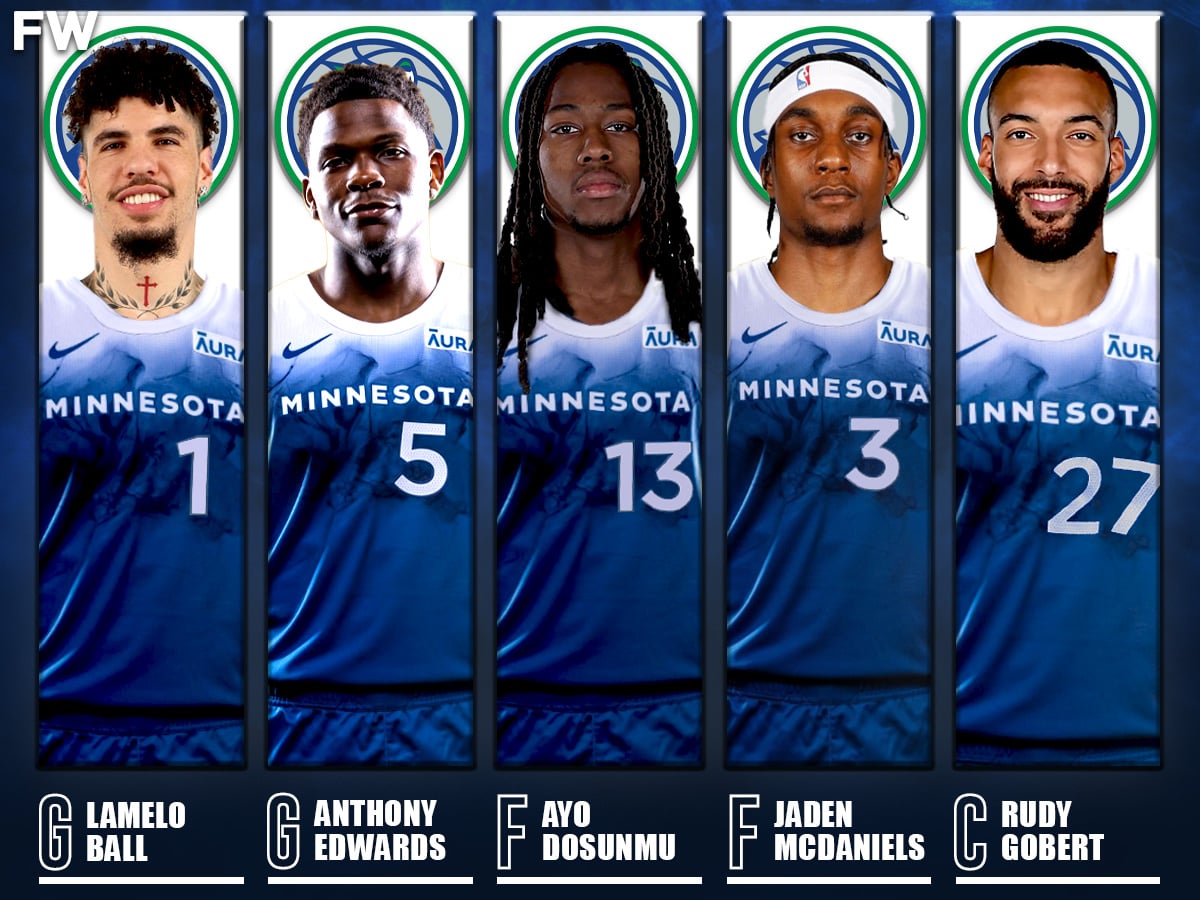
The Minnesota Timberwolves aren’t wasting any time reshaping their roster. After moving on from Julius Randle in a salary-clearing deal, Minnesota has now pulled off an even bigger blockbuster, acquiring LaMelo Ball and Josh Green from the Charlotte Hornets.
Now, the grades of this trade are out, and needless to say, this was a franchise-altering move for both teams.
In return, the Hornets receive Naz Reid, an unprotected 2033 first-round pick, three first-round pick swaps (2028, 2029, and 2030), and three second-round selections. Quite a hefty return.
For years, the Timberwolves have searched for a point guard who could elevate Anthony Edwards and finally break through on offense. They may have finally found one in Ball, a former All-Star who remains one of the NBA’s most creative passers.
The move comes with risks, particularly regarding Ball’s health and the thinning frontcourt, but Minnesota clearly believes the reward is worth it.
On paper, the starting lineup suddenly looks terrifying.
Projected Timberwolves Starting Lineup
PG: LaMelo Ball
SG: Anthony Edwards
SF: Ayo Dosunmu
PF: Jaden McDaniels
C: Rudy Gobert
This is a completely different starting lineup from the one that fielded Julius Randle this season, especially considering Naz Reid is no longer in the equation either. Let’s dive into the strengths, weaknesses, and outlook after this blockbuster trade.
Strength: LaMelo Ball Unlocks Anthony Edwards
This is the biggest reason Minnesota made the trade. For pretty much his entire career, Edwards has been forced to create offense under difficult circumstances.
The Timberwolves tried to fill the point guard hole with Mike Conley and Donte DiVincenzo, but the former has been past his prime for years now, and DiVincenzo is more of a spot-up shooter than a playmaker.
Ball changes the situation immediately. His court vision is among the best in the NBA. The former All-Star and Rookie of the Year averaged 20.1 PPG, 4.8 RPG, and 7.1 APG on 40.7% FG and 36.8% 3-PT FG last season.
Over his career, Ball has averaged 20.8 PPG and 7.3 APG on 41.8% FG and 36.5% 3-PT FG so far.
This is who Ball is at this point. A 20 PPG, 7 APG point guard who isn’t the most efficient but can create offense. For Edwards, that means fewer double teams and more opportunities to attack scrambling defenses, so expect his efficiency to rise dramatically.
Strength: One Of The NBA’s Most Dangerous Transition Teams
Few players push the pace better than Ball, and few players finish in transition better than Edwards.
That’s a terrifying combination because Minnesota already possessed elite defensive talent. With Rudy Gobert protecting the rim and McDaniels disrupting passing lanes, the Timberwolves generate plenty of transition opportunities.
Now imagine Ball grabbing a rebound and immediately launching a full-court pass to Edwards. The Timberwolves ranked 9th in pace last season (100.5) and 12th in offensive rating (116.8), so those should improve with their new point guard.
Strength: Some Defensive Versatility Remains
The biggest concern whenever Ball joins a team is defense. Fortunately for Minnesota, they have the personnel to cover for him.
McDaniels is one of the NBA’s premier perimeter defenders. He averaged 1.1 SPG and 1.0 BPG last season while being only two seasons removed from the All-NBA Defensive Second Team. His defensive rating was 114.4 last season, and his career defensive rating is 113.2. He can get stops against almost any player in the NBA consistently.
Of course, four-time Defensive Player of the Year Rudy Gobert continues to anchor elite defenses near the basket. The Frenchman made the All-Defensive First Team last season while finishing 4th in DPOY voting. He posted 0.8 SPG and 1.6 BPG with a 110.1 defensive rating (2nd in the NBA).
Recently signed Ayo Dosunmu is a rugged defender (0.8 SPG and 0.3 BPG with 118.2 defensive rating) who embraces difficult assignments, while Edwards has evolved into a much more engaged defender. That makes Minnesota one of the best possible environments for Ball, overall.
Weakness: Health Concerns Surrounding LaMelo Ball
There is no way around it. The Timberwolves are taking a massive gamble.
When healthy, Ball is one of the league’s most talented point guards. Unfortunately, injuries have become a recurring theme throughout his career.
The point guard played 72 games last season, but his track record is concerning. He has played 65 games only twice in his career, and his season game counts read as follows: 51, 75, 36, 22, 47, and 72. That is a little hard to believe for a player who isn’t 25 years old yet.
The Timberwolves need Ball healthy after losing Julius Randle and Naz Reid this summer, and if he isn’t, this trade could immediately backfire.
Weakness: Frontcourt Depth And Identity Take A Hit
Naz Reid’s departure leaves a massive hole, especially with Julius Randle gone. While Gobert is one of the league’s best defensive centers, Reid provided something unique: scoring, shooting, and instant energy.
Minnesota’s frontcourt depth suddenly looks thinner than ever before. The Timberwolves may need to use free agency or more trades to add another reliable big man before the season begins.
Minnesota needed a point guard desperately, but losing their core identity is worrying. Rudy Gobert is almost 34 years old, and decline will settle in within a few seasons if not already. There isn’t any other established big outside of Joan Beringer, who is only 19 years old and averaged 3.9 PPG, 2.3 RPG, and 0.7 BPG on 7.9 MPG last season.
Weakness: Three-Point Shooting Questions
While Ball is a capable volume shooter, consistency has never been his greatest strength. The same can be said for Edwards at times, even if last season was his best.
Ball shot 36.8% from three last season and averages 36.5% for his career. Edwards shot 39.9% from three last season, an elite clip, but he is still at 36.9% over his career so far. Relying on Ball and Edwards to shoot 40% from three isn’t entirely realistic, especially with the number of attempts they take.
McDaniels (career 35.9%) and Gobert aren’t players that defenses fear from deep, which could occasionally create spacing challenges in half-court settings. Dosunmu shot 43.9% from deep last season, but is also under 40% for his career (38.9%).
Now, it’s entirely possible these players heat up next season, because they have the talent to do so, but there isn’t a natural shooter on the team as of yet, especially off the bench.
Minnesota has enough talent to overcome those issues, but adding another proven shooter would make this roster significantly more dangerous.
What Is The Final Outlook Of This Trade?
The Timberwolves took a massive risk here. They gave up a beloved Sixth Man of the Year candidate in Naz Reid, traded Julius Randle for nothing, surrendered significant draft capital, and accepted the injury and perimeter defense risk attached to LaMelo Ball.
But championship teams aren’t built by playing it safe. If Ball stays healthy, Minnesota may have finally found the missing piece alongside Anthony Edwards.
The result could be one of the most exciting teams in basketball and a legitimate threat in the Western Conference next season. They are weaker defensively, when it comes to toughness, and on the boards, but Ball gives them a creator on offense that they have lacked in the Edwards era.
Overall, we still place the Minnesota Timberwolves behind the San Antonio Spurs, Oklahoma City Thunder, and Denver Nuggets next season because their lack of size could come back to bite them against the likes of Victor Wembanyama, Chet Holmgren, and Nikola Jokic.