The Wizards have lived in the lottery way too much since 2010. That gave them chances. Real chances. They landed a franchise point guard, a star shooting guard, a strong 3-and-D forward, a few useful young players, and also some painful misses.
This list grades every Wizards lottery pick from 2010 to 2025. The grade is based on what the Wizards got from the pick, not only what the player became later somewhere else.
So John Wall and Bradley Beal are easy. Jan Vesely and Johnny Davis are also easy, but for the wrong reason. The younger group is harder, but there is enough early evidence to grade the direction.
2010 NBA Draft
John Wall – 1st Pick
Stats: 19.0 PPG, 4.3 RPG, 9.2 APG, 1.7 SPG, 0.7 BPG, 43.3% FG, 32.4% 3PT
John Wall was the best Wizards pick of this whole window. He played 573 games for the franchise and averaged 19.0 points, 9.2 assists, and 4.3 rebounds. That is franchise-player production. He made five All-Star teams, one All-NBA team, and helped drag the Wizards out of the totally dead zone.
The peak was real. Wall was fast as hell, got to the rim, created open threes, and made Marcin Gortat look like a perfect pick-and-roll partner. In 2016-17, he averaged 23.1 points and 10.7 assists, and the Wizards won 49 games. That was the closest this era got to feeling like something serious.
The injuries killed the ending. Achilles, knee, heel, everything. After 2017-18, he played only 147 more NBA games. That part was brutal, but it doesn’t change the grade of the pick.
Wall was a No. 1 pick who became the face of the franchise for almost a decade. He wasn’t a champion, and the Wizards never got past the second round, but he was a clear hit.
Rating: Great
2011 NBA Draft
Jan Vesely – 6th Pick
Stats: 3.6 PPG, 3.4 RPG, 0.6 APG, 0.6 SPG, 0.3 BPG, 40.8% FG, 0.0% 3PT
Jan Vesely is one of the worst Wizards lottery picks in this stretch. The Wizards took him 6th in 2011, and he gave them almost nothing. In 141 games with the team, he averaged 3.6 points and 3.4 rebounds. That is bench-minimum production from a top-six pick.
The offense was the main issue. Vesely couldn’t shoot, couldn’t create, and was not skilled enough to play forward in the NBA. He was athletic, but there was no real half-court role. He shot 40.8% from the field with the Wizards, which is bad for a player who basically lived near the rim.
The painful part is that he became a very good EuroLeague player later. He was EuroLeague MVP in 2019, made multiple All-EuroLeague teams, and retired in 2026 as one of the best EuroLeague players of his era. So he was not bad at basketball.
He was bad for the NBA, and very bad for the Wizards. That matters for this grade. The Wizards drafted him to help Wall’s young core. He lasted less than three seasons before being moved. A No. 6 pick can’t become a total non-factor that fast.
Rating: Bust
2012 NBA Draft
Bradley Beal – 3rd Pick
Stats: 22.1 PPG, 4.1 RPG, 4.3 APG, 1.1 SPG, 0.4 BPG, 46.0% FG, 37.2% 3PT
Bradley Beal was a great pick. No need to make this complicated. The Wizards took him 3rd in 2012, and he became their best scorer of the last 15 years. He averaged 22.1 points, 4.1 rebounds, and 4.3 assists in 695 games with the franchise. He made three All-Star teams, one All-NBA team, and turned into a real 30 PPG-level scorer at his peak.
The best version was insane. Beal averaged 30.5 points in 2019-20 and 31.3 points in 2020-21. He also had a 60-point game and was one of the best tough-shot guards in the league. The Wizards didn’t build enough around him, but Beal did his job for a long time.
The ending was messy because of the contract. The no-trade clause and $251.0 million deal became a giant problem. The Wizards had to move him later, and the return wasn’t close to his peak value.
But that is more about the front office than the draft pick. At No. 3, the Wizards got 11 seasons, over 15,000 points, All-Star production, and a backcourt partner for Wall. That is a great result.
Rating: Great
2013 NBA Draft
Otto Porter Jr. – 3rd Pick
Stats: 10.7 PPG, 5.0 RPG, 1.4 APG, 1.2 SPG, 0.5 BPG, 48.3% FG, 39.9% 3PT
Porter was not a star, but he was not a bust either. He was the 3rd pick in 2013, and that pick always looked worse because of who went later. Giannis Antetokounmpo went 15th. Rudy Gobert went 27th. CJ McCollum went 10th. That hurts.
But grading only what Porter gave the Wizards, he was useful. He played 384 games, averaged 10.7 points and 5.0 rebounds, and became a very good role player next to Wall and Beal. He shot 39.9% from three with the Wizards, which was huge for those lineups.
His best years were 2016-17 and 2017-18. He averaged 13.4 points in 2016-17 and 14.7 points in 2017-18 while shooting over 43.0% from three both seasons. That was real 3-and-D wing production.
The issue is the No. 3 pick tag. You want more than a good starter at No. 3. You want a star, or at least a player who becomes part of your core for eight years. Porter was a clean fit, but he was never that level. Still, he played winning minutes, helped playoff teams, and later won a title with the Warriors. This was not a great value, but it was a good value.
Rating: Good
2019 NBA Draft
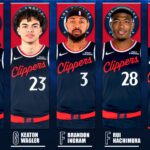
Rui Hachimura – 9th Pick
Stats: 13.0 PPG, 5.1 RPG, 1.4 APG, 0.7 SPG, 0.2 BPG, 47.9% FG, 35.6% 3PT
Rui Hachimura was a solid pick, even if the Wizards didn’t keep him long enough. He averaged 13.0 points and 5.1 rebounds in 177 games with the team. His scoring was useful right away. He could hit mid-range shots, attack mismatches, and play as a bigger forward. He was not a high-level defender or passer, but he gave them real NBA production.
The rookie season was fine: 13.5 points and 6.1 rebounds. That is good for a No. 9 pick. The problem is that the development never fully exploded with the Wizards. He stayed in that same useful-but-limited range.
The trade to the Lakers made the pick look a little worse for the Wizards. Hachimura became a playoff rotation forward there and had real postseason scoring moments. That showed he had more value than the Wizards got back.
Still, this is not a bust. A No. 9 pick who becomes a rotation forward and averages 13 PPG for your team is fine. The issue was asset management, not the selection.
The Wizards didn’t draft a star, but they drafted an NBA player. That counts.
Rating: Good
2020 NBA Draft
Deni Avdija – 9th Pick
Stats: 9.8 PPG, 6.0 RPG, 2.5 APG, 0.8 SPG, 0.4 BPG, 45.7% FG, 32.7% 3PT
Deni Avdija is one of the most annoying grades here. As a Wizards player, he was good. Not great, but clearly good. He averaged 9.8 points, 6.0 rebounds, and 2.5 assists over 287 games. The numbers were not crazy early, but he improved every year.
The final Wizards season was the key. Avdija averaged 14.7 points, 7.2 rebounds, and 3.8 assists while shooting 50.6% from the field and 37.6% from three in 2023-24. That was the breakout. He defended, rebounded, pushed the ball, and finally scored with confidence.
Then the Wizards traded him. That is why this feels so weird. The pick itself was good. The Wizards took a 6’8” forward at No. 9, developed him slowly, got the breakout, then moved him right when his value was rising. The return included Bub Carrington, Malcolm Brogdon, a 2029 first-round pick, and second-round value, so it was not empty.
But Avdija, later becoming an All-Star player immediately with the Trail Blazers, makes the timing look rough. The grade stays Good because the pick was good. The front office decision after that is a different debate.
Rating: Good
2022 NBA Draft
Johnny Davis – 10th Pick
Stats: 3.5 PPG, 1.6 RPG, 0.6 APG, 0.4 SPG, 0.2 BPG, 39.7% FG, 27.3% 3PT
Johnny Davis is a clear bust. The Wizards took him 10th in 2022 after he averaged 19.7 points and 8.2 rebounds at Wisconsin. The college production was real. The NBA translation was not.
He played 112 games for the Wizards and averaged 3.5 points, 1.6 rebounds, and 0.6 assists. The shooting was brutal: 39.7% from the field and 27.3% from three. For a guard who needed to score to justify his value, that was basically a death sentence.
The bigger issue was that he never looked comfortable. The handle wasn’t strong enough, the burst wasn’t there, and the jumper didn’t scare defenses. He was drafted as a tough scoring guard, but NBA defenders erased a lot of what worked for him in college.
The Wizards moved on, and he ended up in the G League with the Wisconsin Herd. That says everything. A lottery pick should not be fighting for G League stability after three seasons.
The 2022 class had other useful players after him, including Jalen Williams at No. 12. That makes it worse. This was a miss from the start and never recovered.
Rating: Bust
2023 NBA Draft
Bilal Coulibaly – 7th Pick
Stats: 11.7 PPG, 4.3 RPG, 2.6 APG, 1.3 SPG, 1.0 BPG, 42.5% FG, 31.9% 3PT
For Bilal Coulibaly, it is still early, but the grade is positive. The Wizards traded up for him in 2023, and the bet was very clear. They wanted size, defense, length, age, and upside. He was raw then, and he is still raw now, but he already looks like a real NBA wing.
His rookie year was solid: 8.4 points, 4.1 rebounds, and 1.7 assists. In 2025-26, he averaged 11.7 points, 4.3 rebounds, 2.6 assists, 1.3 steals, and 1.0 blocks. That defensive activity is the reason to stay patient.
The offense is still not clean. He shot only 42.5% from the field and 31.9% from three. That has to get better. If the jumper stays below league average, his ceiling gets smaller.
But a 21-year-old wing with steals, blocks, passing flashes, and real defensive matchups is valuable. The Wizards don’t need him to become a 22 PPG scorer. They need him to become a two-way starter who can guard the best wings. He is not a Great pick yet. That would be too much. But he is also not close to a bust.
For now, this is a good pick with room to become more.
Rating: Good
2024 NBA Draft
Alex Sarr – 2nd Pick
Stats: 16.3 PPG, 7.4 RPG, 2.7 APG, 0.8 SPG, 2.0 BPG, 48.2% FG, 33.0% 3PT
Alex Sarr is the best young lottery pick the Wizards have made since the Beal era.
The rookie year was uneven but useful. He averaged 13.0 points, 6.5 rebounds, and 2.4 assists in 2024-25, made All-Rookie First Team, and finished fourth in Rookie of the Year voting. That is already a good start for a No. 2 pick.
The second season was better. Sarr averaged 16.3 points, 7.4 rebounds, and 2.0 blocks in 48 games. He also improved his efficiency, hitting 48.2% from the field and 33.0% from three. For a 7-footer who entered the league as a raw offensive player, that matters a lot.
The injury part is the only reason to slow down. Sarr had surgery for a fractured right foot after an offseason workout, but the Wizards expect him to be ready for 2026-27. Big-man foot injuries are always scary, so that has to be watched.
Still, the pick looks good. Sarr protects the rim, can move, has shown more shooting touch, and already looks like a core piece. The Wizards were 17-65, so team context was awful, but that doesn’t erase the progress.
This can become Great later. Right now, it is Good with a very real chance to climb.
Rating: Good
Bub Carrington – 14th Pick
Stats: 10.3 PPG, 3.8 RPG, 4.5 APG, 0.6 SPG, 0.2 BPG, 41.2% FG, 37.4% 3PT
Bub Carrington was technically drafted by the Trail Blazers, but he came to the Wizards on draft night in the Avdija trade. For this article, he counts.
The value is already solid. As a rookie, he averaged 9.8 points, 4.2 rebounds, and 4.4 assists, played all 82 games, and made All-Rookie Second Team. That is very good from the 14th pick.
He followed that with 10.7 points, 3.4 rebounds, and 4.6 assists in 2025-26 while again playing all 82 games. That availability matters. Young guards normally miss time, hit a rookie wall, or get buried. Carrington stayed on the floor.
The shot also moved in the right direction. He shot 33.9% from three as a rookie and 40.8% from three in his second season. That is the real swing stat. If he is a 38.0% to 40.0% shooter, he can be a long-term guard.
He still needs strength, rim pressure, and better finishing. He is not a star guard right now. But at No. 14, getting a young guard who can pass, shoot, play every game, and start a lot of games is a win.
This is an easy Good.
Rating: Good
2025 NBA Draft
Tre Johnson – 6th Pick
Stats: 12.2 PPG, 2.8 RPG, 2.0 APG, 0.6 SPG, 0.2 BPG, 41.9% FG, 38.0% 3PT
Tre Johnson is too new for a final verdict, but the first season was good enough to grade the pick positively.
The Wizards took him 6th in 2025 because he was the best pure shooter on the board. At Texas, he averaged 19.9 points and shot 39.7% from three. The scoring résumé was strong, and the Wizards needed a guard who could bend defenses with shooting.
As a rookie, Johnson averaged 12.2 points, 2.8 rebounds, and 2.0 assists in 60 games. The 41.9% from the field was not special, but the three-point shooting translated. He hit around 38.0% from deep, and that is the stat that matters most for him.
He is not a complete guard yet. The playmaking is basic, the defense needs work, and he is not a strong rim finisher. That was all part of the scouting report. The question was always whether the shooting would carry him.
So far, yes.
On a 17-win Wizards team, Johnson still looked like a real offensive building block. He doesn’t need to be the whole offense if Sarr, Coulibaly, Carrington, and the 2026 No. 1 pick develop around him.
This is not Great yet. It can’t be after one season. But for now, the Wizards got the shooting they drafted.
Rating: Good
A Key No. 1 Overall Pick Decision Is Coming
The next Wizards lottery grade will start with the No. 1 pick in the 2026 NBA Draft.
They went 17-65 and won the lottery, so this is not a normal pick. This is supposed to be the next franchise player. ESPN reported that the Wizards have narrowed the decision to Darryn Peterson or AJ Dybantsa, and that is the right two-player debate. Dybantsa looks like the favorite right now, with the top-pick odds moving hard toward him, but Peterson is the more interesting basketball fit.
Peterson averaged 20.0 points, 4.2 rebounds, 1.6 assists, and 1.4 steals at Kansas while shooting 43.8% from the field and 38.2% from three. Dybantsa averaged 25.5 points, 6.8 rebounds, and 3.7 assists at BYU. Dybantsa has the bigger wing profile and more scoring volume. Peterson has the cleaner guard shot-making path.
For the Wizards, I would take Peterson. They already have Alex Sarr, Bilal Coulibaly, Bub Carrington, and Tre Johnson. What they still need is a real No. 1 offensive guard next to Trae Young. Dybantsa might be the safer public pick, but Peterson gives them the superstar ceiling they have missed since John Wall.