Scoring is not everything in the NBA Draft. It matters, obviously. Teams love points. Fans love points. Mock drafts normally push the guys with big scoring averages because it is easier to understand.
But lottery picks are not always built around college production. Sometimes teams draft size. Sometimes they draft defense. Sometimes they draft tools, age, athletic testing, shooting indicators, or just the idea of what a player can become in three years.
That is why this list is interesting.
All 10 players here averaged less than 10 points per game in college and still became lottery picks. Some became great picks. Some were risky. Some were mostly drafted off tools. Some had small roles because they played on loaded teams.
The point is simple: NBA teams don’t only draft the college stat sheet.
10. Steven Adams – 12th Pick, 2013
NCAA Stats: 7.2 PPG, 6.3 RPG, 0.6 APG, 0.7 SPG, 2.0 BPG, 57.1% FG, N/A 3P%
Steven Adams is a big hit on this list. He averaged only 7.2 points at Pittsburgh, but the Thunder didn’t draft him to be a scorer. They took a 7-footer who could rebound, screen, protect the rim, and play strong. The 2.0 blocks per game mattered more than the points.
Adams became exactly that in the NBA. Through 796 career games, he has averaged 8.7 points, 8.0 rebounds, and 1.5 assists while shooting 58.4% from the field. He also became one of the best screeners in the league, which never shows up properly in box scores.
His value is still needed to this day. The Rockets gave him a 3-year, $39.0 million extension in 2025 after he helped as a bench inside presence. He averaged only 3.9 points and 5.6 rebounds in 13.7 minutes in 2024-25, but Houston was 5.0 points per 100 possessions better with him on the floor. That is why he still got paid.
Adams is the reason teams keep drafting low-scoring centers. If the role is clear and the body translates, the scoring doesn’t need to be big. He never became a star, but 11 years, 796 games, and $39.0 million more at this stage is a great outcome for a 7.2 PPG college center.
9. Zach LaVine – 13th Pick, 2014
NCAA Stats: 9.4 PPG, 2.5 RPG, 1.8 APG, 0.9 SPG, 0.2 BPG, 44.1% FG, 37.5% 3P%
Zach LaVine is the best upside play here. He averaged only 9.4 points at UCLA, but the lottery case was obvious. He had elite bounce, real speed, guard skill, and a 37.5% three-point mark. Teams were not drafting the UCLA version. They were drafting the NBA space version.
That bet worked. LaVine became a two-time All-Star and one of the best pure scoring guards in the league at his peak. His best Bulls season was 27.4 points per game in 2020-21, with 50.7% from the field and 41.9% from three. That is insane compared to the 9.4 PPG freshman version.
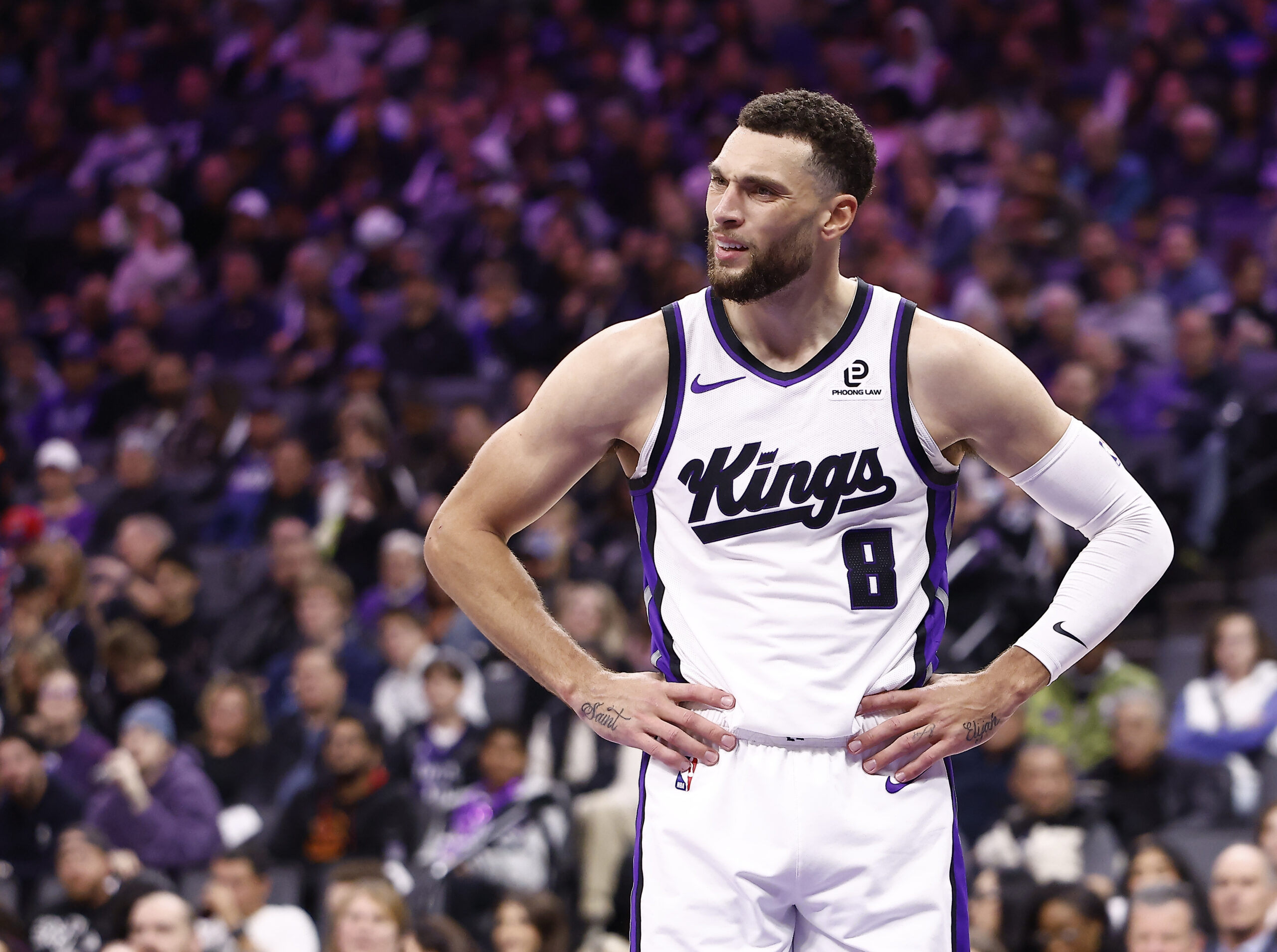
His current situation is much worse, though. LaVine averaged 19.2 points for the Kings in 2025-26, his lowest scoring season since 2017-18, before season-ending right hand surgery. He still shot 47.9% from the field and 39.0% from three, but the impact was not the same.
The contract also matters. He has a $48.9 million player option for 2026-27, and that is a massive number for a guard coming off another injury year.
Still, the draft result was a win. A 13th pick who becomes a 25-plus PPG scorer and All-Star is a hit. LaVine is now in a rough phase, but the original low-scoring college profile turned into real NBA scoring.
8. Willie Cauley-Stein – 6th Pick, 2015
NCAA Stats: 8.9 PPG, 6.4 RPG, 1.0 APG, 1.2 SPG, 1.7 BPG, 57.2% FG, 0.0% 3P%
Willie Cauley-Stein is the other side of the low-scoring tools bet. He averaged 8.9 points at Kentucky, but that team was stacked. Karl-Anthony Towns, Devin Booker, Trey Lyles, and more. Nobody had a normal star role. Cauley-Stein’s case was defense, not scoring.
The defensive numbers were real. He averaged 1.7 blocks and 1.2 steals. For a 7-footer, that steals number was the selling point. He could move his feet, switch, run, and defend in space. That is why he went 6th.
His NBA career was not a total disaster, but it was not a top-six hit either. He played 422 NBA games and averaged 8.7 points, 5.9 rebounds, and 1.4 assists. He had moments with the Kings and Mavs, but he never became the locked-in defensive anchor teams expected.
Now he is basically out of the NBA picture. That says a lot. The tools kept him in the league for years, but not as a franchise-level defensive big man.
The lesson is simple. If a low-scoring prospect is drafted only for defense and athleticism, that defense has to be elite every night. Cauley-Stein had the body and flashes, but not enough consistency.
7. Trey Lyles – 12th Pick, 2015
NCAA Stats: 8.7 PPG, 5.2 RPG, 1.1 APG, 0.5 SPG, 0.4 BPG, 48.8% FG, 13.8% 3P%
Trey Lyles was a weird college evaluation because Kentucky used him in a strange role.
He averaged 8.7 points and shot only 13.8% from three. That looks bad now, especially because his NBA value became tied to stretch-big shooting. But teams looked past the number because he had size, touch, and skill at 6’9”.
His NBA career became solid, not special. Lyles played 650 NBA games and averaged 7.6 points, 4.3 rebounds, and 1.1 assists. That is normal rotation-forward production. He never became a top-end starter, but he lasted because he could shoot enough, play as a forward or small-ball big, and fit different lineups.
His current story is more interesting because he went to Real Madrid in 2025-26 and had a strong year. He averaged 13.5 points in EuroLeague and shot 45.9% from three. In the Final Four, he averaged 20.5 points and 7.5 rebounds. That is a big bounce for his value.
Lyles also reportedly wants to return to the NBA for the 2026-27 season. That makes sense. A forward who just shot 45.9% from three in the EuroLeague will get calls.
This is not a star story. It is a good career, still. The 12th pick did not become a franchise player, but he played 650 NBA games, moved to Europe, proved he can still score, and may get another NBA shot.
6. Patrick Williams – 4th Pick, 2020
NCAA Stats: 9.2 PPG, 4.0 RPG, 1.0 APG, 1.0 SPG, 1.0 BPG, 45.9% FG, 32.0% 3P%
Patrick Williams is the big warning sign on this list. He averaged 9.2 points at Florida State and did not start a single game. The Bulls still took him 4th because of the wing tools: 6’8”, strong, young, 1.0 steals, 1.0 blocks, and 83.8% at the free-throw line. That is the classic NBA projection formula.
The problem is the production never exploded. Through six NBA seasons, Williams has career averages of 9.0 points, 3.9 rebounds, and 1.5 assists. That is not enough for a No. 4 pick. It is even harder now because he is making $18.0 million per year.
His 2025-26 season was rough. The Bulls went 31-51, and Williams averaged only 7.0 points in 72 games while shooting 37.2% from the field. The three-point number was okay at 34.7%, but the overall scoring and impact were low.
This is why low-scoring wings are dangerous. The tools can look perfect, but at some point the player has to take more control. Williams has size, can defend some, and can make open shots, but he still doesn’t create enough. He also doesn’t rebound enough for his body.
The Bulls drafted the idea of a two-way wing. Six years later, he is more of an overpaid role player. That doesn’t mean he is useless. It means the top-four bet was too aggressive.
5. Joshua Primo – 12th Pick, 2021
NCAA Stats: 8.1 PPG, 3.4 RPG, 0.8 APG, 0.6 SPG, 0.3 BPG, 43.1% FG, 38.1% 3P%
Joshua Primo is probably the most extreme risk pick here. He averaged 8.1 points at Alabama. The Spurs took him 12th because he was one of the youngest players in the draft and hit 38.1% from three. That was the whole case: young guard, decent size, shooting touch, more upside later.
The problem was the actual guard production. Primo averaged only 0.8 assists. That is very low for a lottery guard. It meant teams were not seeing real creation yet. They were mostly betting on age and shooting.
Then everything fell apart off the court. The Spurs waived him in 2022 after allegations that led to an NBA investigation. The league later suspended him four games for conduct detrimental to the league. After that, he spent time with the Clippers on a two-way deal and later signed an Exhibit 10 contract with the Bulls.
So this is not only a basketball miss. It is also a career situation that never stabilized.
The pick is still worth mentioning because it shows how much NBA teams value age. Primo was not a big college scorer, not a real playmaker yet, and not physically ready. But the Spurs saw an 18-year-old shooter and jumped.
Sometimes that works. Here it didn’t. The low-scoring profile had too many unknowns, and the off-court situation ended the Spurs chapter fast.
4. Jeremy Sochan – 9th Pick, 2022
NCAA Stats: 9.2 PPG, 6.4 RPG, 1.8 APG, 1.3 SPG, 0.7 BPG, 47.4% FG, 29.6% 3P%
Jeremy Sochan was never drafted for points. The Spurs took him 9th because he defended, rebounded, passed, and played with edge. The 1.3 steals and 0.7 blocks were more important than the scoring. He looked like a playoff-style chaos forward.
His NBA career has been useful but uneven. He made All-Rookie in 2022-23 and has shown real defensive energy, but the jumper is still the issue. His college warning signs were obvious: 29.6% from three and 58.9% from the line. That kind of shooting profile makes spacing hard.
The Spurs also had a weird development path with him. They tested him at point guard, used him as a forward, then had to figure out his role next to Victor Wembanyama, De’Aaron Fox, Stephon Castle, and Dylan Harper. That is a lot of ball-handlers and frontcourt pieces around him.
The 2025-26 season was also messy with injuries and role changes. That led to his eventual waiver and signing with the Knicks, becoming later an NBA champion, but his season never became fully stable.
Sochan is still only 23 and has a real defensive identity. But the pick shows the same thing as Patrick Williams in a different way. Defensive forwards need enough offense. If the shot stays unreliable, the role gets smaller when the games get serious.
3. Dereck Lively II – 12th Pick, 2023
NCAA Stats: 5.2 PPG, 5.4 RPG, 1.1 APG, 0.5 SPG, 2.4 BPG, 65.8% FG, 15.4% 3P%
Dereck Lively II had the lowest college scoring number on this list. He put up only 5.2 points at Duke. That is wild for a lottery pick. But the Mavs did not draft scoring. They drafted rim protection, vertical spacing, screening, and size.
The rookie year proved the idea right. Lively became a real part of the Mavs’ 2024 Finals run. He gave Luka Doncic a lob threat, defended the rim, and played within himself. That is exactly what teams want from a low-usage lottery center.
The current situation is more stressful. His 2025-26 season was basically lost. He played only seven games because of recurring foot and ankle issues, then had surgery in December. He was barely at 4.3 points and 5.3 rebounds in just 16 minutes per game.
The bigger concern is durability. Through three seasons, he still has not reached 100 regular-season games. That is scary for a center whose value depends on mobility, timing, and physical presence.
He is entering the final year of his rookie deal at $7.2 million, and 2026-27 is huge for him. If he plays 60-plus games, the Mavs can still view him as a core piece. If the injuries keep going, the extension talks get very hard.
Lively is still a good example of a low-scoring prospect translating fast. But now the issue is staying on the floor.
2. Carter Bryant – 14th Pick, 2025
NCAA Stats: 6.5 PPG, 4.1 RPG, 1.0 APG, 0.9 SPG, 1.0 BPG, 46.0% FG, 37.1% 3P%
Carter Bryant was not drafted for his Arizona role. He started only five games. But the Spurs took him 14th because the profile was useful: 6’6” wing, strong frame, defensive chaos, and 37.1% from three. Arizona also noted he was one of five freshmen in the country with 200 points, 35 assists, 35 blocks, and 35 steals.
His rookie season was mostly developmental, but he still played. Bryant appeared in 71 games for the Spurs and averaged 4.2 points, 2.5 rebounds, and 0.7 assists in 11.5 minutes. He shot 40.8% from the field and 33.5% from three. Not amazing, but not dead either for a 20-year-old rookie on a Finals team.
The Spurs reached the 2026 Finals, so he was not walking into a bad team where he could take 12 shots and learn through mistakes. He had to play small minutes behind better players. That makes the low scoring less scary.
His next step is simple: shoot better and defend without fouling. The Spurs already have Wembanyama, Fox, Castle, Harper, Vassell, and Keldon Johnson. Bryant doesn’t need to become a star. He needs to become a 3-and-D wing who can survive playoff matchups.
That is why this lottery pick still makes sense. A 6.5 PPG college wing became a real NBA development piece because the defensive stats and shooting base were there.
1. Khaman Maluach – 10th Pick, 2025
NCAA Stats: 8.6 PPG, 6.6 RPG, 0.5 APG, 0.2 SPG, 1.3 BPG, 71.2% FG, 25.0% 3P%
Khaman Maluach is the big-man version of “don’t draft the points.” He only scored 8.6 points at Duke, but he shot 71.2% from the field. Duke also had Cooper Flagg, Kon Knueppel, Tyrese Proctor, and other options, so Maluach’s job was simple: finish, rebound, protect the rim, and run.
Duke’s own records make the efficiency look even better. He went 136-191 from the field, which ranked third in Blue Devils single-season history and second among Duke freshmen. He was also ACC All-Rookie, All-ACC Tournament First Team, and NCAA East Region All-Tournament.
His rookie year with the Suns was exactly what people expected: slow, raw, but interesting. He played only 46 games and averaged under 9 minutes per game. The G League numbers were more important: 17.4 points, 13.2 rebounds, and 2.0 blocks per game. That shows why the lottery bet still makes sense. He is 7’2”, young, and already impacts the rim.
Maluach is not ready as an NBA offensive player. He doesn’t pass much, doesn’t create, and the jumper is still more idea than real weapon. But for a 10th pick, the path is clear. If he becomes a starting rim protector who finishes lobs and survives in space, the low college scoring won’t matter at all.