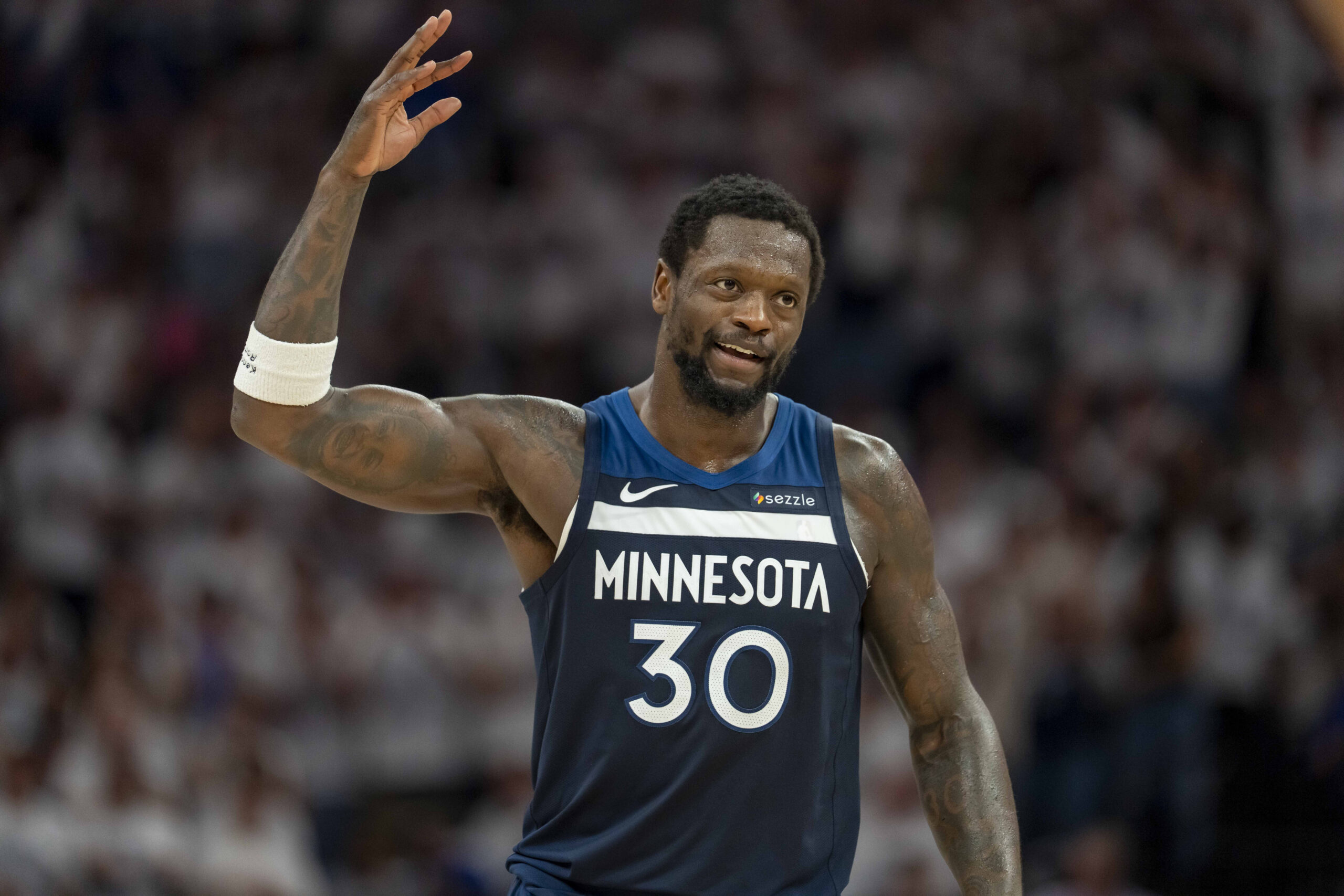
Matters have been heating up in the hours leading up to the 2026 NBA Draft. Although the Giannis Antetokounmpo trade stole all the attention, the Minnesota Timberwolves also had their moment in the sun after trading Julius Randle to the Brooklyn Nets as part of a three-team deal with the Chicago Bulls.
Seeing Julius Randle traded this summer is not shocking. Despite how reliable he was for the Wolves during the regular season (21.1 PPG, 6.7 RPG, 5.0 APG), his averages of 16.0 points, 7.5 rebounds, and 2.8 assists per game while shooting 39.0% from the field and 24.4% from three-point range in the playoffs had an impact on his credibility.
Following Minnesota’s second-round exit in the postseason, rumors had already suggested that the Wolves’ forward would be on the trade block. With Randle being traded to the Brooklyn Nets, Minnesota is likely to change directions.
But why would the Wolves trade Randle?
Apart from his shortcomings in the postseason, there were more pressing issues that may have led to the two-time All-Star’s departure. Among these, the Wolves’ salary cap concerns may have been the leading cause.
Julius Randle’s $33.3 million cap hit would have severely hindered Minnesota’s ability to make key signings in the offseason. When additionally factoring in his $35.8 million player option for the 2027-28 season, the Wolves would have been in a very complicated position if they retained Randle.
With this deal, the Wolves have effectively offloaded Randle’s contract without taking on any new salaries.
Having acquired the No. 33 pick from Brooklyn and Mohamadou Gueye (non-guaranteed contract) from Chicago in return for the two-time All-Star, Minnesota has effectively taken nearly $36 million off its payroll, helping it get below the salary cap of $165 million.
To top things off, the Wolves have gained a $33.3 million trade exception while also going nearly $50 million under the first apron. With this kind of cap flexibility, the Timberwolves are likely to make some big moves this summer.
What’s In Store For The Wolves Following Julius Randle’s Departure?
The immediate impact of Julius Randle’s departure for the Wolves will be on their starting lineup. With Randle headed out, reports have indicated that Naz Reid will solidify his position as a starter next season.
Last season, Reid averaged 13.6 points, 6.2 rebounds, 1.0 steals, and 1.0 blocks per game while shooting 45.6% from the field and 36.2% from beyond the arc while coming off the bench. With a bigger role in the rotation and a suitable cap hit of $23.2 million (2026-27), Minnesota will see great value in pairing Reid with Jaden McDaniels and Rudy Gobert in the frontcourt.
The repercussions of Julius Randle’s trade have also been felt on the offseason signings front. With more salary cap flexibility, the Wolves were able to bring back Ayo Dosunmu on a five-year, $112 million deal, according to The Athletic’s Jon Krawczynski. Given Minnesota’s demands for a reliable point guard, signing Dosunmu proves quite significant for the Wolves.
Barring Dosunmu’s addition, however, there is reason to believe that the Timberwolves could be gearing up for some bigger moves. With a $33.3 million trade exception, the Wolves could look to acquire some capable players.
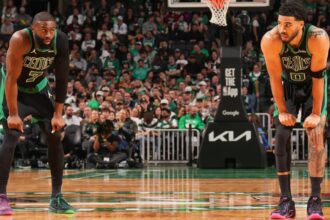
On that note, NBA insider Kevin O’Connor speculated that Minnesota may set its sights on Celtics’ guard Derrick White, who has been rumored to be on the Wolves’ radar. Given that White is on a $30.3 million contract for the 2026-27 season, the Wolves can easily acquire him by using their trade exception.
Apart from White, O’Connor also noted that players like Trey Murphy III, Myles Turner, Jrue Holiday, and Dejounte Murray could emerge as targets within the same price range. With Minnesota’s cap flexibility giving them the luxury to make meaningful roster moves this summer, it will be intriguing to see how the offseason plays out for the Wolves.