The first round of the 2026 NBA Draft didn’t have many wild twists. Most of the board stayed close to what was expected, and there were not many huge moves that changed the whole night.
Still, that doesn’t mean every team left in the same spot. Some teams used the board well. Some players landed in the right place. Others missed better chances, reached too early, or created a weird roster problem.
This is only about draft night. Value, fit, timing, roster need, and what each team actually did with the pick.
Winners
1. Washington Wizards
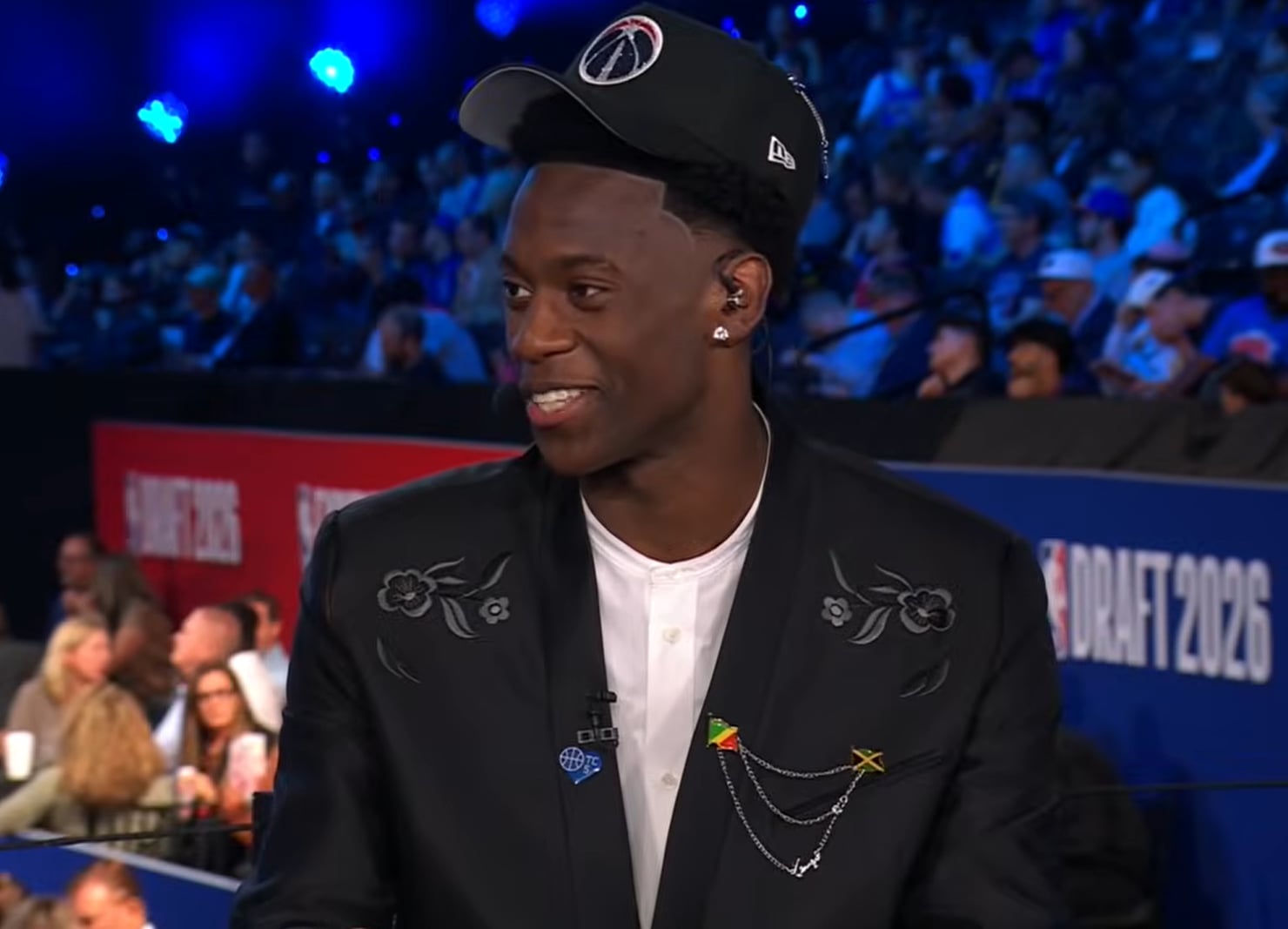
The Wizards won the night because they didn’t make the pick harder than it had to be. There was some Darryn Peterson noise before the draft, mostly because he only worked out for the Wizards. That could have made things weird for a team that needed a franchise piece badly. But Washington made the right call and took AJ Dybantsa.
Dybantsa was the best player in the class. He posted 25.5 points, 6.8 rebounds, and 3.7 assists at BYU while shooting 51.0% from the field. The three-point shot still needs work at 33.1%, but the scoring package is too strong. Size, rim pressure, midrange touch, transition scoring, and shot creation. That is the type of wing the Wizards didn’t have.
The context is better now, too. Trae Young just signed a four-year, $212.0 million extension, so the offense has a real creator locked in. Anthony Davis gives them a veteran defensive anchor. Alex Sarr is still part of the young frontcourt.
That means Dybantsa doesn’t need to do everything on day one. Young can create easy looks. Davis can protect the back line. Dybantsa can grow into the No. 1 scorer without being thrown into a dead roster.
The Wizards needed a wing scorer with star upside. They got the best one.
2. Sacramento Kings
Darius Acuff Jr. falling to the Kings at No. 7 was huge for both sides. The Kings were one of the worst teams in the league last season, and the roster had no real point guard and no young player who looked like a clear future All-Star. That is a brutal place to be, but it also creates a perfect opening for a guard like Acuff.
Acuff comes in with the ball available. He won’t be stuck behind a veteran star guard. He won’t have to play off three older scorers. The Kings can give him reps right away and let him learn through mistakes.
At Arkansas, Acuff put up 23.5 points, 3.1 rebounds, and 6.4 assists while shooting 48.4% from the field and 44.0% from three. That is star guard production. He can score off the dribble, run pick-and-roll, get into the paint, and punish defenders who go under screens.
The defense is the real concern. He is not big, and stronger guards will attack him. That is why he wasn’t a perfect prospect.
But the Kings needed a franchise guard more than they needed a low-risk role player. Acuff gives them real hope. At No. 7, that is a win.
3. Oklahoma City Thunder
The Thunder lost to the Spurs in the Western Conference Finals, then drafted the player people immediately started calling a Wembanyama stopper. That is a little dramatic, but the logic is clear. Aday Mara is 7-foot-3, massive, and gives the Thunder a different kind of frontcourt body. They already have Chet Holmgren and Isaiah Hartenstein, but Mara gives them another look for the biggest matchups.
Mara had 12.1 points, 6.8 rebounds, 2.4 assists, and 2.6 blocks at Michigan while shooting 67.0% from the field. He also helped Michigan win the national title, so this is not just a height pick. He can pass from the high post, protect the rim, and finish inside.
The Thunder don’t need to rush him. That is the luxury. Shai Gilgeous-Alexander, Jalen Williams, Holmgren, and Hartenstein already handle the main work. Mara can develop slowly, play certain matchups, and give them more size when teams try to punish them inside.
His foot speed is the concern. Playoff teams will try to pull him away from the paint. But at No. 12, this is the type of swing that makes sense for a team already close to another title.
4. San Antonio Spurs
The Spurs lost in the Finals, and the draft showed they knew exactly where the roster needed some vital upgrades. Victor Wembanyama was carrying too much of the defensive structure. ESPN had the Spurs with a plus-17.3 net rating with him on the floor in the playoffs, compared to minus-0.3 without him. That is still a strong team without him, but the gap was massive. When Wembanyama sat, the paint became a much bigger problem.
That is why taking Jayden Quaintance at No. 20 and trading for Tarris Reed Jr. at No. 26 makes sense. Quaintance is the upside swing. He has big defensive tools, shot-blocking, and athleticism, but the knee history makes him a slower build. He doesn’t need to help right away.
Reed is more ready. He gives the Spurs a stronger 6-foot-10 body who can rebound, protect the rim, and play physical backup minutes. The Spurs moved multiple second-rounders to get him, which shows this was not random.
The idea is simple. Wembanyama will still be the system. Nobody replaces that. But the Spurs needed better defensive survival when he rests. Two late first-round centers won’t fix everything, but they give San Antonio more size, more fouls, and more rim protection behind the best defender in the league.
5. Los Angeles Lakers
The Lakers needed a wing who could shoot, defend, and help Luka Doncic and Austin Reaves without needing the ball. Cameron Carr was a strong answer at No. 24.
Carr had real lottery buzz at different points in the process, and NBA.com listed him as one of the draft’s sleeper names after his strong combine showing. He dropped, and the Lakers were there to take advantage.
At Baylor, Carr put up 18.9 points, 5.8 rebounds, and 2.6 assists while shooting 37.4% from three. He has good size at 6-foot-6, a 7-foot wingspan, and the athletic tools to defend wings if the effort stays steady.
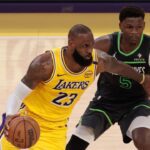
The Lakers needed this kind of player badly. Doncic creates advantages every possession, but he needs shooters around him. Reaves and, more importantly, LeBron still need wings who can run, cut, and guard, so he isn’t doing everything at 41. Carr can fill those gaps.
He is not a finished defender yet, and the frame still needs strength. But the upside at No. 24 is excellent. For a team that needed cheap young perimeter talent, this was one of the best value picks of the late first round.
Losers
1. Milwaukee Bucks
The Bucks needed more than two solid prospects after trading Giannis Antetokounmpo to the Miami Heat, ending their contending era to start a retooling process.
That is the problem. Brayden Burries at No. 10 and Nate Ament at No. 13 are not bad picks. Burries had 16.1 points, 4.9 rebounds, 2.4 assists, and 1.5 steals at Arizona while shooting 49.1% from the field and 39.1% from three. He can fit with Tyler Herro and Ryan Rollins because he shoots, defends some, and doesn’t need to be the whole offense.
Ament is the bigger swing. He finished with 16.7 points, 6.3 rebounds, 2.3 assists, and 1.0 steals at Tennessee, but the shooting was rough at 39.9% from the field and 33.3% from three.
The tools are there: 6-foot-9, ball skills, flashes as a scorer, defensive length. There is a little Jalen Johnson-type draft feel here because Johnson also had elite tools and big question marks before falling in 2021. Five years later, Johnson is a franchise player for the Hawks.
So yes, there is a path for Ament. But right now, he looks closer to Zaccharie Risacher than to a future All-Star. Useful, long, skilled, but not a clear franchise guy. That is why this hurts. The Bucks lost Giannis and didn’t leave the draft with a new franchise face.
2. Brooklyn Nets
Mikel Brown Jr. is talented, but the Nets made the backcourt picture more crowded. Brown went No. 6 after putting up 18.2 points, 3.3 rebounds, and 4.7 assists at Louisville. He can shoot off the bounce, pass, and create his own offense. That part is good. The Nets also liked him through the process, so this wasn’t a shocking pick.
The issue is who was still there. Darius Acuff Jr. was on the board, and he had more hype as a pure lead guard after putting up 23.5 points and 6.4 assists at Arkansas while shooting 48.4% from the field and 44.0% from three. If the Nets wanted a franchise guard, Acuff had the stronger case.
The other issue is fit. The Nets already have Egor Demin and Ben Saraf as young guards who need the ball to develop. Brown needs touches, too. That is a lot of guards trying to learn the NBA while also trying to control a struggling offense.
It can work if one of them becomes more off-ball, but that is not automatic. Young guards need rhythm, freedom, and mistakes. The Nets may have too many players fighting for the same kind of reps.
Brown can be good. The roster fit just feels messy.
3. Labaron Philon Jr.
Labaron Philon Jr. had one of the roughest falls of the first round. He was projected much higher for most of the draft cycle. NBA.com’s consensus board had him around the lottery or just outside it in several mocks, and he had the production to back it up.
At Alabama, Philon posted 22.0 points, 5.0 assists, and 1.2 steals while shooting 50.1% from the field and 39.9% from three. That is not a late-first profile. That is a guard who should have been picked earlier.
The landing spot at No. 22 is not terrible, but it is complicated. The 76ers can use him in the old Jared McCain type of role as a bench scoring guard who gives them shot creation and energy. In theory, that helps.
The problem is minutes. Tyrese Maxey is the main guard, and V.J. Edgecombe is already there, too. Philon won’t walk into a big role, and he probably starts as a bench player instead of getting the freedom he would have had on a weaker team.
Long term, maybe it works. Learning behind Maxey is not bad. But draft night was still a loss for Philon. Falling to No. 22 after that college season is brutal.
4. Los Angeles Clippers
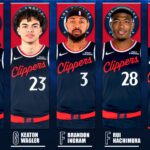
The Clippers didn’t take a bad player. Keaton Wagler can play. He had 17.9 points, 5.1 rebounds, and 4.2 assists at Illinois while shooting 44.5% from the field and 39.7% from three. He won the Jerry West Shooting Guard of the Year award and helped Illinois reach the Final Four. The talent is real.
The issue is the No. 5 spot. After the top four, the class had a lot of guards, but most of them were point guards. The Clippers already have Darius Garland, so the best positional fit was not obvious. Wagler makes sense because he is bigger than the other guards and can play off the ball. That part helps.
Still, using No. 5 on a guard next to Garland is a risky bet. The Clippers are also coming out of the Kawhi Leonard and Paul George era with very few long-term assets. This was one of their best chances to add more draft capital or trade down.
Wagler may become a good starter. But the Clippers could have turned No. 5 into more pieces, especially in a draft where the fifth player was not obvious. The player is fine. The asset use is the problem.
5. Dallas Mavericks
The Mavericks made the pick feel too personal. They hired Dusty May, then used the No. 9 pick on Morez Johnson Jr., his former Michigan big man. Johnson is a good player, but this was too high.
Johnson had 13.1 points, 7.3 rebounds, and 1.1 blocks at Michigan while shooting 62.3% from the field and 34.3% from three. He has power, length, rebounding, and defensive tools. He also helped May win a national title, so the connection is easy to see.
But No. 9 is a lot for that profile. The Mavericks already have Cooper Flagg as the future. They needed a young point guard or shooting guard who could grow next to him, create offense, and make the floor easier. Instead, they took another frontcourt player when the roster already leans heavy there.
Johnson can defend, rebound, and finish. That will help. But he was not viewed as a clear lottery guy for most of the process, and this felt rushed.
The Sergio De Larrea move later helped because he gives them a skilled 6-foot-6 guard. But the main pick was still No. 9. For a team building around Flagg, using that pick on a coach’s former piece is hard to like.